EPIDEMIOLOGY
It is assumed that all humans experience the sensation of pruritus at some point in their life, e.g. from insect bites (Fig. 6.1). However, relatively few studies have investigated the overall incidence and prevalence of pruritus. In a Norwegian population-based, cross-sectional study of self-reported skin morbidities, pruritus was the dominant symptom among adults, experienced within the past week by 9% of women and 7.5% of men. A German population-based, cross-sectional study found that the self-reported point, 12-month, and lifetime prevalences of chronic pruritus (lasting ≥6 weeks) were 13.5%, 16%, and 22%, respectively; in a follow-up cohort study, a 7% 12-month cumulative incidence of chronic pruritus was observed. Women have a higher lifetime prevalence of chronic pruritus than men, and older adults are more frequently affected. Table 6.1 summarizes the prevalence of pruritus in various medical conditions.
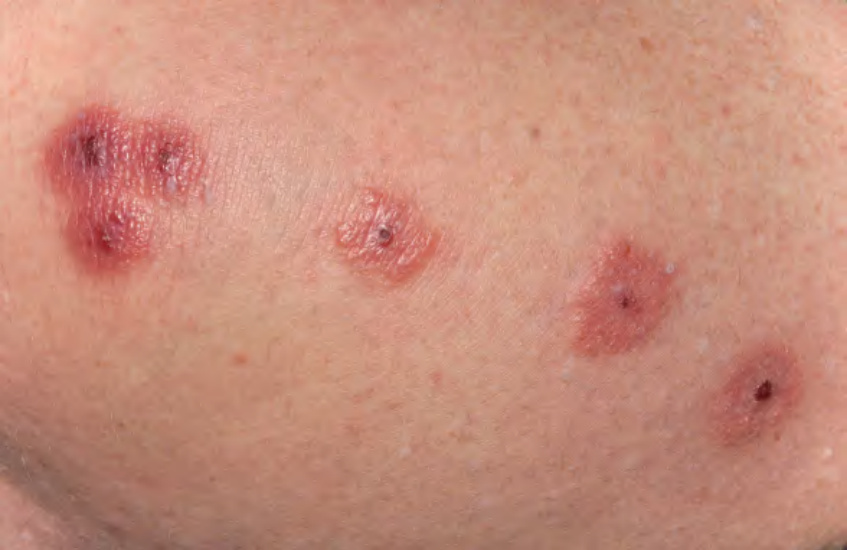
Fig. 6.1 Insect bites. Linear pruritic papules with central crusts demonstrating the “breakfast, lunch, and dinner” sign. Courtesy Antonio Torrelo, MD.
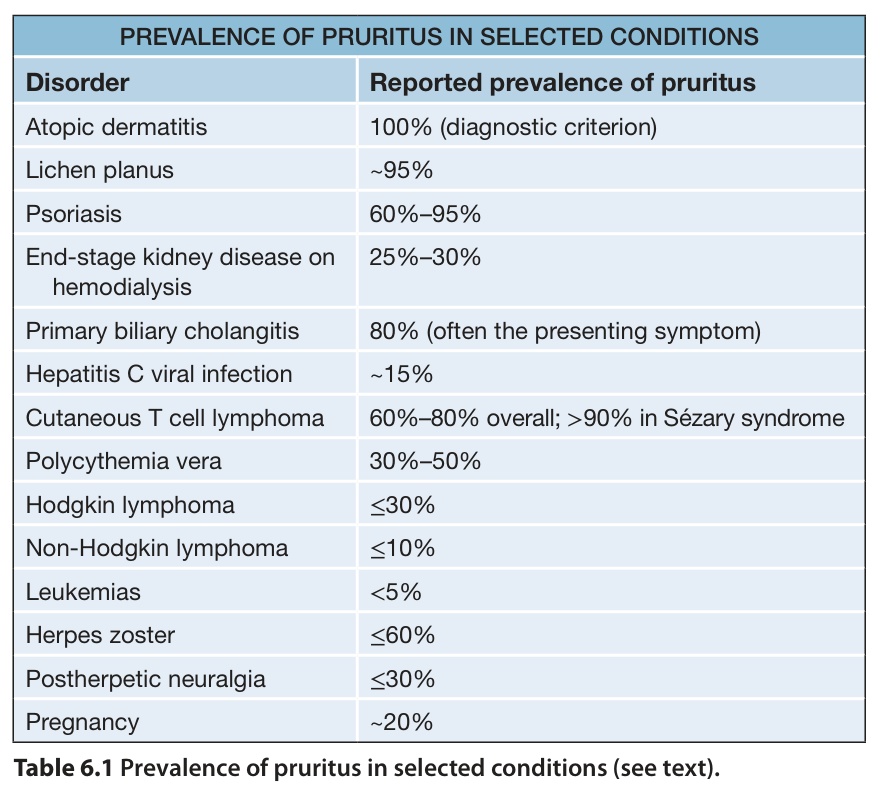
Table 6.1 Prevalence of pruritus in selected conditions (see text).