PHARMACOLOGIC PRURITUS
Virtually any drug can cause a skin reaction that is associated with pruritus. Pruritic drug reactions most often present as morbilliform or urticarial eruptions (see Ch. 21). Occasionally, however, pruritus is the predominant manifestation with an absence of skin findings (Table 6.8). Some medication effects (e.g. hepatotoxicity) that
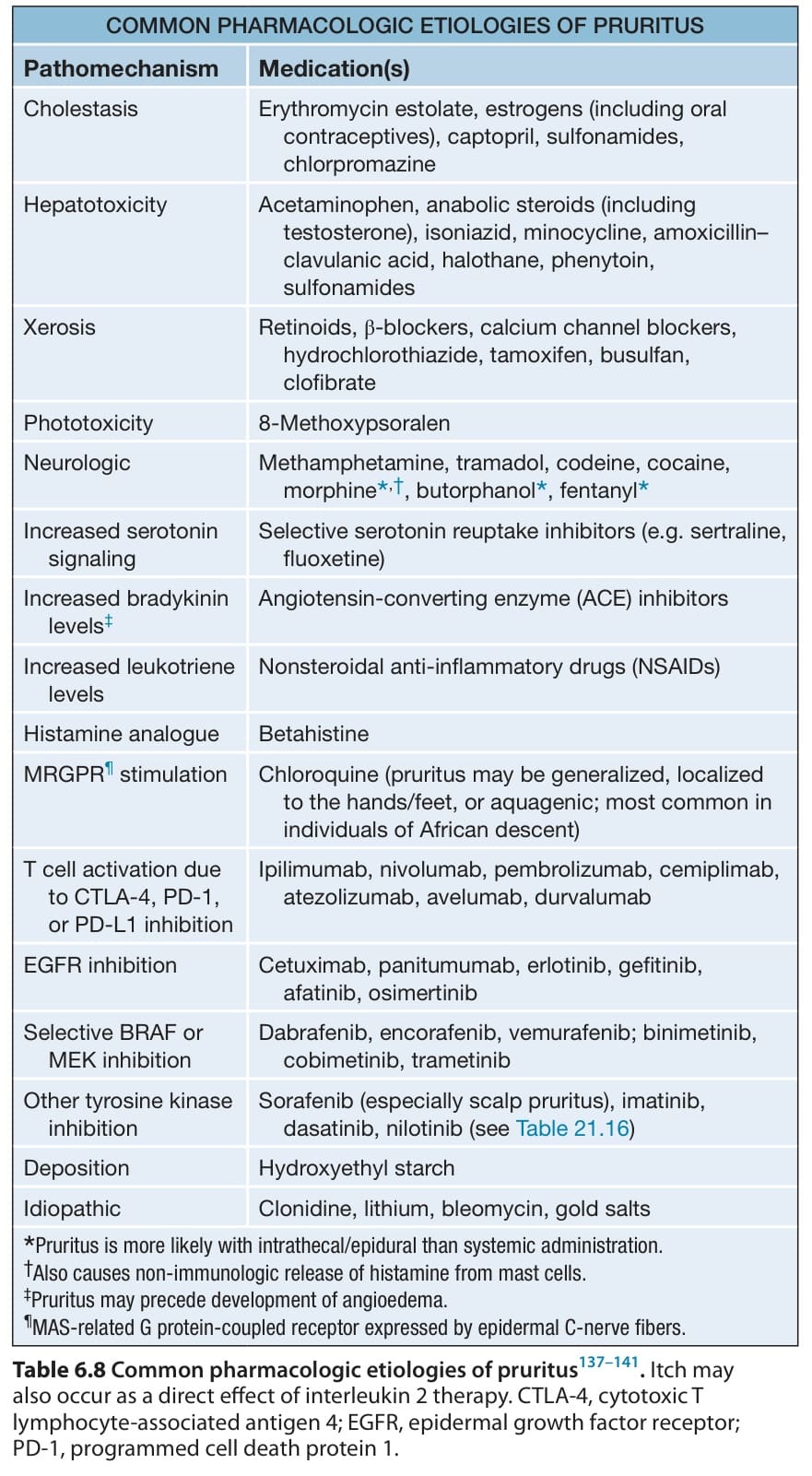
Table 6.8 Common pharmacologic etiologies of pruritus. Itch may also occur as a direct effect of interleukin 2 therapy. CTLA-4, cytotoxic T lymphocyte-associated antigen 4; EGFR, epidermal growth factor receptor; PD-1, programmed cell death protein 1. can lead to pruritus have a relatively long latency period. The primary goal is to identify and discontinue the offending drug, with supportive antipruritic therapy as needed (see Table 6.11).