INTRODUCTION
Given their prognostic implications, cutaneous metastases represent an important dermatologic entity. The skin is not a particularly common site for metastatic spread, and because the clinical appearance of cutaneous metastases can mimic more common disorders, e.g. epidermoid cysts (inflamed and non-inflamed; Fig. 122.1), lipomas, cellulitis, there may be a delay in diagnosis. This is especially true when the primary malignancy is occult. An understanding of the clinical spectrum as well as advances in histological assessment of skin metastases is vital to establishing the correct diagnosis.
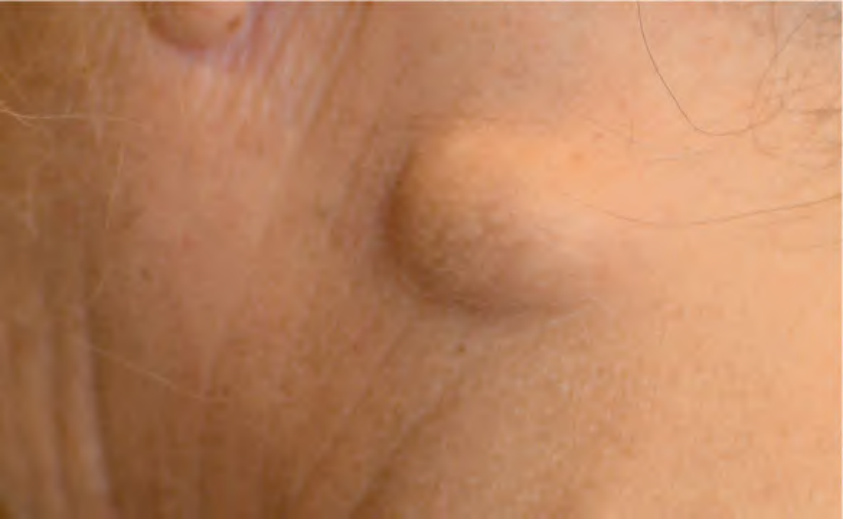
Fig. 122.1 Cutaneous metastasis of small cell lung carcinoma. A skin-colored nodule on the neck that resembles an epidermoid cyst or lipoma. Courtesy Ian Odell, MD, PhD.