INTERFERONS
Interferons (IFNs) are a family of secretory glycoproteins produced by most eukaryotic cells in response to a variety of viral and non-viral stimuli. IFNs display antiviral activity and have immunoregulatory and antiproliferative effects. IFN does not inactivate viruses directly but rather renders cells resistant to viruses.
There are three antigenically distinct IFNs, originally described as leukocyte (α), fibroblast (β), and immune (γ) (Table 128.1). IFN-α and
IFN-β are type I interferons, whereas IFN-γ represents a type II inter-feron. Of note, a targeted immune modulator that inhibits the type I interferon receptor is approved as treatment for systemic lupus erythematosus. IFNs must be injected intralesionally or administered parenterally due to the large size of the protein. IFN-α-2a and IFN-α-2b are the agents most frequently used for cutaneous diseases. The dermatologic uses, side effects, and interactions of IFNs are outlined in Table 128.2.
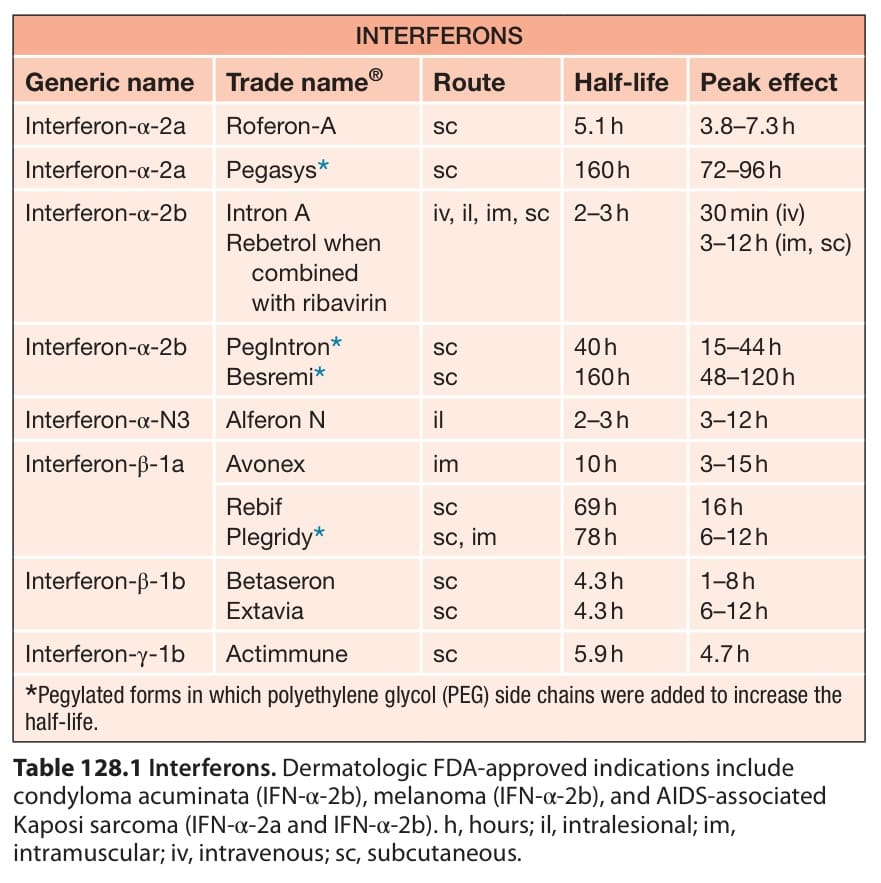
Table 128.1 Interferons. Dermatologic FDA-approved indications include condyloma acuminata (IFN-α-2b), melanoma (IFN-α-2b), and AIDS-associated Kaposi sarcoma (IFN-α-2a and IFN-α-2b). h, hours; il, intralesional; im, intramuscular; iv, intravenous; sc, subcutaneous.
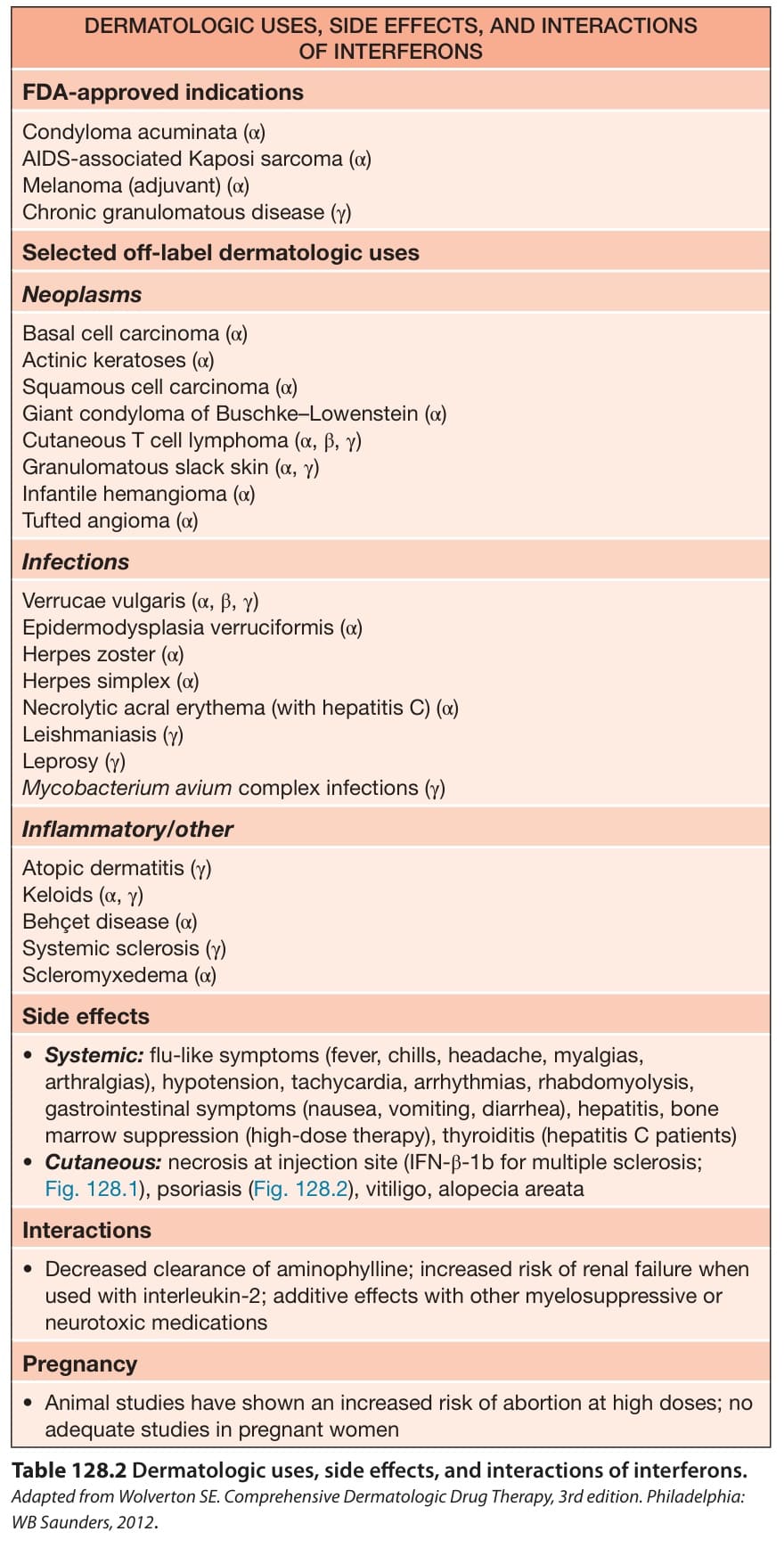
Table 128.2 Dermatologic uses, side effects, and interactions of interferons.