KERATOLYTICS AND HUMECTANTS
Keratolytic agents reduce the thickness of the stratum corneum via elimination of squames. This can be beneficial in diseases characterized by reduced desquamation or accelerated epidermal proliferation.
Keratolytics and humectants are reviewed in Table 129.7, and their use in cosmeceutical products and chemical peels is discussed in Chapters 153 and 154.
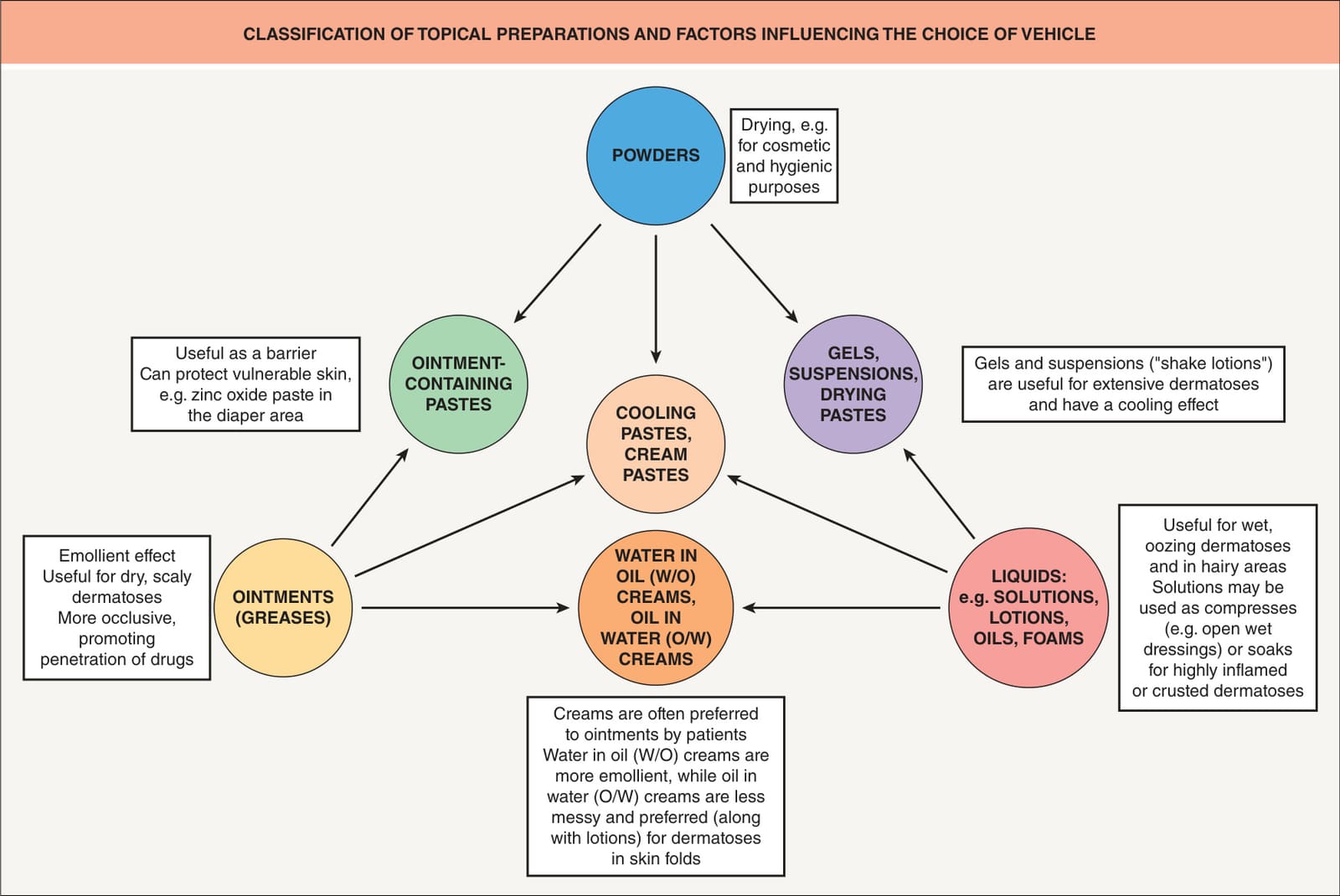
Fig. 129.3 Classification of topical preparations and factors influencing the choice of vehicle. Monophasic preparations are in primary colors. Diphasic preparations, which represent a combination of two monophasic preparations, are in secondary colors. Cooling pastes and cream pastes are triphasic preparations. Ointments, creams, gels, and pastes (highly concentrated suspensions) are semi-solids. Creams and lotions may be emulsions, i. e. contain mixtures of ≥2 liquids that are normally immiscible, brought together by emulsifiers. Foams and aerosol sprays represent liquids with pressurized gaseous propellants, and paints are alcoholbased solutions. Preparations containing alcohol or salicylic acid can lead to stinging and burning when applied to fissured or eroded skin. Vehicles may also contain preservatives, absorption promoters, and fragrances. Adapted from Polano MK. Principles of formulation. Topical Skin Therapeutics. New York: Churchill Livingstone; 1984.
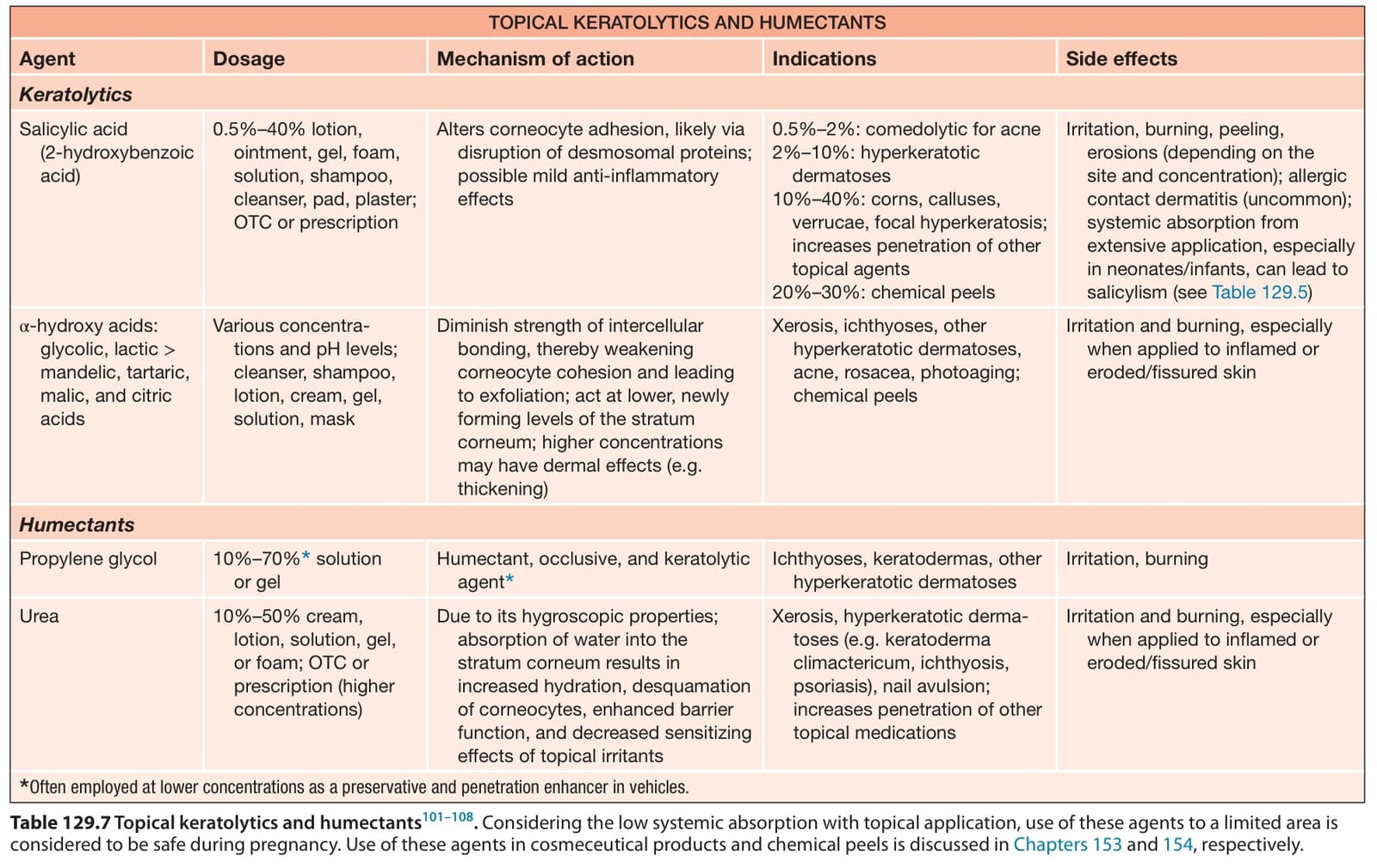
Table 129.7 Topical keratolytics and humectants. Considering the low systemic absorption with topical application, use of these agents to a limited area is considered to be safe during pregnancy. Use of these agents in cosmeceutical products and chemical peels is discussed in Chapters 153 and 154, respectively.