LEUKOTRIENE (LT) INHIBITORS
Initially identified as the slow-reacting substance of anaphylaxis, leukotrienes play a key role in systemic and cutaneous inflammatory reactions. Primarily used for the treatment of asthma, leukotriene inhibitors have been explored in a myriad of dermatologic conditions, including atopic dermatitis, urticaria, autoimmune bullous diseases, and Sjögren–Larsson syndrome. These inhibitors include montelukast
(Singulair®), zafirlukast (Accolate®), and pranlukast (Ultair®), which block LTC, LTD and LTE, as well as zileuton (Zyflo CR®) which inhibits 5-lipoxygenase (Table 130.11).
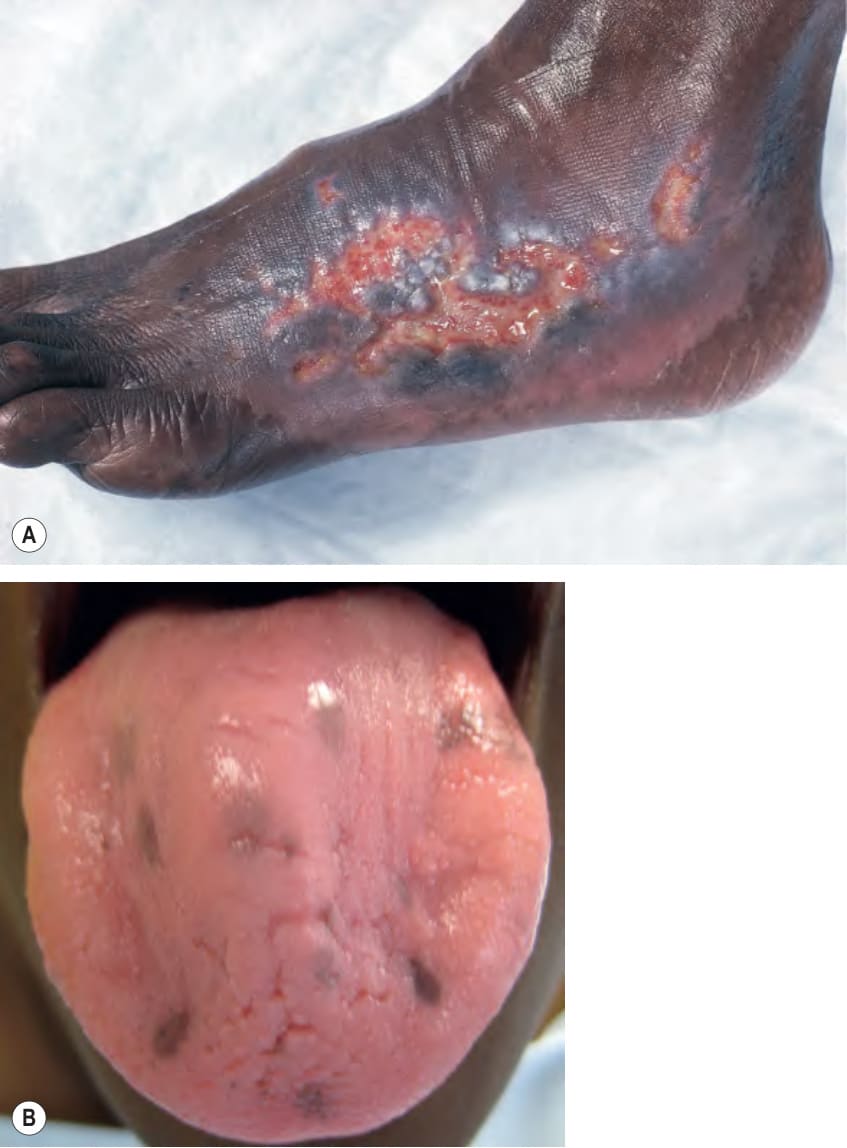
Fig. 130.6 Hydroxyurea-induced mucocutaneous changes.A Lower extremity ulcerations. B Hyperpigmentation of the oral mucosa. B, Courtesy Brian Horvath, MD.
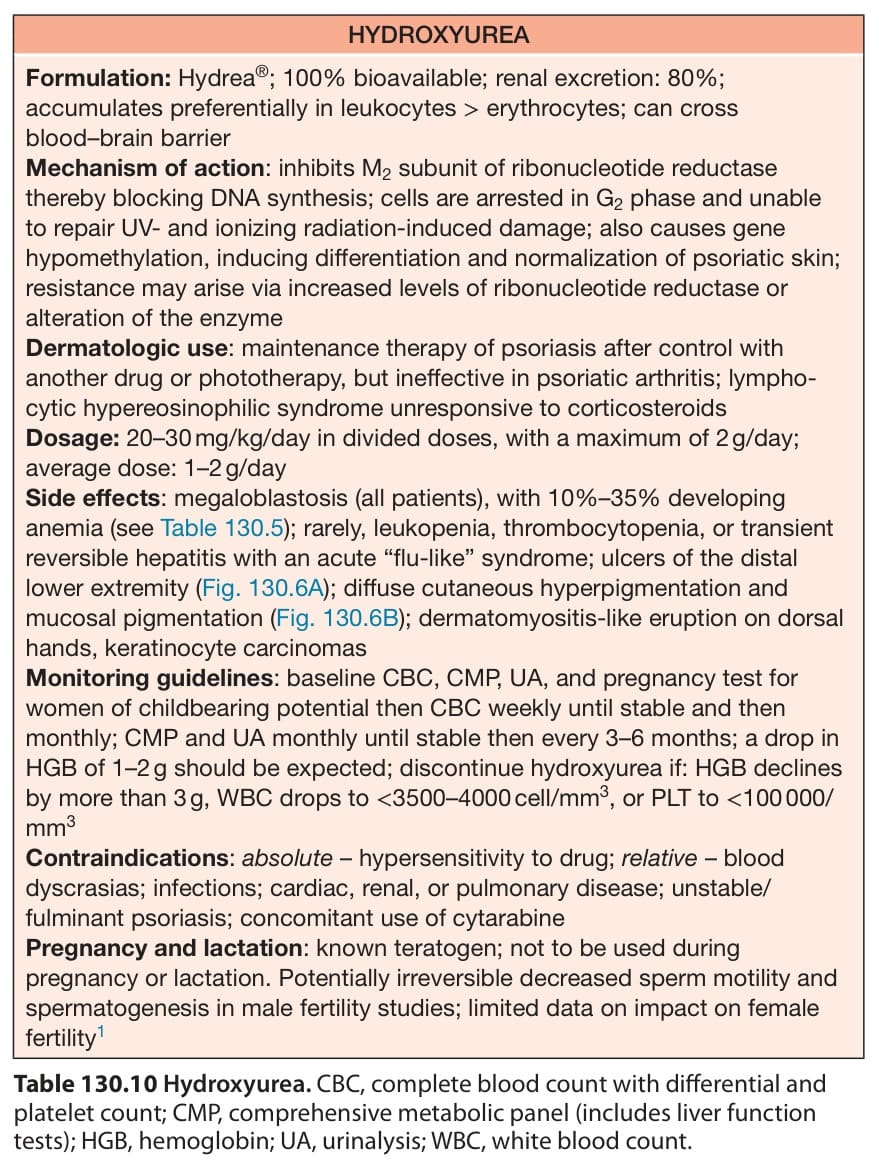
Table 130.10 Hydroxyurea. CBC, complete blood count with differential and platelet count; CMP, comprehensive metabolic panel (includes liver function tests); HGB, hemoglobin; UA, urinalysis; WBC, white blood count.
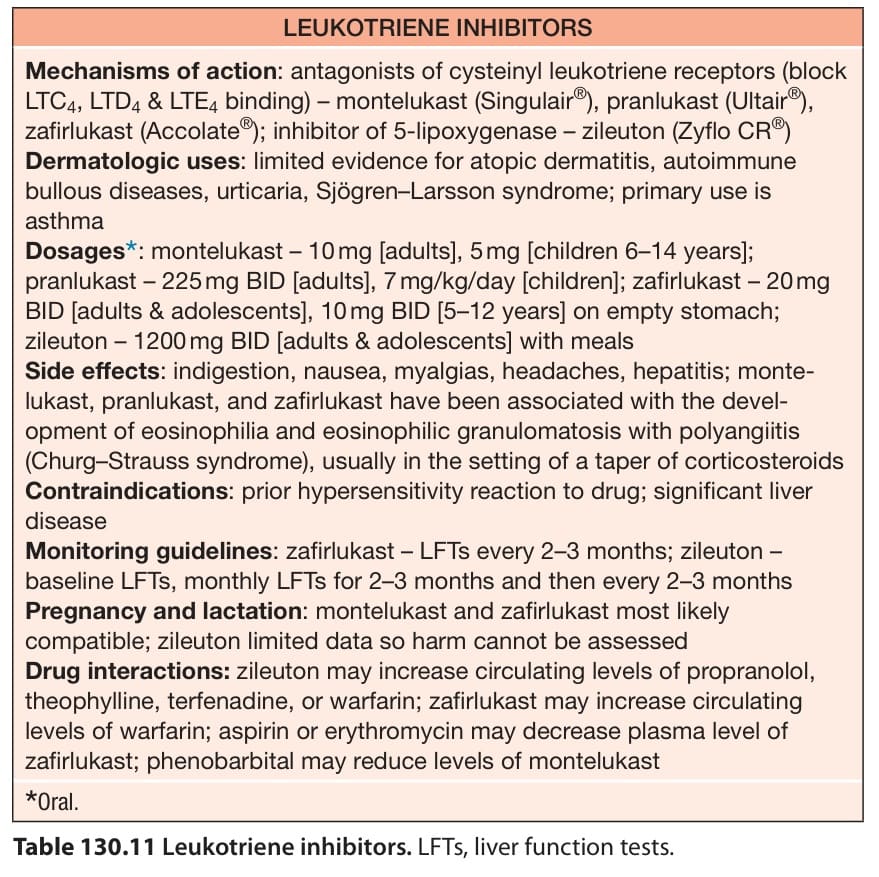
Table 130.11 Leukotriene inhibitors. LFTs, liver function tests.