INTRODUCTION
Over the past half-century, phototherapy has greatly influenced treatment concepts in dermatology. Studies focusing on the effects of electromagnetic radiation (Fig. 134.1) on the skin have induced fruitful collaborations between basic scientists and clinicians.
Although ultraviolet (UV) radiation had been used for decades in the management of common skin diseases such as psoriasis and atopic dermatitis, the introduction of PUVA in the mid-1970s sparked a whole new series of discoveries, including high-intensity UV sources and selective spectra in the UVB and UVA range, e.g. narrowband UVB (311–313 nm) and UVA1 (340–400 nm).
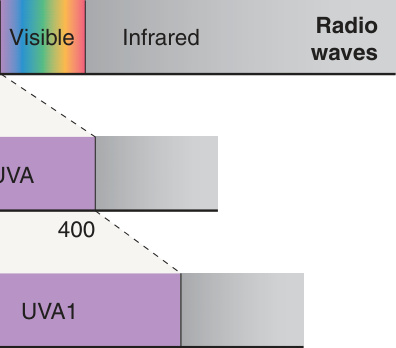
Fig. 134.1 Electromagnetic spectrum with expanded UV region.