FUTURE TRENDS (IMAGING TECHNOLOGY FOR MONITORING CRYOSURGICAL OUTCOME)
Cryosurgery is now, and will be in the future, a readily available, simple, and cost-effective surgical procedure. As the number of cutaneous
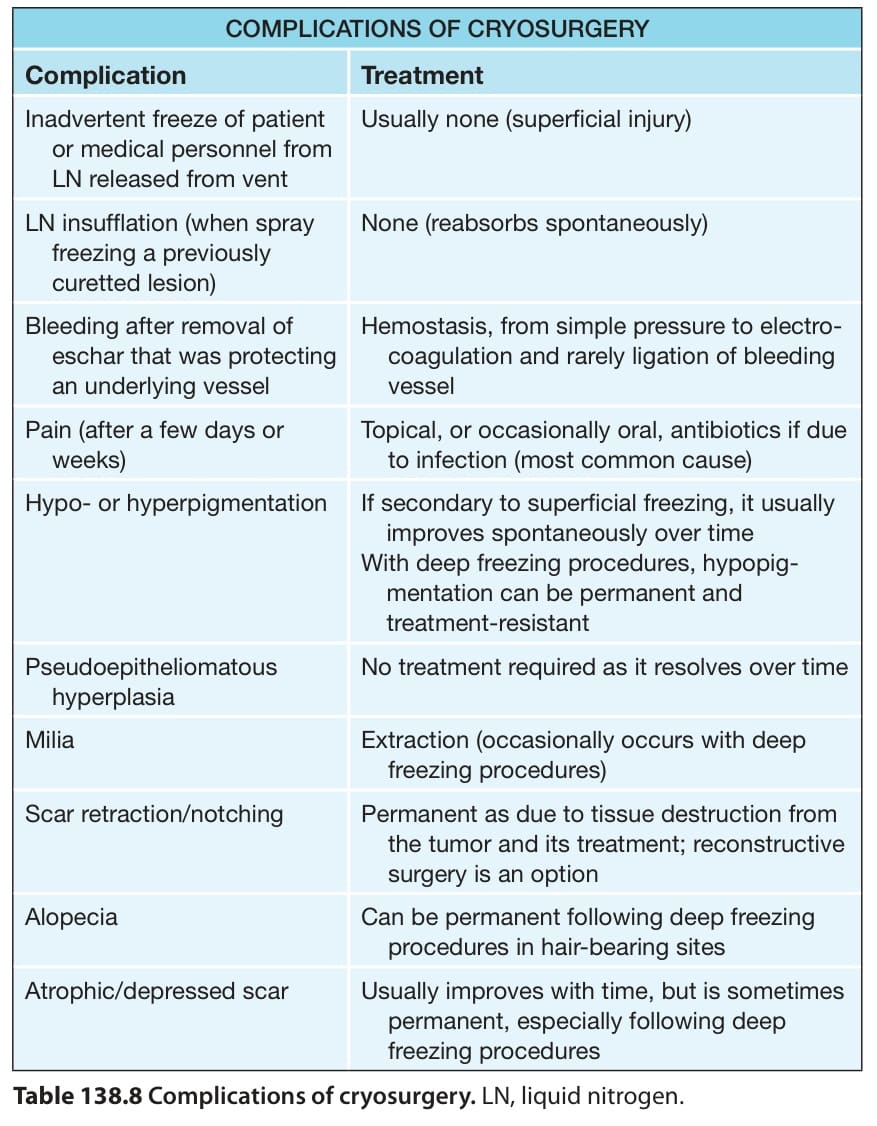
Table 138.8 Complications of cryosurgery. LN, liquid nitrogen.
malignancies increases worldwide with many amenable to minimally invasive techniques, principles and proper techniques become an essential component of the scope of practice of dermatology and should be familiar to all dermatologists. Cryosurgery will clearly benefit from the newer non-invasive imaging techniques (e.g. dermoscopy, HFUS, confocal microscopy, optical coherence tomography) that assist in diagnosis and provide information on the depth, volume, and histology of cutaneous tumors. In addition, these techniques can improve margin control while the effects of freezing can be visualized in situ. Non-invasive devices that measure skin temperature should also provide valuable information that can be used to standardize cryosurgical procedures.