FUNCTIONS OF A WOUND DRESSING
The essential function of every dressing is to optimize the healing environment, but because the process of wound repair is dynamic (see Ch. 141), each stage may require a different dressing. While an ideal wound dressing would have many positive features (see Table 145.1), they should at the minimum protect the wound from trauma, bacterial invasion, or exposure to caustic substances; this is especially important during the acute inflammatory stage when promotion of granulation tissue formation and epithelialization is crucial. In addition, the dressing should be composed of a material that does not shed fibers or other material into the wound that could lead to foreign body reactions or irritant or allergic contact dermatitis. The “ideal” dressing that meets all of these requirements for every wound type does not yet exist (Table 145.2). However, given the array of dressings available, it is possible to achieve one’s goal.
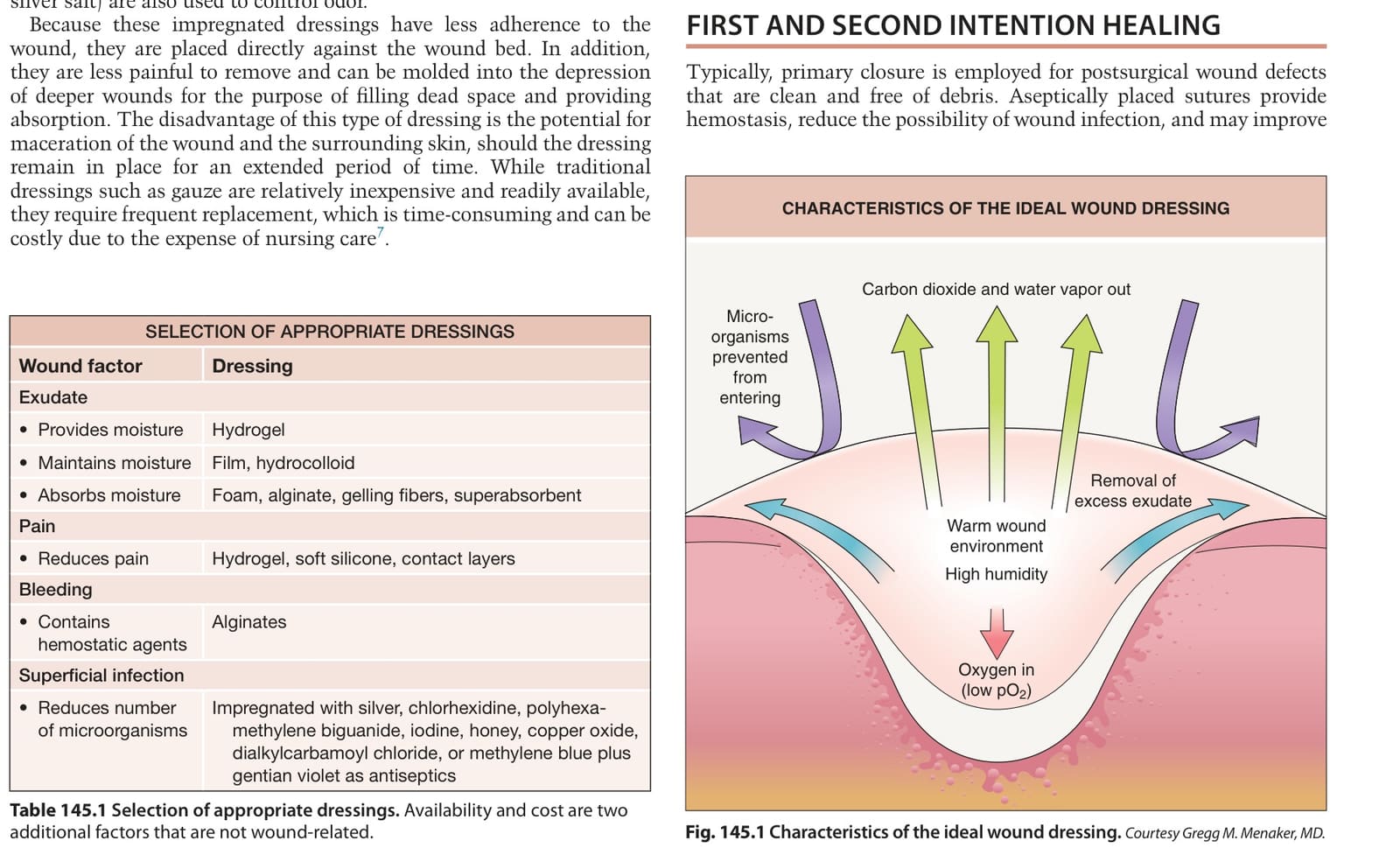
Table 145.1 Selection of appropriate dressings. Availability and cost are two additional factors that are not wound-related.

Table 145.2 Characteristics of an ideal dressing – comparison of moisture-retentive dressingse1.