EPIDEMIOLOGY
ACD can affect individuals in all walks of life. It can affect the old, the young, and individuals of all races and both sexes. Differences between
sexes may be seen but are generally based upon exposure patterns, such as nickel allergy occurring more frequently in women, presumably because of their greater exposure to jewelry. Occupations and avocations also play an important role in the epidemiology of ACD (see Ch. 16). Allergens, and therefore patch test results, differ from region to region, e.g. preservatives used in personal care products can vary based on government legislation. While quaternium-15 is a cosmetic preservative that commonly causes ACD in the US, some have argued that it is not even needed in the European Baseline Series. In addition, even in a particular locale, some allergens can increase in clinical importance over time while others decrease due to usage patterns, and new allergens are continually being introduced.
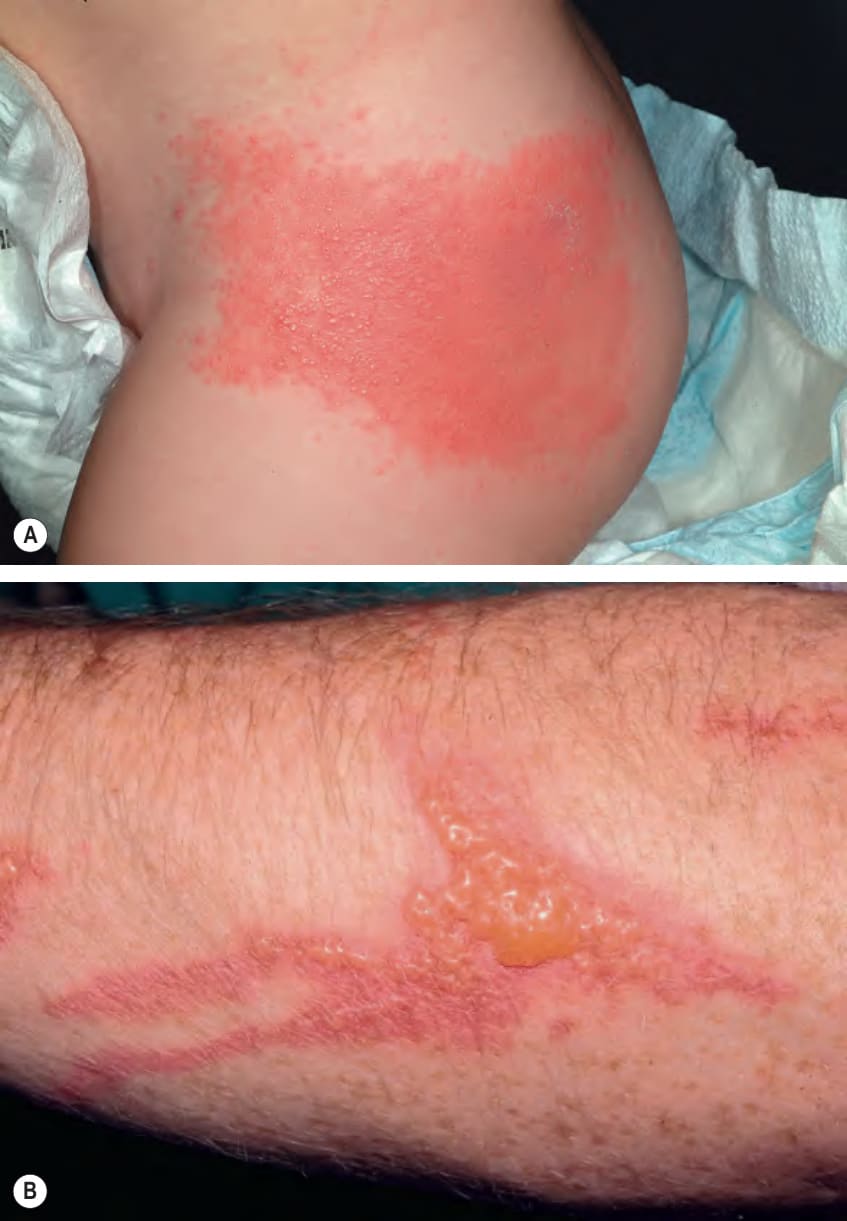
Fig. 14.1 Allergic contact dermatitis (ACD).A This erythematous plaque with vesiculation developed in a 14-month-old boy following the application of neomycin ointment. B Erythematous streaks with linear vesicles caused by ACD to poison ivy. A, Courtesy Anthony J. Mancini, MD; B, Courtesy Joyce Rico, MD.
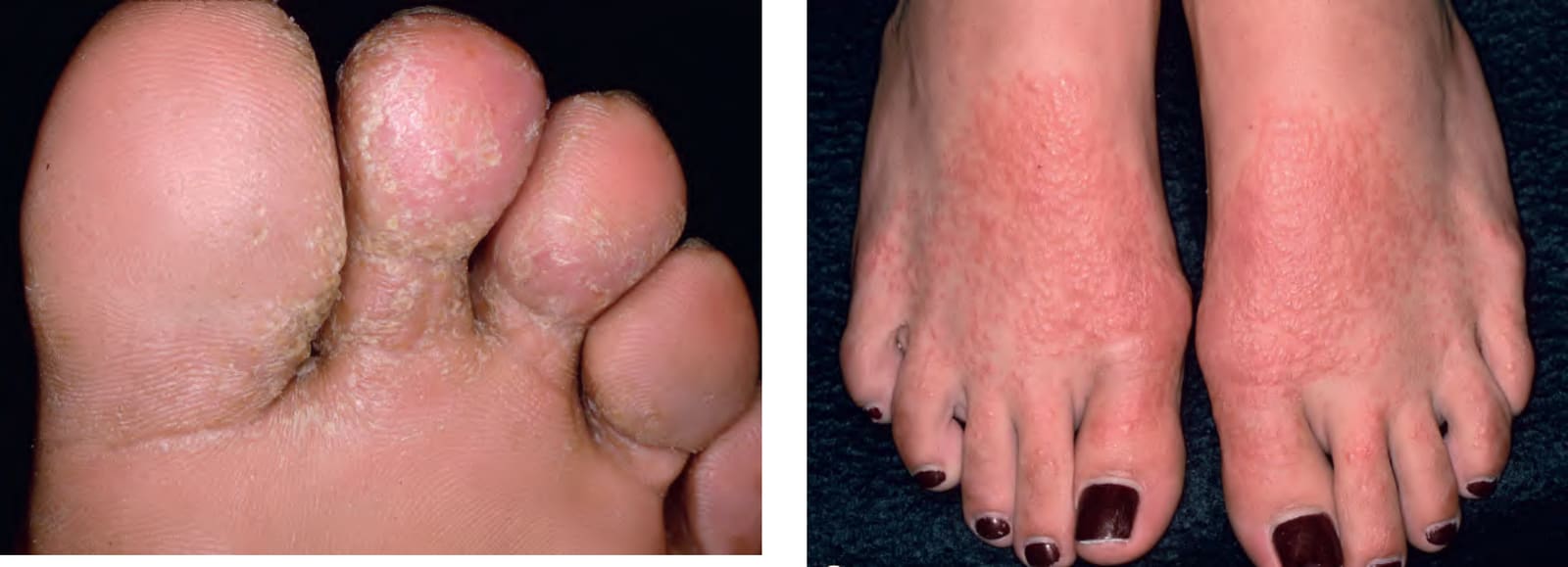
Fig. 14.2 Chronic allergic contact dermatitis (ACD). Chronic foot dermatitis due to ACD to rubber (mercaptobenzothiazole). Courtesy Louis A. Fragola, Jr, MD.
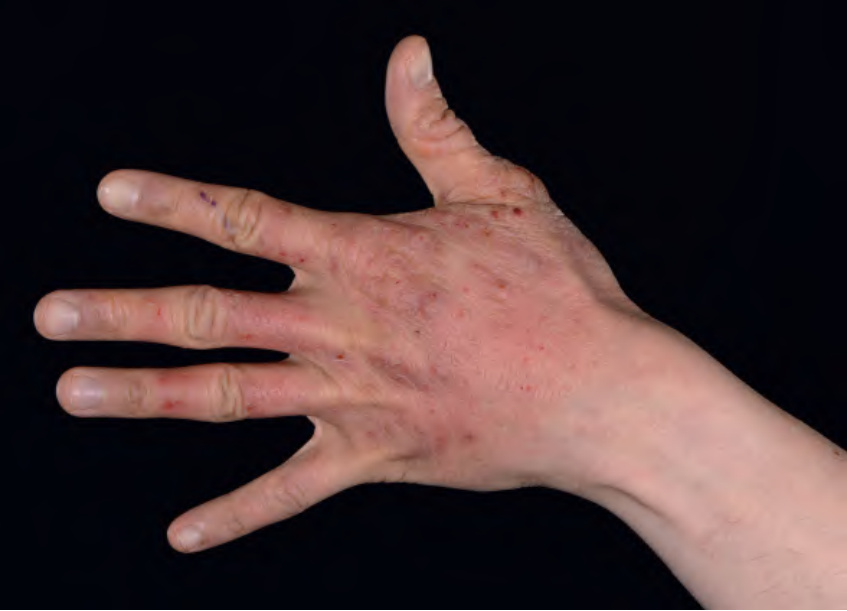
Fig. 14.3 Persistent hand dermatitis due to chronic allergic contact derma- titis. The allergen was epoxy resin.