INTRODUCTION
Erythema represents a change in the color of the skin that is due to the dilation of blood vessels, especially those in the papillary and reticular dermis. The color, which is blanchable, can vary from pink to dark red to violaceous. Most erythemas last for days to months, but some may last only minutes (e.g. flushing). A very heterogeneous group of cutaneous disorders manifests as erythemas, ranging from palmar erythema of pregnancy to a diffuse scarlatiniform eruption. The erythemas discussed in this chapter all share a common feature – a figurate configuration.
In figurate erythemas, the lesions have an annular, arciform, or polycyclic appearance. While a wide range of cutaneous diseases can have an annular configuration (Table 19.1), there are four “classic” figurate erythemas: erythema annulare centrifugum, erythema marginatum, erythema migrans, and erythema gyratum repens.
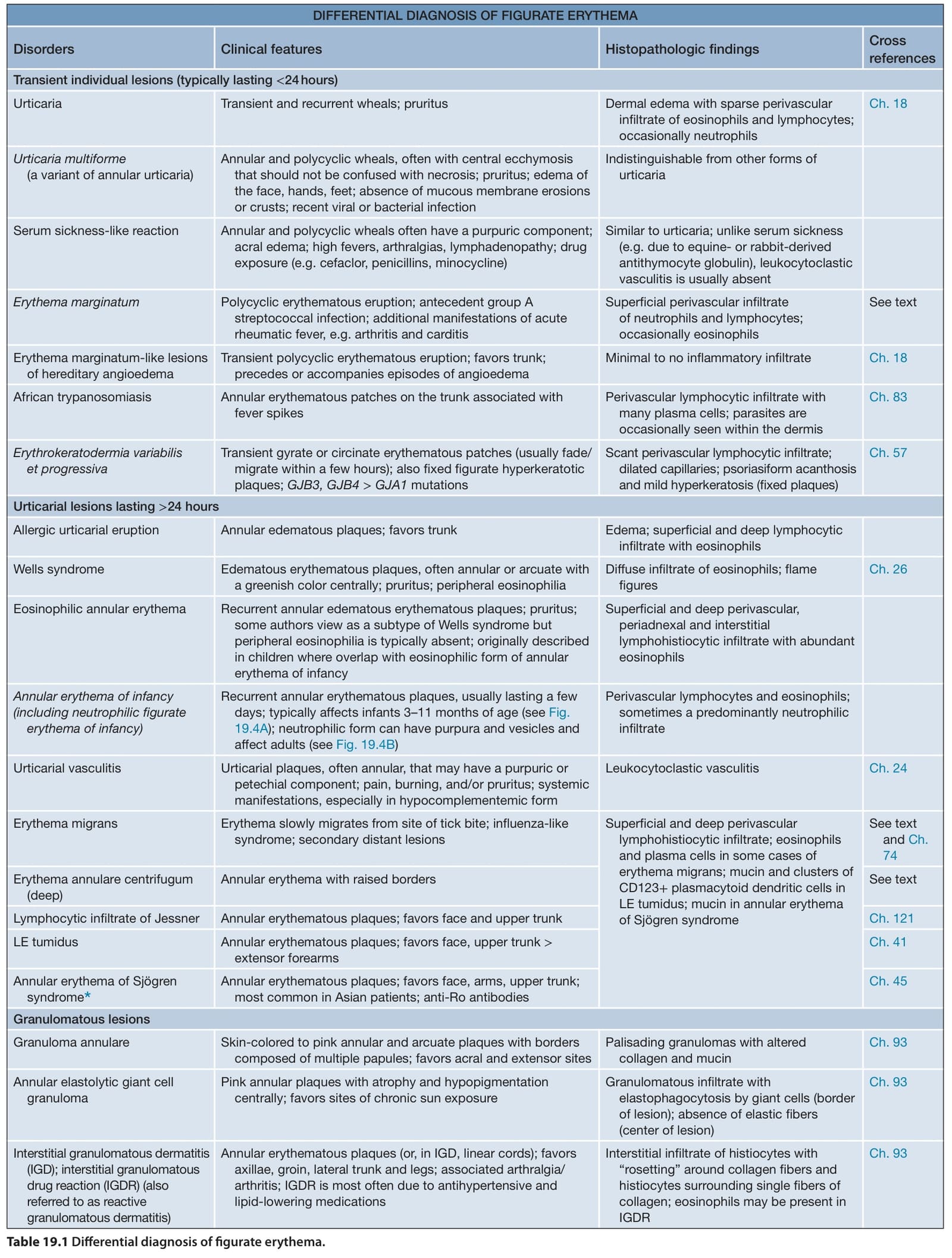
Table 19.1 Differential diagnosis of figurate erythema.