EPIGENETICS AND IMPRINTING
Epigenetics refers to heritable changes affecting gene expression that do not result from alterations in the DNA sequence. Epigenetic changes can involve DNA methylation or modification of histones (e.g. acetylation and deacetylation) and chromatin. RNA-dependent gene silencing can also occur under the influence of small and large RNA species, including small interfering RNAs (siRNAs), microRNAs (miRNAs), and large intervening non-coding RNAs (lincRNAs).
Imprinting is an epigenetic phenomenon in which the sex of the transmitting parent determines whether particular genes are expressed in the offspring (Fig. 54.3A). For example, mating of a male lion with a female tiger results in the giant “liger” (due to inheritance of a growth gene from the lion father that is “turned on”), whereas a male tiger and female lion produce a considerably smaller “tigon” (due to inheritance of a growth gene from the lion mother that is “turned off”).
The effect of imprinting is especially apparent in the case of uniparental disomy (UPD), where both homologous chromosomes are derived from the same parent, instead of one from each parent. UPD can go undetected for some chromosomes, while it results in a disease phenotype for others. A classic example of the latter is UPD for chromosome 15 in Prader–Willi and Angelman syndromes (Fig. 54.3B). UPD that results in inheritance of a duplicated maternal or paternal recessive mutant allele can also produce various autosomal recessive disorders (see Table 54.5).
In addition to their roles in monogenic diseases, epigenetic changes are involved in cancer. Cancer is typically characterized by global hypomethylation and site-specific hypermethylation. The hypomethylation activates growth-promoting genes such as HRAS, cyclin D1 (CCND1), and those in the melanoma antigen family (MAGE). In contrast, hypermethylation silences tumor suppressor genes such as retinoblastoma 1 (RB1), von Hippel–Lindau (VHL), and adenomatosis polyposis coli (APC). Epigenetic alterations can also contribute to inflammatory disorders such as systemic lupus erythematosus.
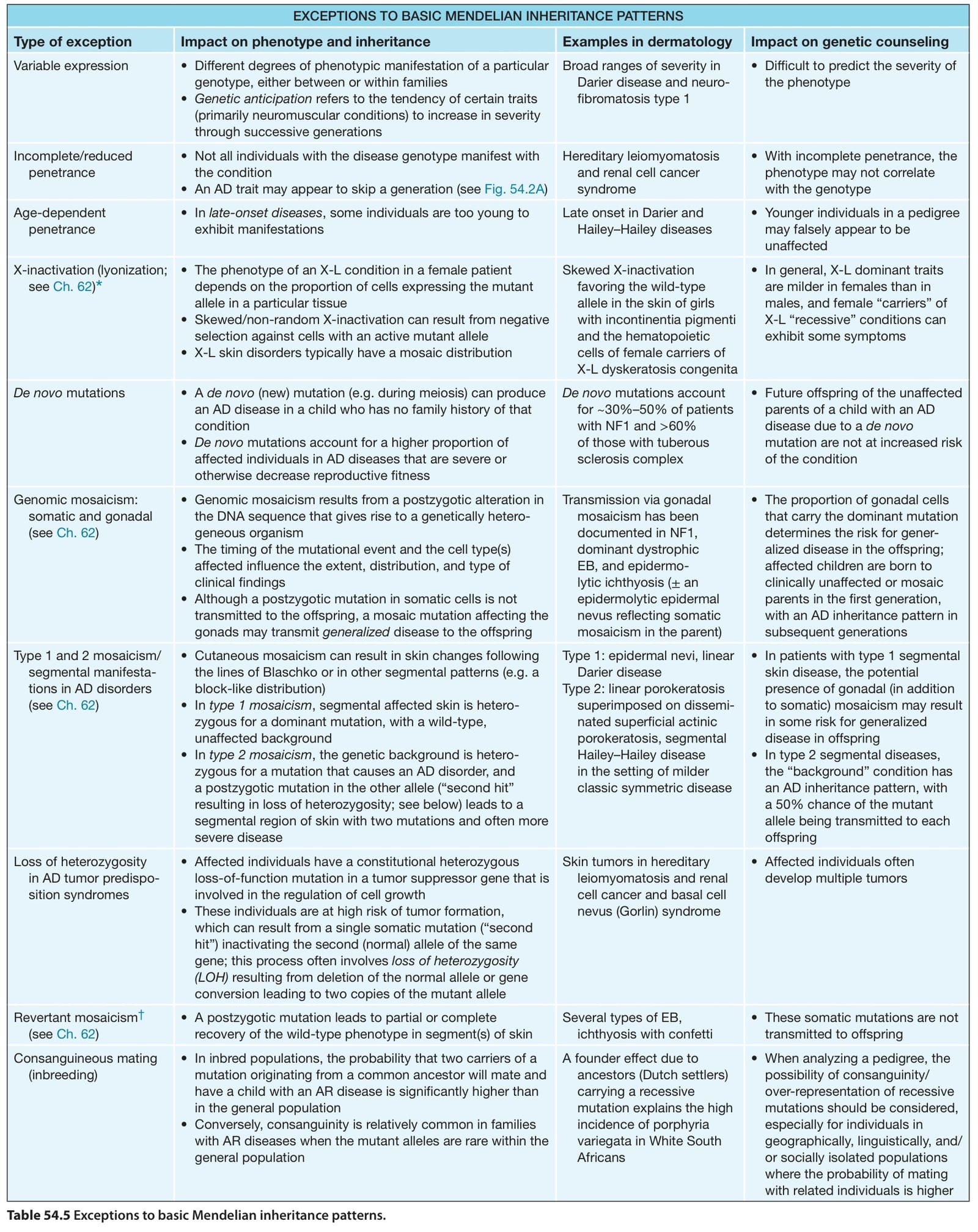
Table 54.5 Exceptions to basic Mendelian inheritance patterns.