Introduction
Gillian K. Weston and Mary Wu Chang Disorders of Hyperpigmentation 67
Chapter Contents
Additional Forms of Circumscribed Hyperpigmentation … 1131
Skin color depends upon the amount and distribution of melanin and other pigments such as hemoglobin, which can influence light absorption, reflection, and scattering. Disorders of hyperpigmentation usually result from an increase in melanin production and, on occasion, from an increase in the density of active melanocytes. Discoloration of the skin may also be caused by deposition of exogenous substances such as drugs, drug complexes (e.g. with melanin or iron), or heavy metals within the dermis.
To aid in the clinical approach, disorders of hyperpigmentation can be divided into diffuse, circumscribed, linear, and reticulated subsets (Fig. 67.1). A discussion of each of these categories is followed by an overview of dyschromatoses, disorders characterized by both hypo- and hyperpigmentation. Keratinocytic disorders that present with hyperpigmentation are listed in Table 67.1, and benign melanocytic neoplasms are covered in Chapter 112.
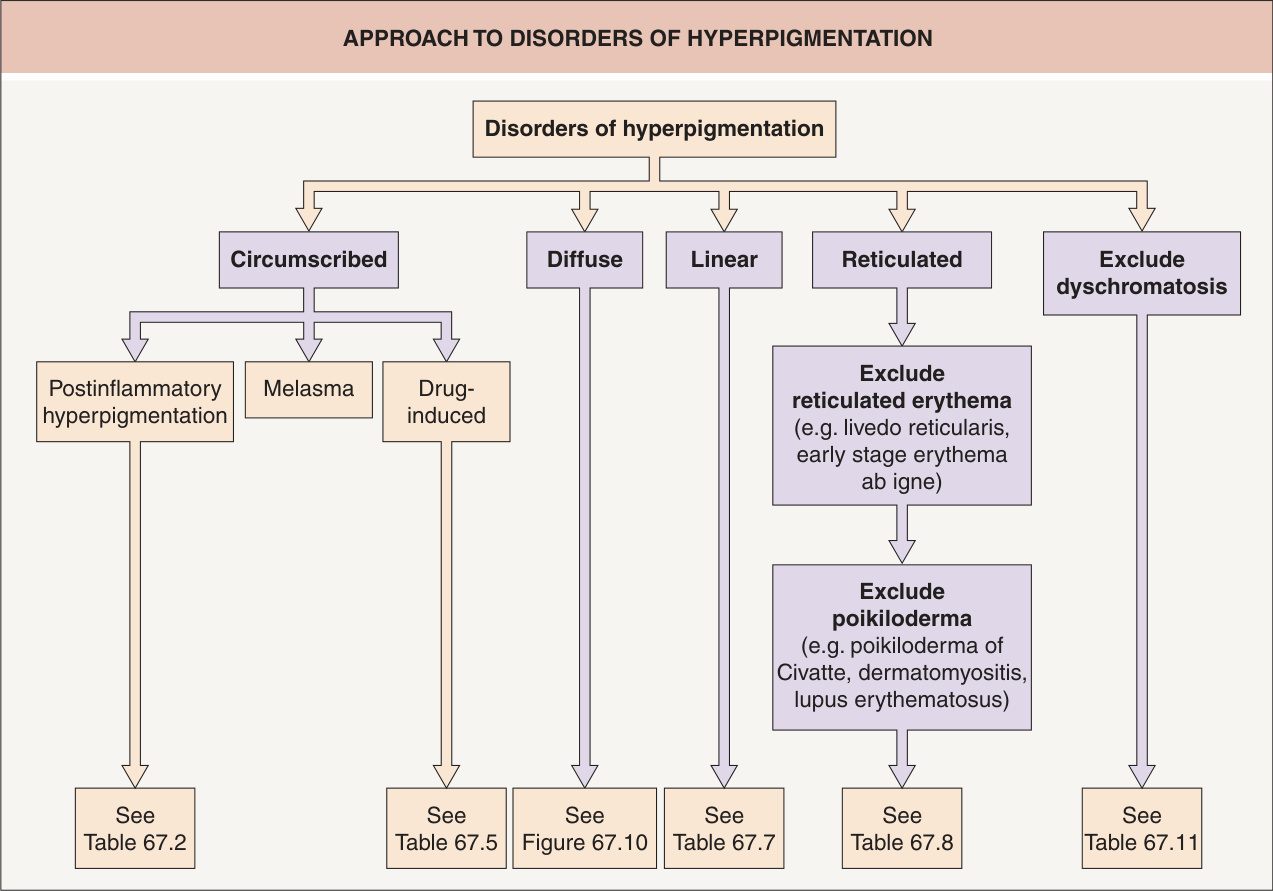
Fig. 67.1 Approach to disorders of
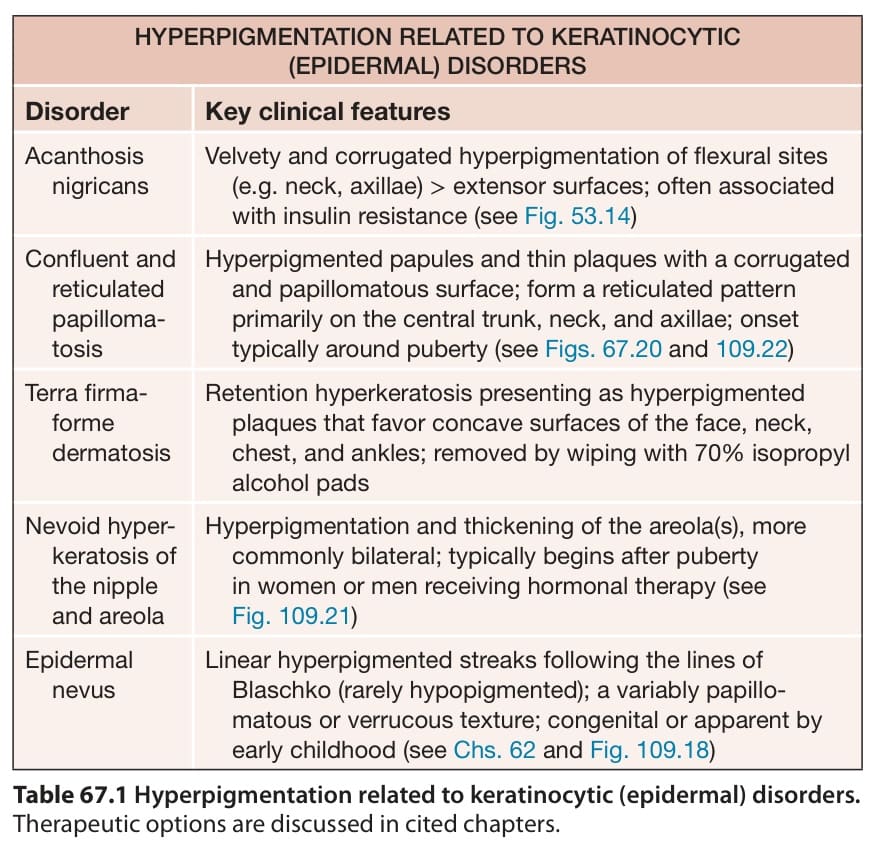
Table 67.1 Hyperpigmentation related to keratinocytic (epidermal) disorders.