Introduction
Fungal Diseases 77
Boni E. Elewski, Lauren C. Hughey, Katherine Marchiony Hunt and Roderick J. Hay
Key features
Cutaneous fungal infections are broadly divided into two groups:
(1) those that are limited to the stratum corneum, hair, and nails; and (2) those that involve the dermis and subcutaneous tissues
Superficial fungal infections of the skin are most often due to dermatophytes and Candida spp.
“Subcutaneous” mycoses are often the result of implantation, while systemic or “deep” mycoses of the skin usually represent hematogenous spread or extension from underlying structures
In the immunocompromised host, opportunistic fungi, e.g.
Aspergillus and Mucor spp., can lead to both cutaneous and systemic infections
This chapter reviews common cutaneous fungal infections, and they are subdivided into three major groups: (1) “superficial”; (2) “subcutaneous”; and (3) “deep” or systemic (Table 77.1).
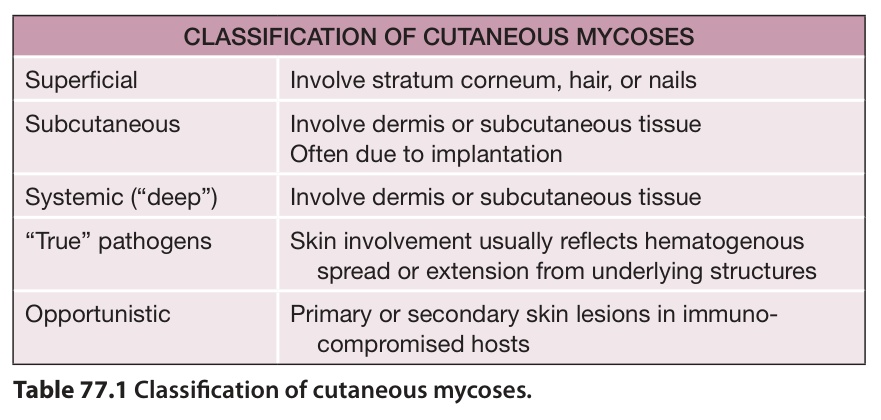
Table 77.1 Classification of cutaneous mycoses.