Introduction
Joseph Jebain, Alfredo Siller Jr. and Stephen K. Tyring Human Herpesviruses
Chapter Contents
The human herpesviruses (HHVs) are categorized into three groups: alpha, beta, and gamma herpesvirinae (Table 80.1). Each virus contains a core of linear double-stranded DNA, an icosahedral capsid 100–110 nm in diameter, and an envelope with glycoprotein spikes on its surface. The pathogenesis of herpesvirus infections follows the sequence of primary infection, latency, and reactivation. The eight human herpesviruses are discussed in this chapter and include the following: herpes simplex virus types 1 and 2 (HSV-1, HSV-2), varicella–zoster virus (VZV), Epstein–Barr virus (EBV), cytomegalovirus (CMV), and human herpesvirus types 6–8 (HHV-6–8).
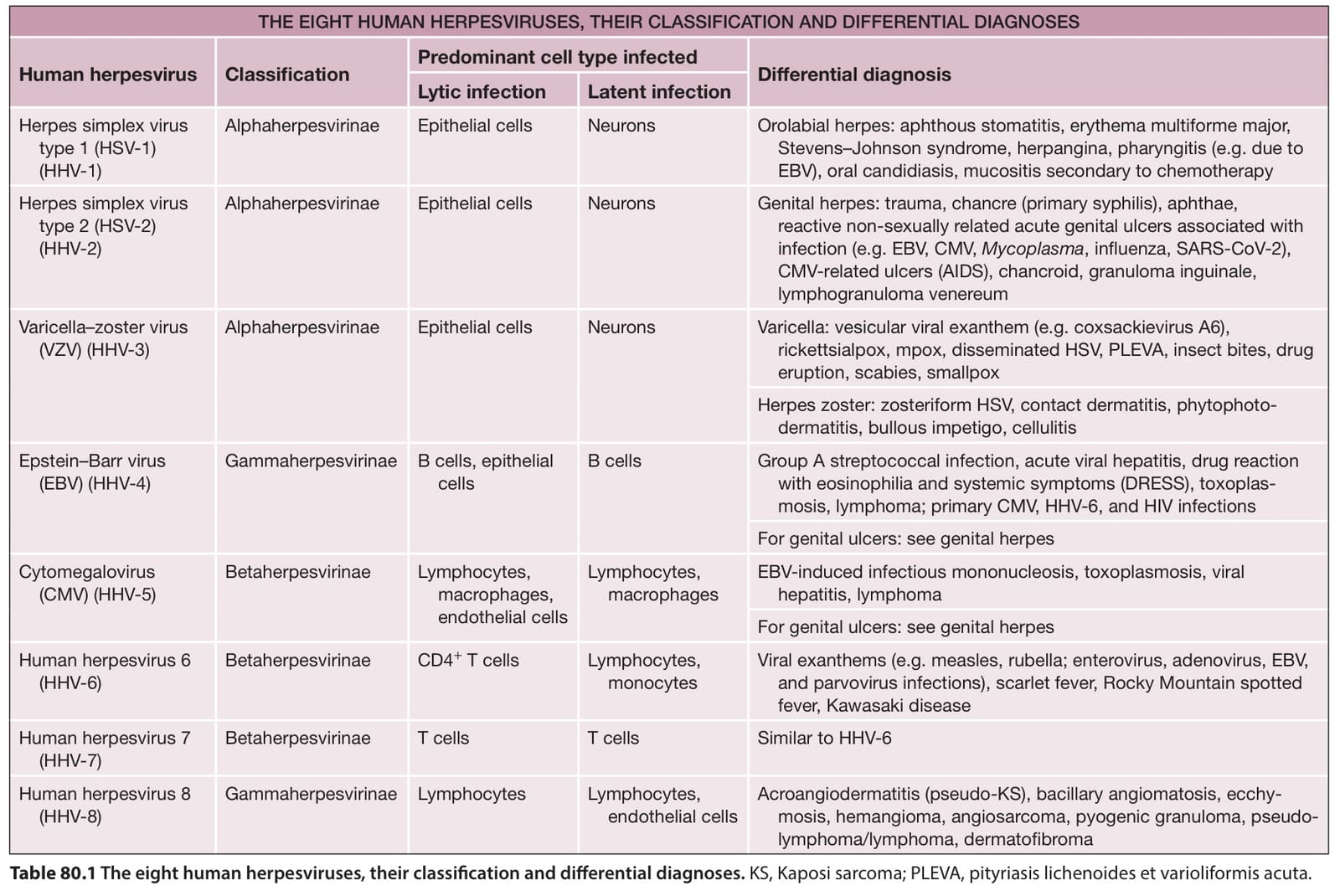
Table 80.1 The eight human herpesviruses, their classification and differential diagnoses. KS, Kaposi sarcoma; PLEVA, pityriasis lichenoides et varioliformis acuta.