TOXOPLASMOSIS
Key features
A common, worldwide disease caused by the protozoan
Toxoplasma gondii
Cutaneous involvement is unusual but occasionally occurs in immunocompromised individuals, pregnant women, and neonates
In congenital infections, the skin lesions are usually necrotic or hemorrhagic papules
Toxoplasma gondii is an intestinal coccidian parasite of domestic cats and other mammals (Fig. 83.20). Toxoplasma infections in humans can be acquired or congenital. In immunocompetent hosts, most infections are asymptomatic or produce only flu-like symptoms, with occasional development of lymphadenopathy or chorioretinitis. In immunosuppressed patients, more severe disease can occur. Cutaneous manifestations are rare and may be seen in both congenital
and acquired forms of the disease. The epidemiology, clinical features, diagnosis, and treatment of toxoplasmosis are presented in Table 83.9.
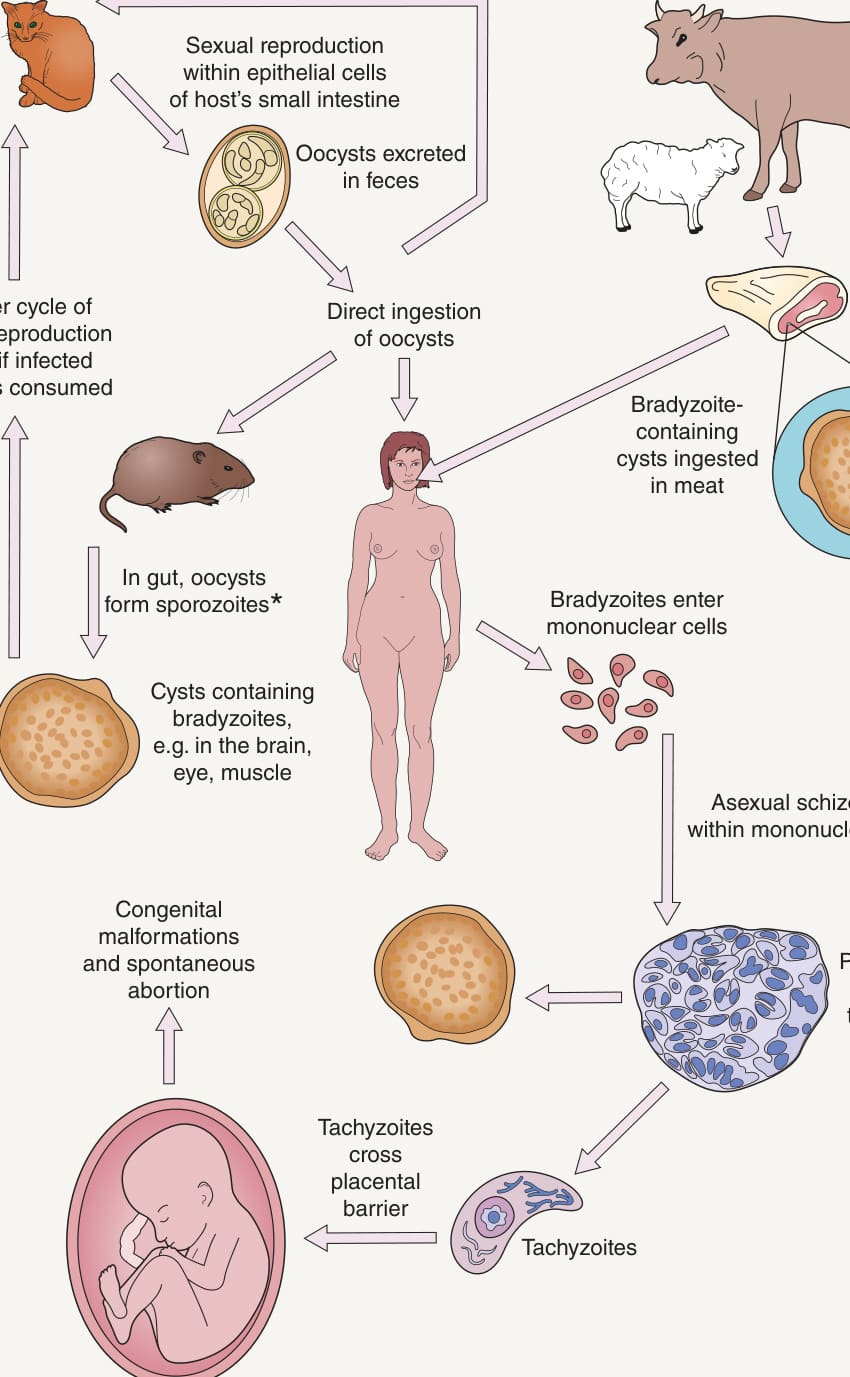
Fig. 83.20 Life cycle of Toxoplasma gondii. There is a wide range of mammalian hosts, the most important being the domestic cat. Adapted from Peters W, Pasvol G. Tropical Medicine and Parasitology, 6th edition. London: Mosby, 2007.
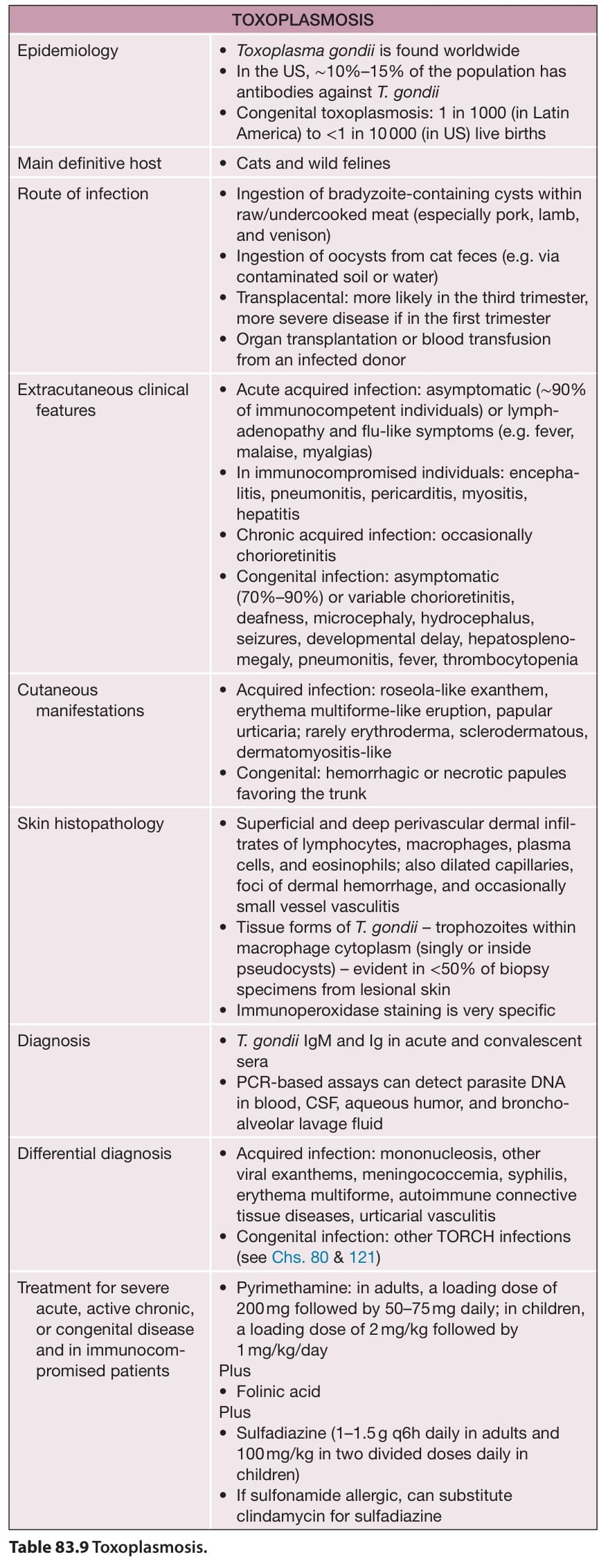
Table 83.9 Toxoplasmosis.