CONCLUSIONS
In this chapter, we have presented a variety of techniques used in dermatology research and clinical practice. Some of these are new, whereas others are long-established and still widely used. New technologies continue to appear and change the way research is done. These technologic advances allow experiments to be done faster and with less and less starting material. They allow the measurement of thousands of different genes or proteins in single experiments. To handle all the information
currently being generated by life sciences, advances in computer science and bioinformatics are progressing along with the technologic advances, accelerating the pace of scientific research.
Advances in our scientific understanding also translate into new developments in disease diagnosis and management. For dermatology, this provides hope that diseases can be diagnosed more rapidly and reliably, and that individualized prognoses can be provided. Therapies have been and will continue to be developed that specifically target the genetic abnormality causing the disease. In the future, therapies may be tailored to the individual, taking into consideration the individual’s genetic make-up and the individual’s disease course. These future possibilities are exciting.
For discussions of types of polymorphisms and genome-wide association studies, seeChapter 54.
Copyright notice
Chapter 3 is US Government work in the public domain and not subject to copyright.
Additional figures available in our eBook (see inside front cover for access code).
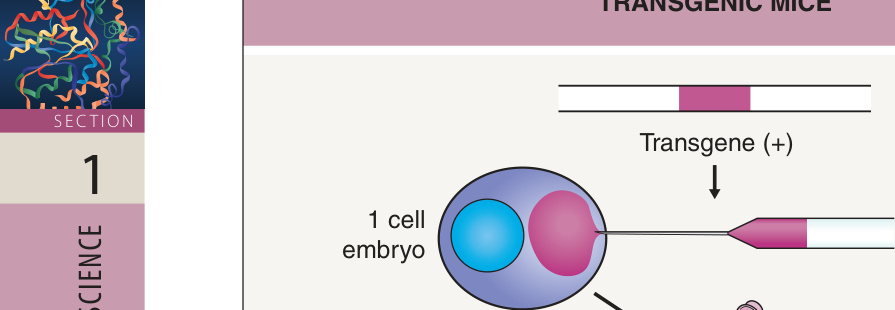
Fig. 3.10 Transgenic mice. A transgene construct, defined as the transgene and regulatory region (promoter/enhancer), is prepared for injection. The transgene is microinjected into fertilized eggs (single-cell stage) and the transgene integrates into the genome, usually at a single site. These injected eggs are then implanted into a recipient mother, who then gives birth to a heterozygous “founder” mouse. The founder mice are bred with normal non-transgenic mice of the same strain, and then two heterozygous transgenic mice are mated.
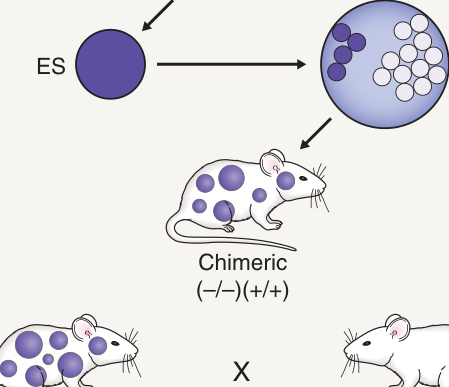
Fig. 3.11 Knockout transgenic mice. A targeting vector that contains some sequences of the gene to be targeted is created and introduced into cells. This targeting vector hybridizes to one of the endogenous alleles of a gene and modifies or deletes the endogenous gene so that no normal protein is produced. The embryonic stem (ES) cells containing the “knocked out” gene are introduced into early mouse embryos, which are then implanted into recipient mothers. The progeny will be chimeric mice, which are then mated to normal mice. To obtain completely knocked out mice, two heterozygous mice are mated.
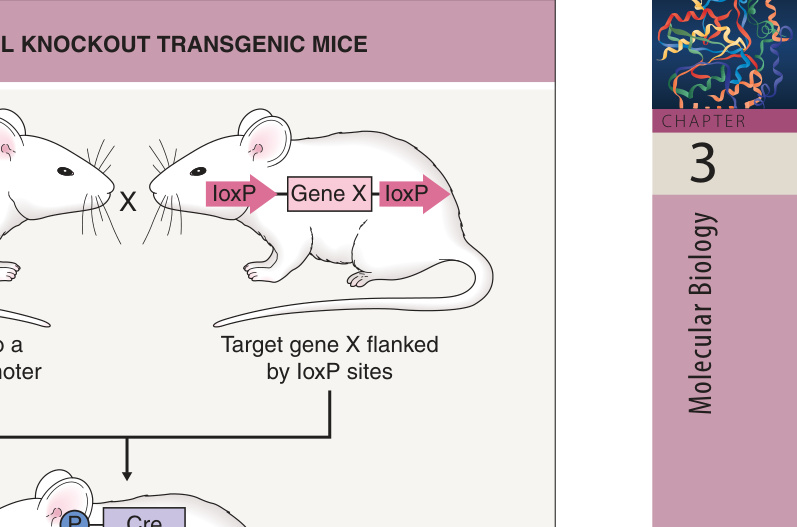
Fig. 3.12 Conditional knockout transgenic mice. In the conditional knockout model using the Cre-lox system, a target gene can be selectively deleted in a particular organ or tissue. Cre is a site-specific DNA recombinase that catalyzes recombination between two loxP sites, resulting in cleavage, exchange, and ligation; this leads to excision (and subsequent degradation) of the DNA between the loxP sites. A transgenic mouse with the Cre gene linked to a tissuespecific promoter is mated to a transgenic mouse with two loxP sites flanking the target gene. Progeny inherit both of these constructs, and the target gene is knocked out only in cells that activate the tissue-specific promoter. By adding a ligand-binding domain to the Cre recombinase, such as one that binds tamoxifen, investigators can achieve temporal control of Cre expression in these cells. The target gene can be temporally deleted, inverted, or translocated, depending on the orientation of the loxP sites.
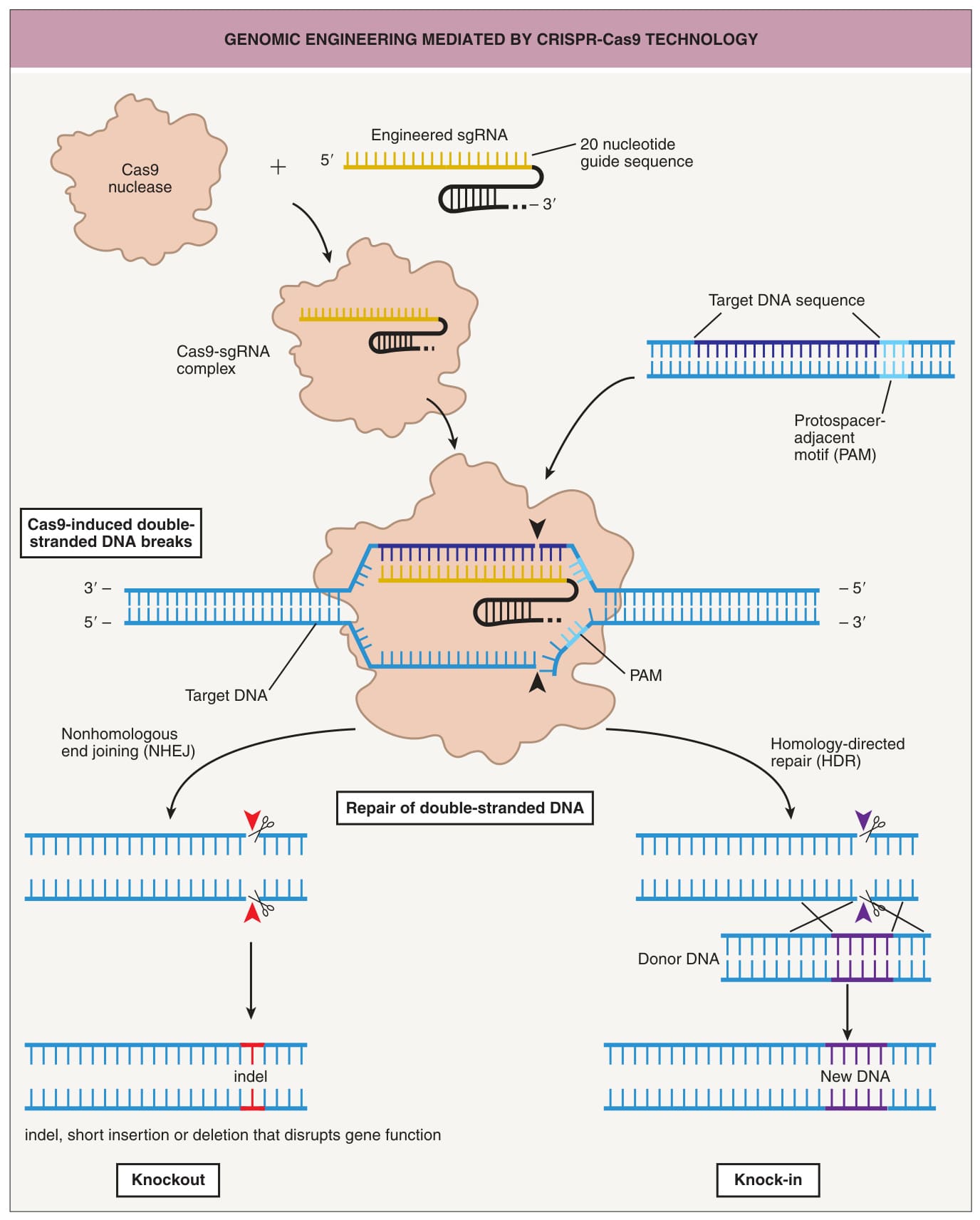
Fig. 3.13 Genomic engineering mediated by CRISPR-Cas9 technology. A single-guide RNA (sgRNA) is engineered to target genomic DNA adjacent to a protospacer adjacent motif (PAM) utilizing a 20-nucleotide guide sequence. The hairpin structure recruits Cas9 to form a complex that binds to the target sequence. Cas9 catalyzes the cleavage of both strands of DNA three nucleotides upstream of the PAM. A double-strand break may be repaired by non-homologous end-joining (NHEJ) that leads to the formation of short insertions or deletions that disrupts gene function. In the presence of a DNA-repair template, homology-directed repair (HDR) may occur to introduce exogenous DNA at the site of the break.
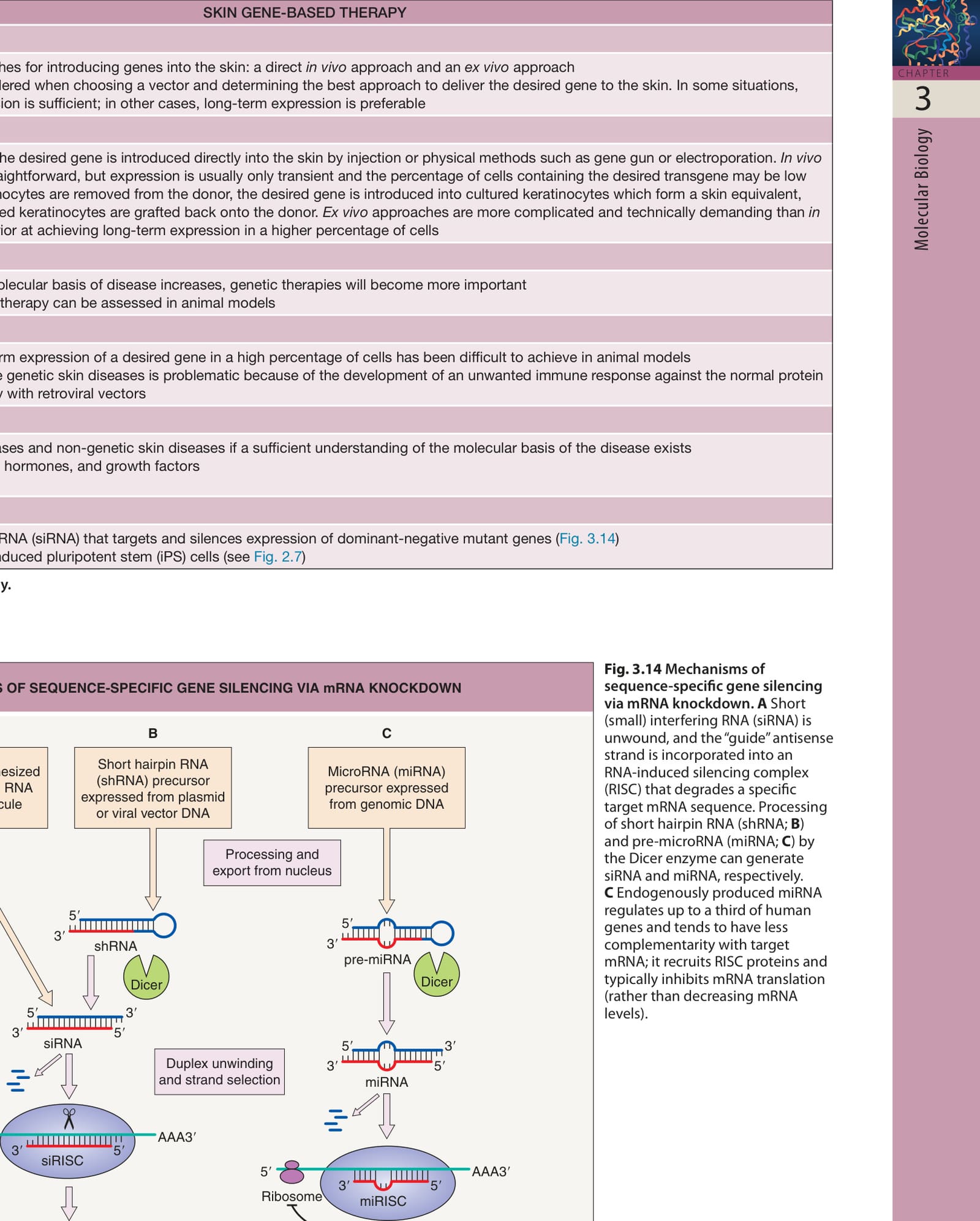
Fig. 3.14 Mechanisms of sequence-specific gene silencing via mRNA knockdown. A Short (small) interfering RNA (siRNA) is unwound, and the “guide” antisense strand is incorporated into an RNA-induced silencing complex (RISC) that degrades a specific target mRNA sequence. Processing of short hairpin RNA (shRNA; B) and pre-microRNA (miRNA; C) by the Dicer enzyme can generate siRNA and miRNA, respectively. C Endogenously produced miRNA regulates up to a third of human genes and tends to have less complementarity with target mRNA; it recruits RISC proteins and typically inhibits mRNA translation (rather than decreasing mRNA levels).
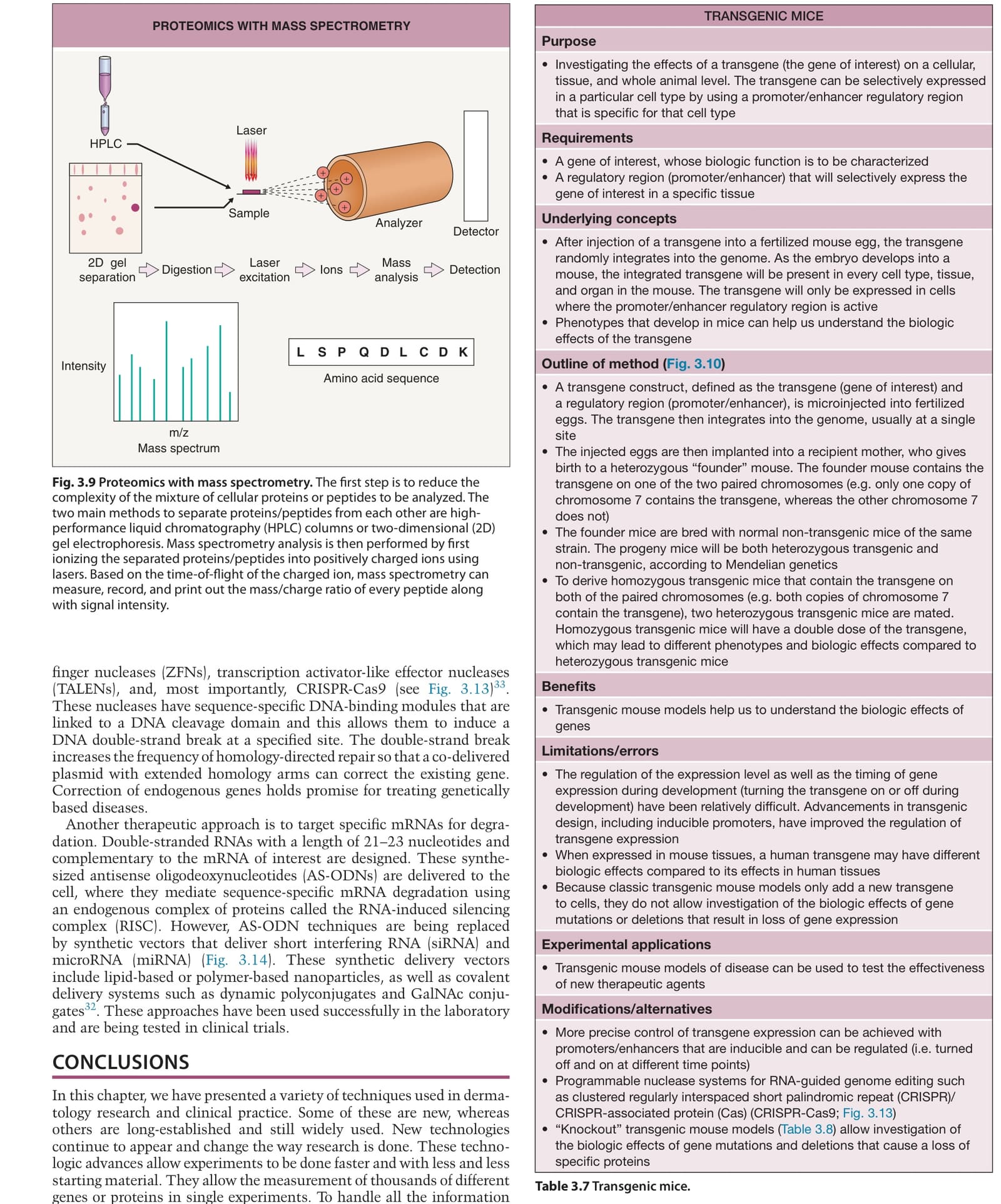
Table 3.7 Transgenic mice.
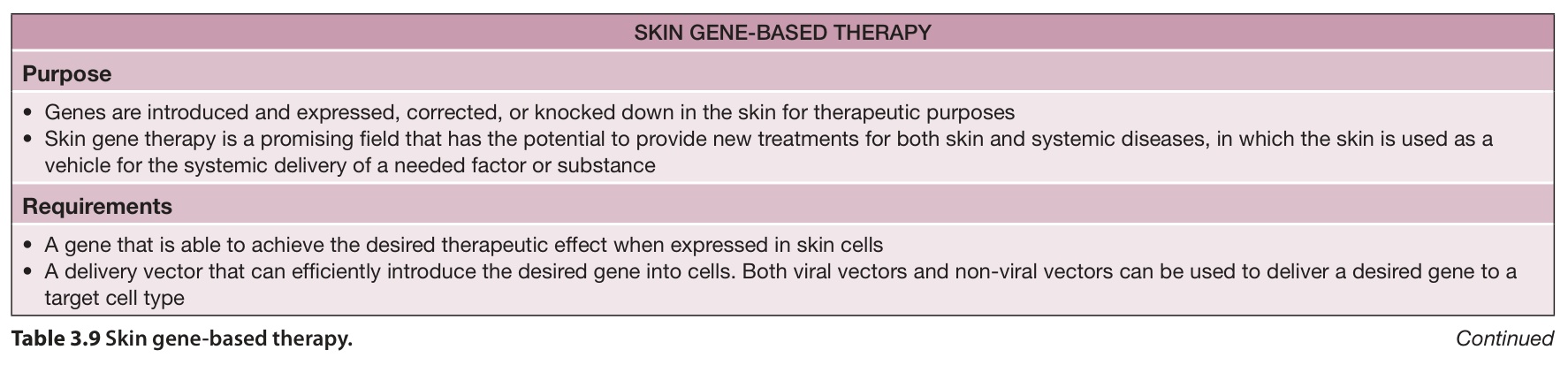
Table 3.9 Skin gene-based therapy. Continued