ANTIPRURITIC AGENTS
Pruritus involves multiple components of the nervous system, including skin surface receptors, peripheral (especially unmyelinated C fibers) and central nerves, and specific brain regions (see Ch. 5). Treatment of the associated dermatologic condition, e.g. by applying topical corticosteroids to inflamed skin and moisturization of dry skin, or the underlying systemic cause remains the most effective method of alleviating itch. Topical antipruritic agents may help reduce the urge to scratch, potentially improving the efficacy of skin disease-specific therapies. Mechanisms of action of topical antipruritics include substituting a different sensation for itching, anesthetizing cutaneous nerve endings, and blocking molecular mediators of pruritus. Unfortunately, a relative lack of comparative studies has made antipruritics difficult to evaluate. Commonly used agents are outlined in Table 129.6 (also see Table 5.5).
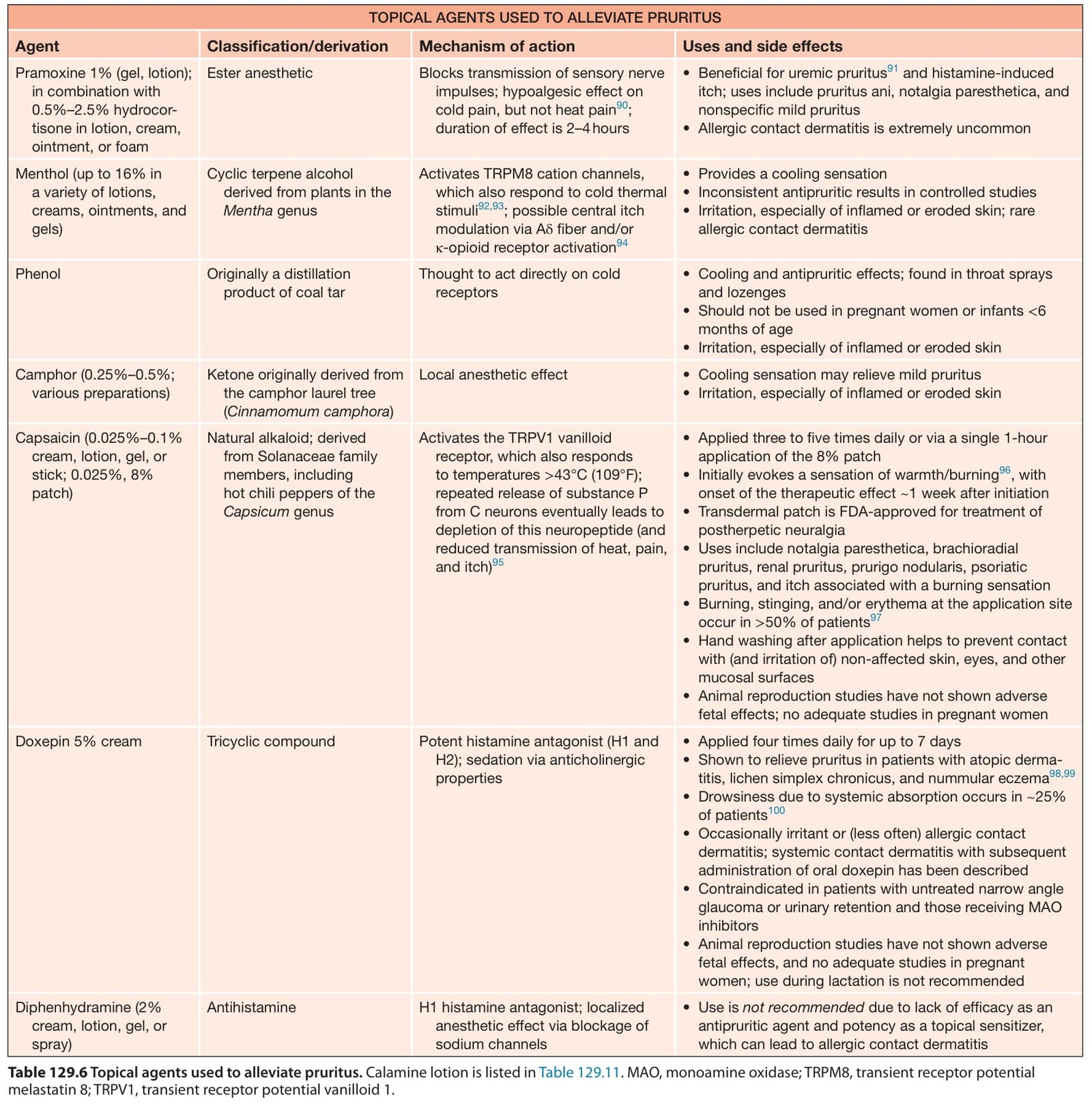
Table 129.6 Topical agents used to alleviate pruritus. Calamine lotion is listed in Table 129.11. MAO, monoamine oxidase; TRPM8, transient receptor potential melastatin 8; TRPV1, transient receptor potential vanilloid 1.