EXPECTED POSTOPERATIVE EVENTS AND CARE
Compared to conventional excisional surgery, cryosurgery can be performed more rapidly but since healing is by second intention, healing time is prolonged. The latter is especially true for the lower extremities. The expected course and postoperative care are outlined in Table 138.7. Degree of edema will be determined by the depth of the freeze as well as the anatomic location, e.g. cryosurgery of eyelid lesions often leads to more edema (even with light freezing) than does a deep freeze on the arm. Patients with cold sensitivity can also develop more edema after cryosurgery.
For lesions that develop a large bulla, the fluid is often drained to decrease pressure and possibly hasten healing; the blister roof is usually left intact to serve as a biologic dressing although the recommendation of some cryosurgeons is to remove it, especially for verrucae to minimize risk of reimplantation. A gauze dressing can be placed if there is significant oozing and application of a bland topical ointment such as petrolatum enhances second intention healing. Eschars due to cryonecrosis, a later event when deep freezing is performed, should be debrided to facilitate healing.
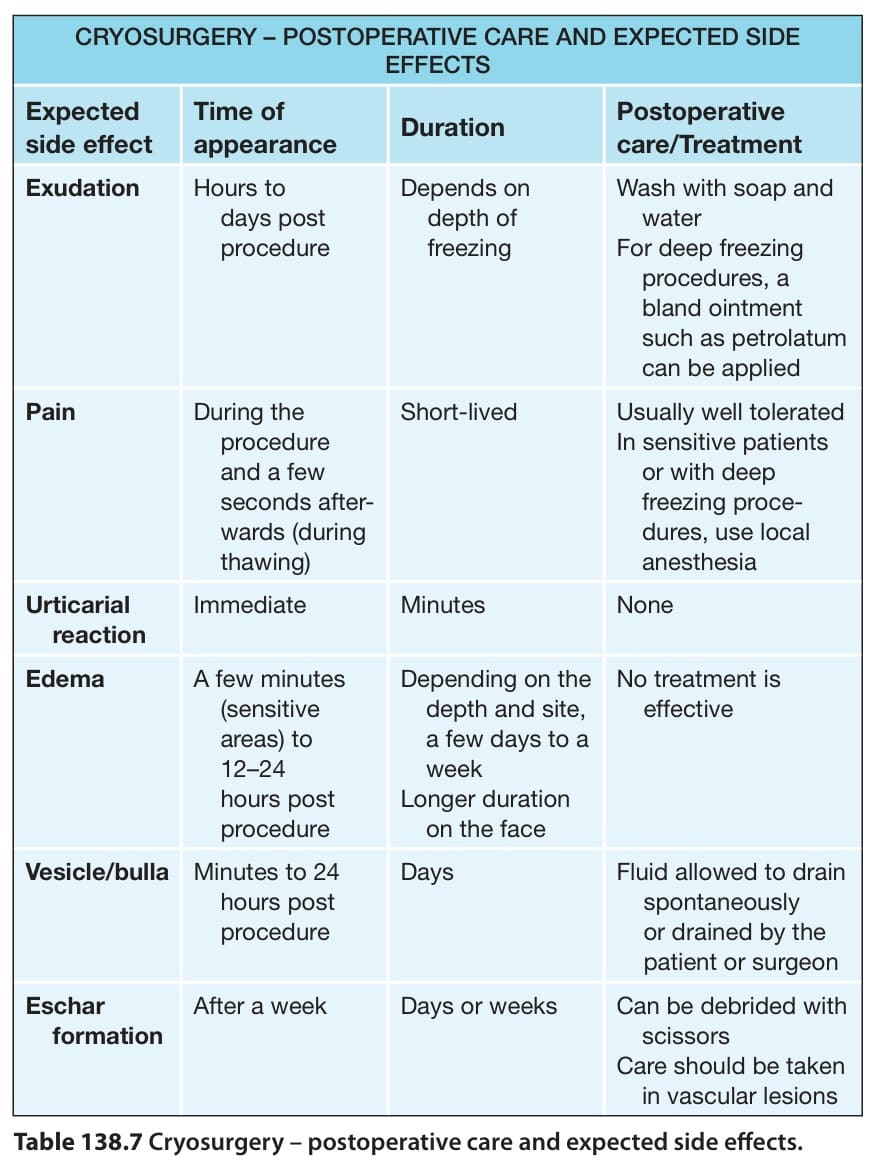
Table 138.7 Cryosurgery – postoperative care and expected side effects.