INDICATIONS/CONTRAINDICATIONS
The simplest way to think of electrosurgical applications in the clinical setting is to consider the three major capabilities of electrosurgery units. These include superficial tissue destruction (electrodesiccation), deep tissue destruction (electrocoagulation), and cutting (electrosection). Destruction or excision of skin lesions by electrosurgery should be accomplished with the smallest possible amount of damage to normal tissues. Whether electrosurgery, cryosurgery or ablative laser surgery is used, the greater the penetration of the destructive modality into the skin, the greater the likelihood that unacceptable scarring will result. Because the destructive effects of electrocoagulation extend more deeply than those of electrodesiccation, the clinician must consider the histologic characteristics of the lesion to be treated when selecting the appropriate current. A partial list of dermatologic conditions that are commonly treated by each electrosurgical modality is found in Table 140.1.
There are no absolute contraindications to the use of electrosurgery, but precautions should be taken during the treatment of patients with cardiac implantable electronic devices (see Variations/Unusual Situations, below).
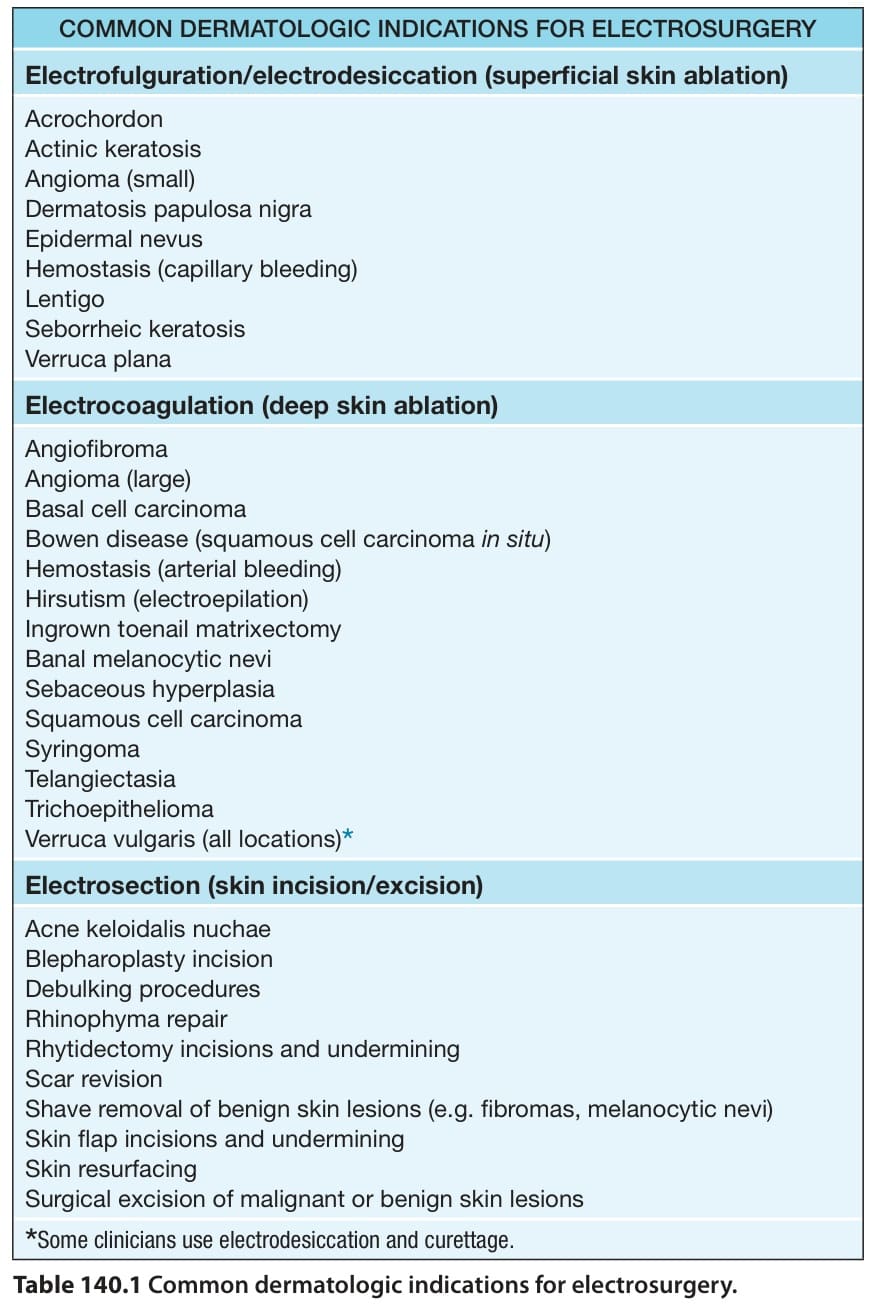
Table 140.1 Common dermatologic indications for electrosurgery.