CLINICAL FEATURES
In order to diagnose ACD and treat it adequately, the clinician needs to be familiar with its clinical presentations. The typical appearance is often a well-demarcated pruritic eczematous eruption, which may be acute (blistering, weeping and/or edema, e.g. Figs. 14.1, 14.5 & 14.6) or chronic (lichenified or scaly plaques, e.g. Figs. 14.2, 14.3, 14.4B, 14.7 & 14.8). This reaction is typically localized to the area of skin that comes in contact with the allergen (Fig. 14.9A,B). However, the clinician must also be aware that patchy or diffuse distributions can also be seen, depending on the nature of the causative allergen (Fig. 14.9C,D & 14.10). For example, body washes or shampoos that are rinsed over the body may cause a more patchy or diffuse clinical dermatitis. Other less common presentations of allergic contact dermatitis are listed in Table 14.1.
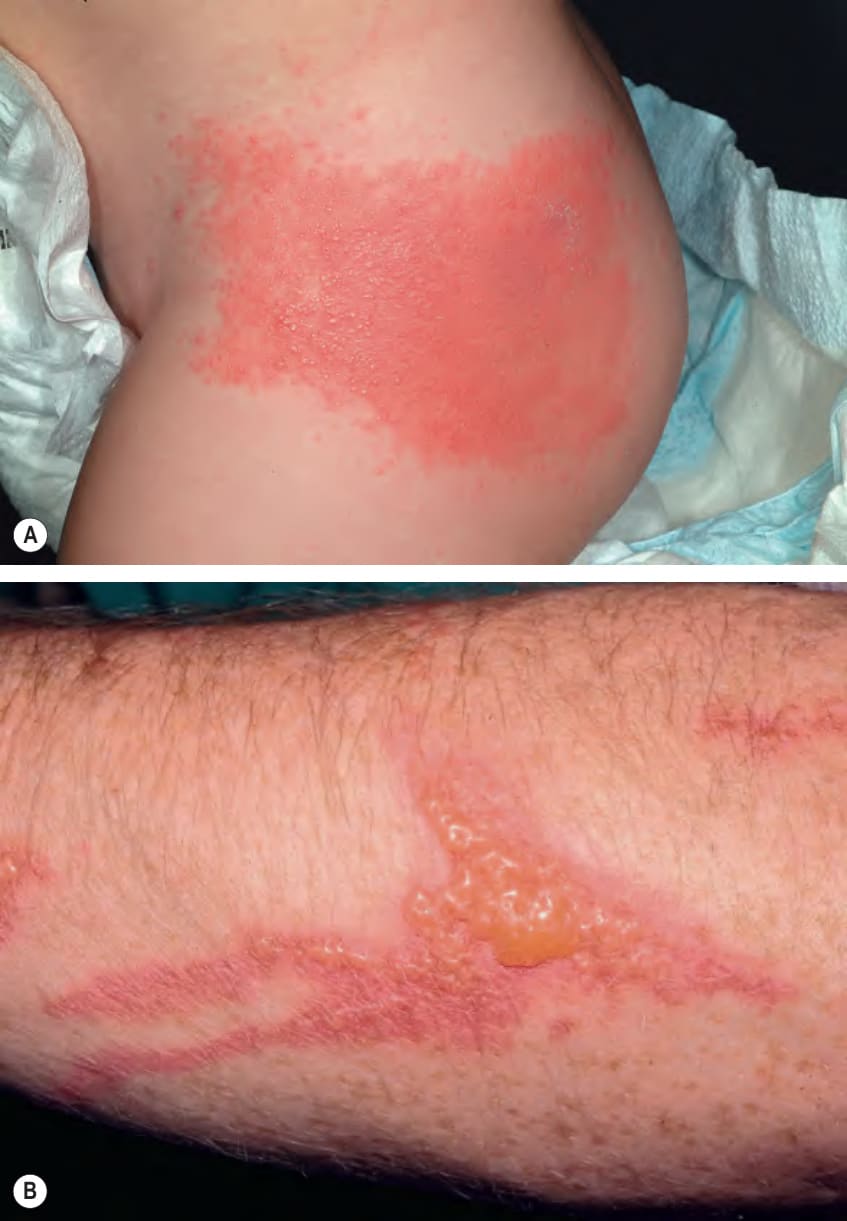
Fig. 14.1 Allergic contact dermatitis (ACD).A This erythematous plaque with vesiculation developed in a 14-month-old boy following the application of neomycin ointment. B Erythematous streaks with linear vesicles caused by ACD to poison ivy. A, Courtesy Anthony J. Mancini, MD; B, Courtesy Joyce Rico, MD.
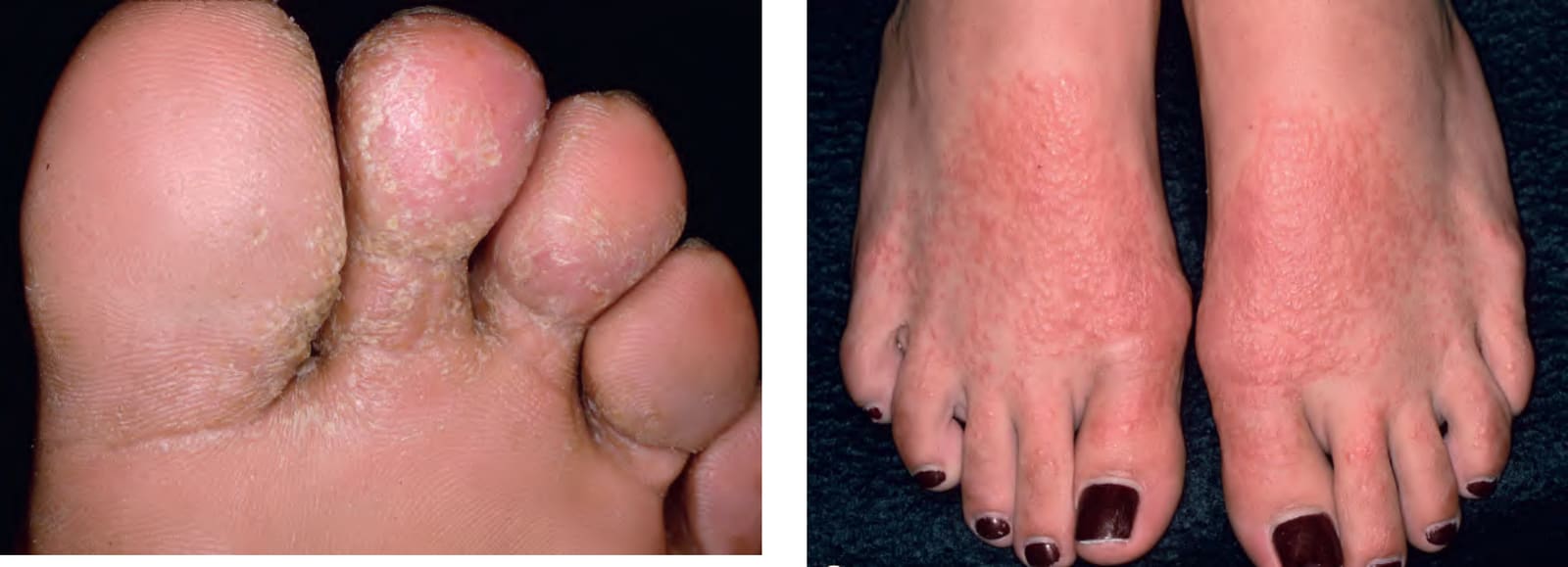
Fig. 14.2 Chronic allergic contact dermatitis (ACD). Chronic foot dermatitis due to ACD to rubber (mercaptobenzothiazole). Courtesy Louis A. Fragola, Jr, MD.
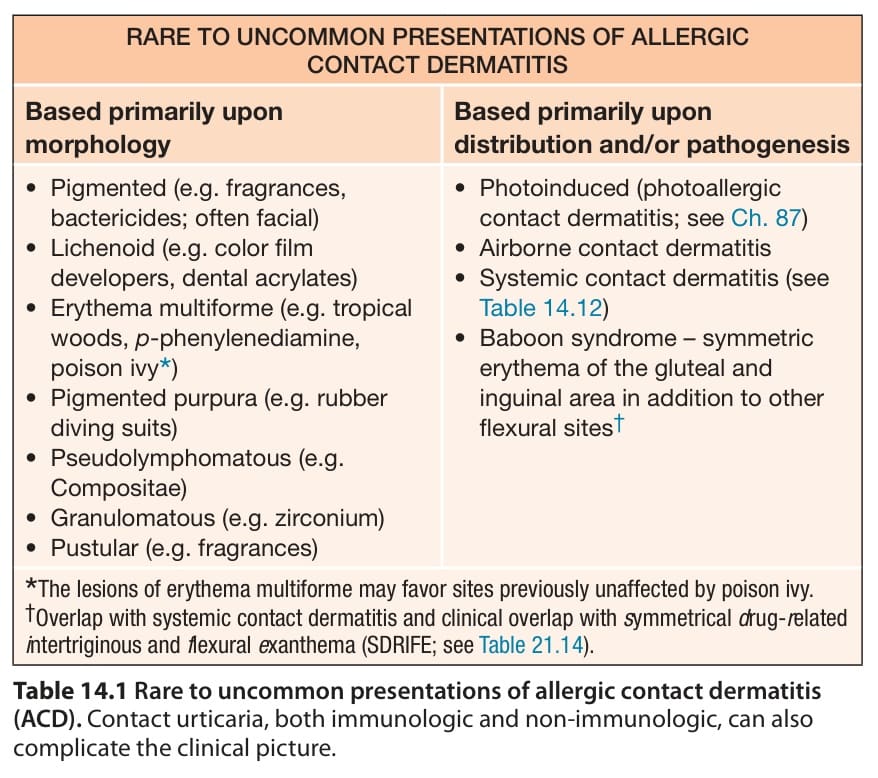
Table 14.1 Rare to uncommon presentations of allergic contact dermatitis