NEXT-GENERATION (MASSIVELY PARALLEL) SEQUENCING
In recent years, high-throughput technology has revolutionized genetic testing via “next-generation” techniques that allow much faster and less expensive DNA and RNA sequencing than does the traditional Sanger method. Also referred to as massively parallel sequencing, this process involves amplification of fragmented sequences of DNA to produce thousands of copies, which are then sequenced as a group (see Table 3.2 and Fig. 3.5).
Multi-gene panels utilizing next-generation sequencing enable a large group of genes associated with a particular phenotype (e.g. epidermolysis bullosa, ichthyosis, vascular malformation) to be evaluated in a cost-effective manner. When testing of a single gene or panel of genes based on the clinical findings in a patient suspected of having a genetic disorder fails to provide an answer, WES or WGS can be the next step (Tables 54.6 and 54.7). For example, in a patient with sparse hair, hypohidrosis, and absent teeth, the initial step toward establishing a molecular diagnosis is targeted testing utilizing a panel of genes known to be associated with ectodermal dysplasia. An advantage of targeting specific genes is that coding regions and some non-coding regions can be analyzed in fine detail for both sequence aberrations and deletions or duplications. In contrast, WES uses an array to specifically capture the protein-coding (expressed) regions of the human genome, which account for only 1%–2% of genetic material but contain >85% of disease-causing mutations. If a patient with ectodermal dysplasia has no pathogenic
All of these modalities can be performed on DNA extracted from a variety of sample types (e.g. blood, saliva, tissue), and none is able to completely exclude the possibility of a particular disorder. Whole-exome sequencing (WES) analyzes only expressed regions, which account for ~2% of the genome. Whole-genome sequencing (WGS) covers more non-coding regions, but at a lower depth of coverage compared to WES. For WES and WGS, samples from a parent–child trio can help to determine which variants are pathogenic and increase the diagnostic yield, and bioinformatics analysis is required to filter and prioritize variants identified based on function, zygosity, and population frequency.
changes identified via targeted testing, WES enables examination of the coding regions of many additional genes. Currently, for identifying disease-causing mutations in both recessively and dominantly inherited conditions, WES followed by bioinformatics analysis of the data generated represents a more efficient and cost-effective approach than WGS (see Table 54.6). However, genetic technology is advancing rapidly, and further optimization of WGS is expected to lead to its increased use in the future.
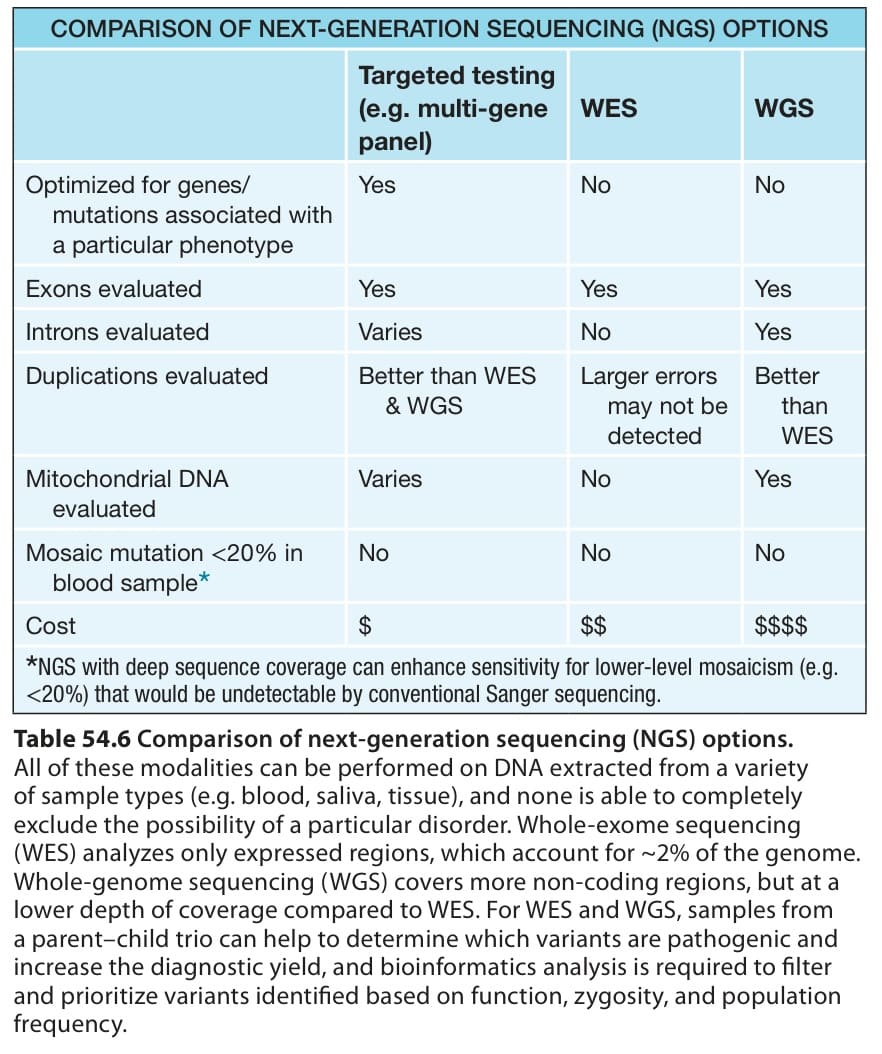
Table 54.6 Comparison of next-generation sequencing (NGS) options.