RETICULATED HYPERPIGMENTATION
Disorders characterized by true reticulated macular hyperpigmentation are rare. Initial evaluation should exclude other more common entities such as confluent and reticulated papillomatosis of Gougerot and Carteaud (see Table 67.1 and Ch. 109), where the lesions are elevated and favor the neck and upper trunk (Fig. 67.20), and the hyperpigmentation of erythema ab igne, which has a widely spaced net-like pattern corresponding to the arrangement of the cutaneous venous plexus (see Ch. 88). A similar violaceous to brown-colored net-like pattern can also be seen on the lower extremities of patients with livedo reticularis. Reticulated hyperpigmentation is an occasional feature of other skin disorders, such as its occurrence on the anterolateral neck in patients with atopic dermatitis (“atopic dirty neck”) and in association with epidermolysis bullosa herpetiformis.
When a true reticulated pigmentary disorder exists, the family history should be reviewed and the patient carefully examined for associated abnormalities. The following section discusses prurigo pigmentosa and six genodermatoses associated with reticulated hyperpigmentation. Additional entities that feature reticulated hyperpigmentation are listed in Table 67.8.
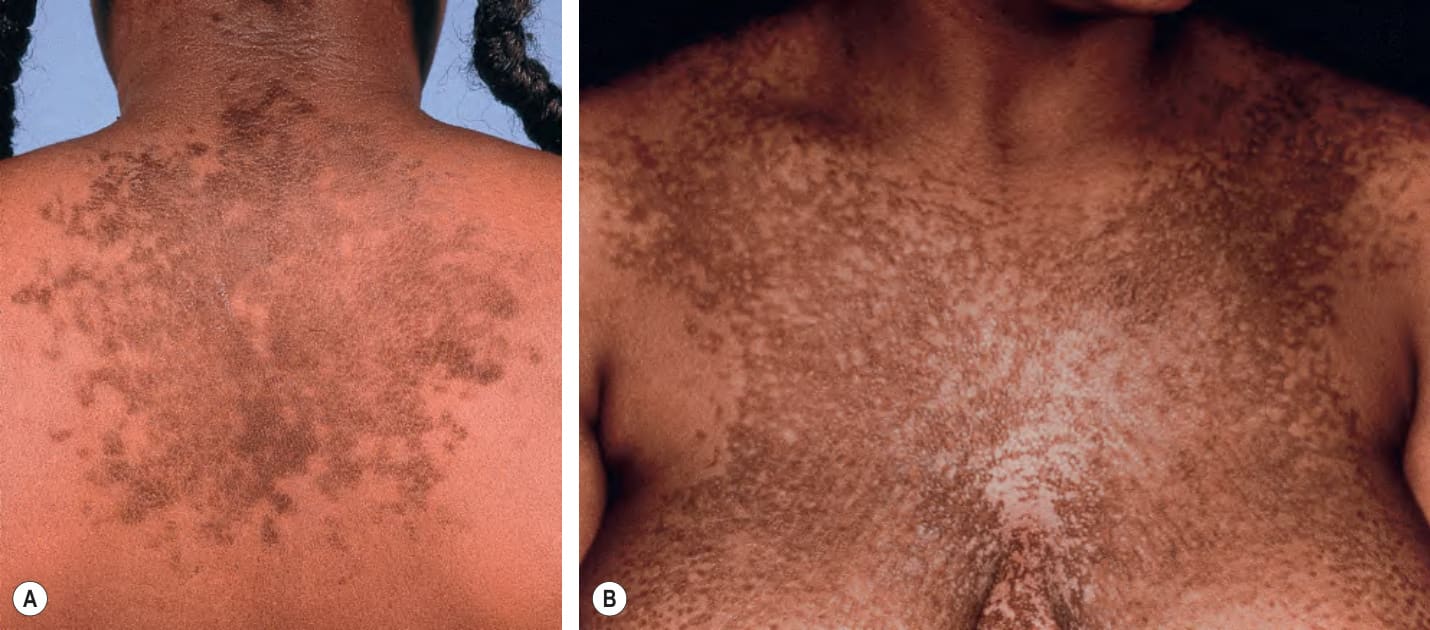
Fig. 67.20 Confluent and reticulated papillomatosis.
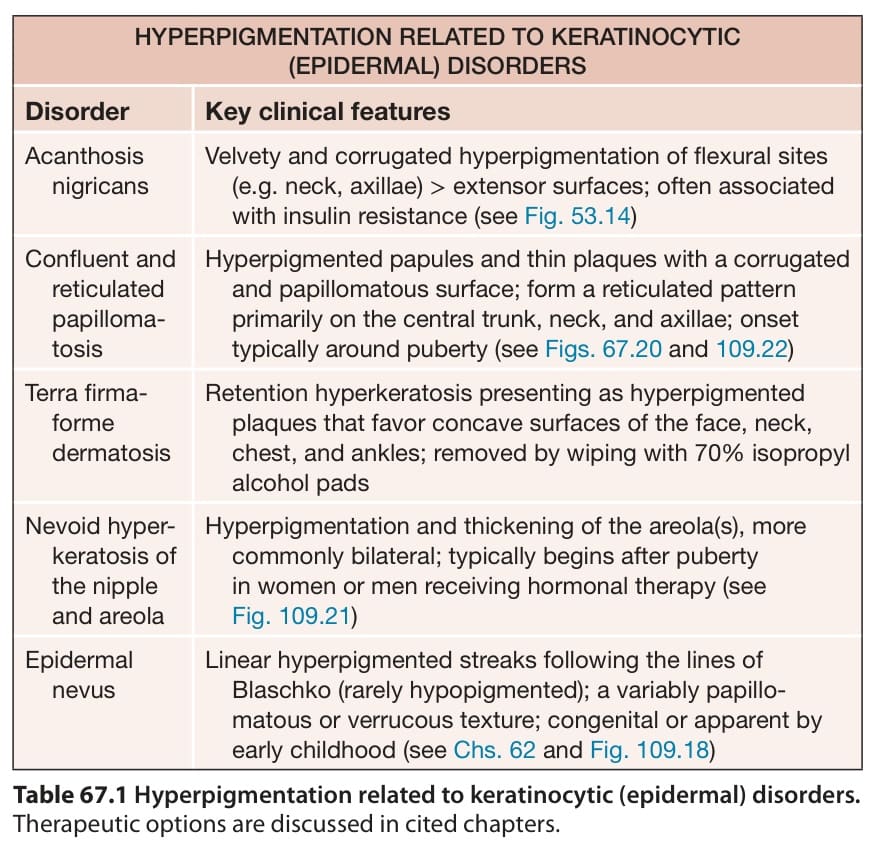
Table 67.1 Hyperpigmentation related to keratinocytic (epidermal) disorders.
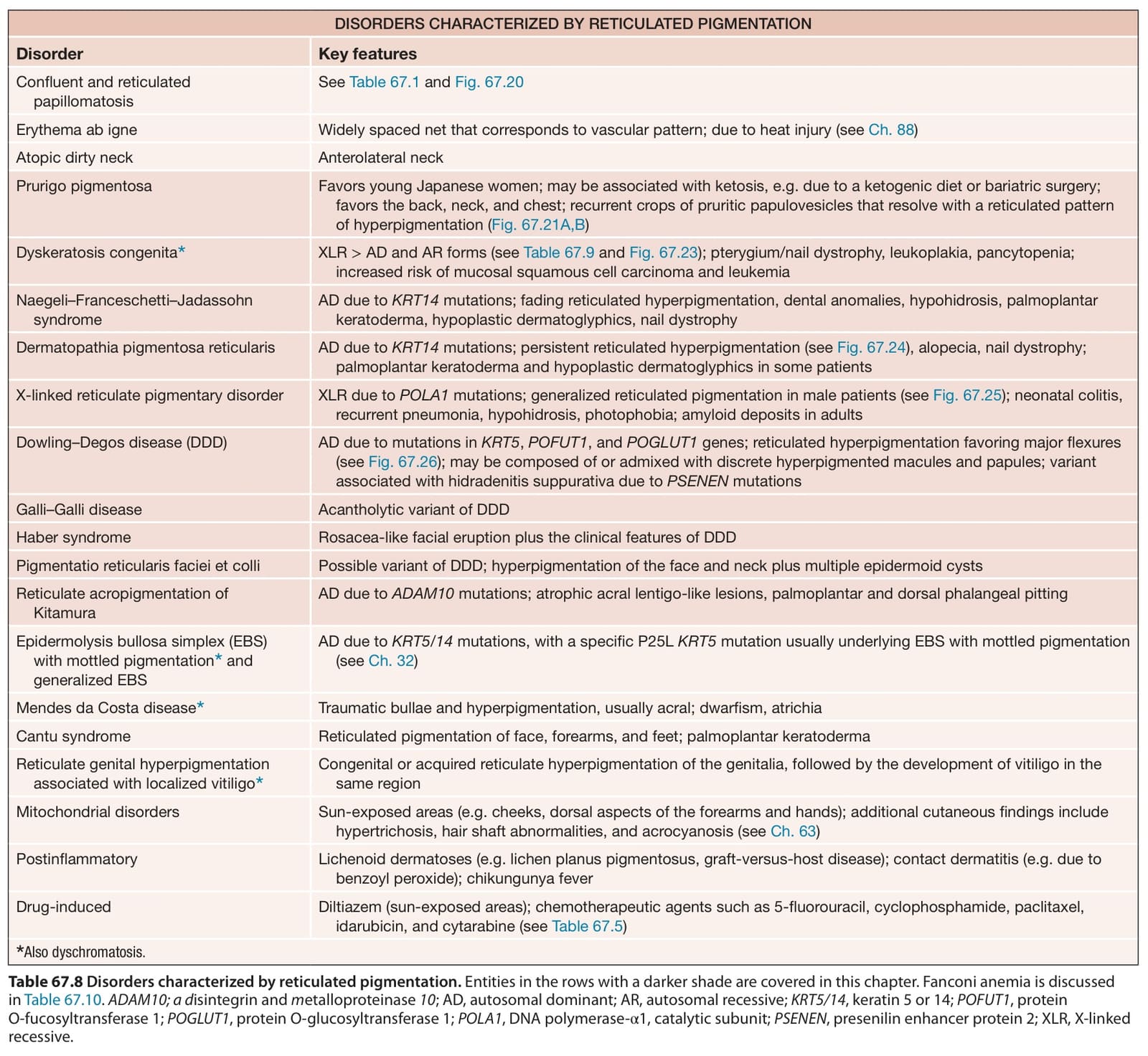
Table 67.8 Disorders characterized by reticulated pigmentation. Entities in the rows with a darker shade are covered in this chapter. Fanconi anemia is discussed in Table 67.10. ADAM10; a disintegrin and metalloproteinase 10; AD, autosomal dominant; AR, autosomal recessive; KRT5/14, keratin 5 or 14; POFUT1, protein O-fucosyltransferase 1; POGLUT1, protein O-glucosyltransferase 1; POLA1, DNA polymerase-α1, catalytic subunit; PSENEN, presenilin enhancer protein 2; XLR, X-linked recessive.