THE CUTANEOUS MICROBIOTA
Hundreds of species of bacteria, along with fungi and viruses, collectively form a dynamic ecosystem known as the cutaneous microbiota (flora). The microbiota composition depends on the anatomic location – Cutibacterium (formerly Propionibacterium) spp. dominate in sebaceous sites, whereas Staphylococcus and Corynebacterium spp. thrive in moist skin folds (Fig. 74.1). Together these organisms help prevent skin infections by providing competition against pathogenic microbes and hydrolyzing lipids of sebum to produce free fatty acids, which are toxic to many pathogenic bacteria. The ecology of particular areas of the skin is determined by the availability of moisture, presence of sebaceous lipids, and gaseous environment. Disruption of the delicate balance between host and microorganisms can result in skin disorders or infection. The nomenclature of cutaneous bacterial infections reflects the site, depth, and extent of the infection as well as the organism involved.
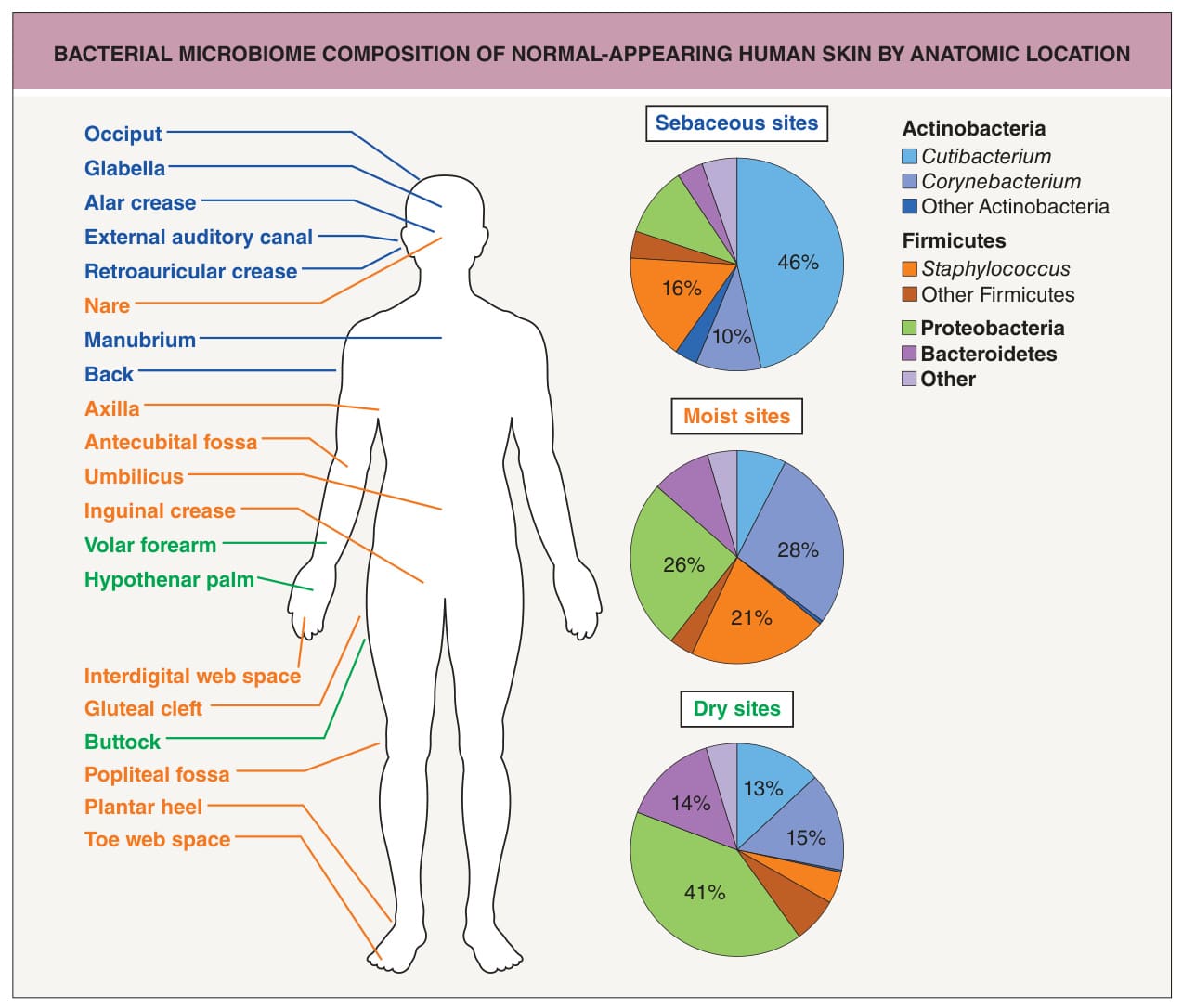
Fig. 74.1 Bacterial microbiome composition of normal-appearing human skin by anatomic location.Adapted from Chen YE, Tsao H. The skin microbiome: Current perspective and future challenges. J Am Acad Dermatol 2013;69:143–55. Figure 3.