RABIES
While rabies is not accompanied by a cutaneous eruption, dermatologists may be asked to perform a biopsy of nuchal skin that can be assayed for rabies virus antigen or (via PCR) rabies virus RNA.
CUTANEOUS MANIFESTATIONS OF SARS-CoV-2 INFECTION
Since initially being reported in Wuhan, China in December 2019, the severe acute respiratory syndrome coronavirus-2 (SARS-CoV-2) pandemic has caused >6.5 million deaths worldwide. While respiratory failure and hypercoagulability are associated with the highest morbidity and mortality, cutaneous findings occur in up to 20% of individuals with SARS-CoV-2 infection, ranging from morbilliform eruptions to retiform purpura (Table 81.9). Although SARS-CoV-2 infection in pediatric patients usually has a milder course compared to adults, an exaggerated immune response can result in multisystem inflammatory syndrome in children (MIS-C), which presents with systemic and mucocutaneous manifestations similar to those of Kawasaki disease (Table 81.10). In addition, a wide variety of local and widespread cutaneous reactions to SARS-CoV-2 vaccines have been described (see Table 81.9).
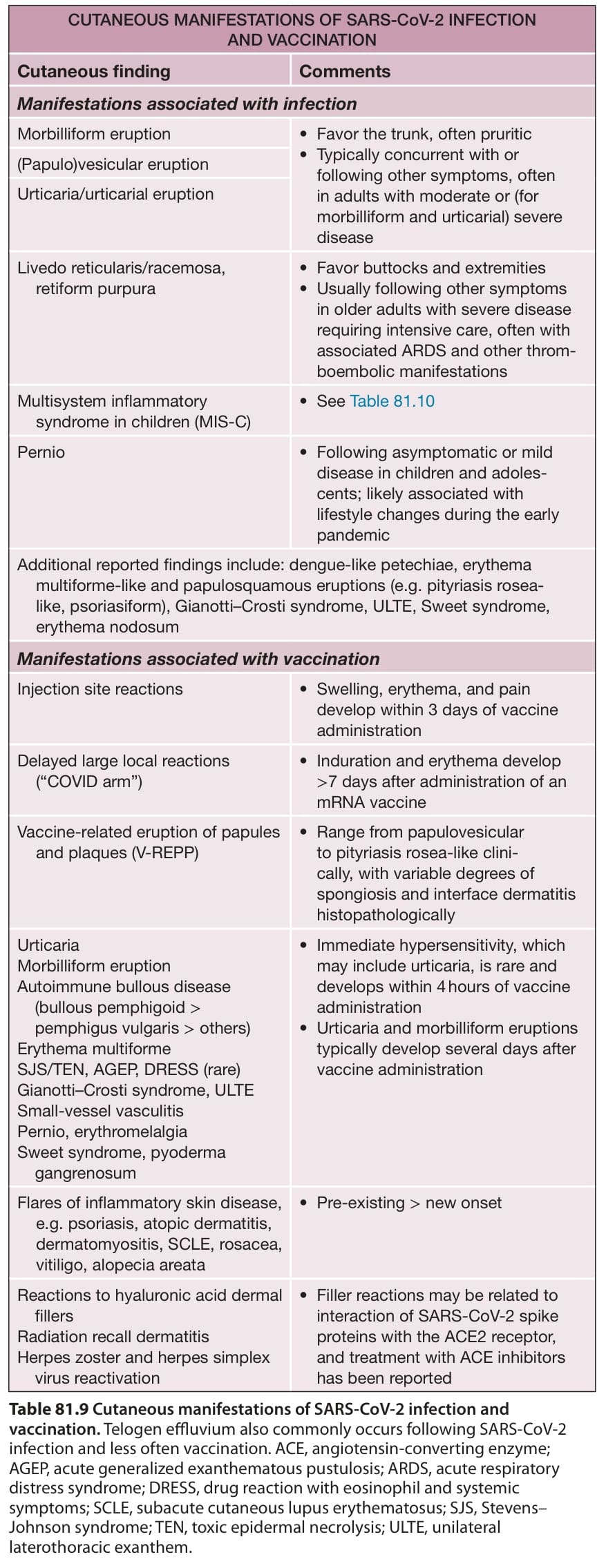
Table 81.9 Cutaneous manifestations of SARS-CoV-2 infection and vaccination. Telogen effluvium also commonly occurs following SARS-CoV-2 infection and less often vaccination. ACE, angiotensin-converting enzyme; AGEP, acute generalized exanthematous pustulosis; ARDS, acute respiratory distress syndrome; DRESS, drug reaction with eosinophil and systemic symptoms; SCLE, subacute cutaneous lupus erythematosus; SJS, Stevens– Johnson syndrome; TEN, toxic epidermal necrolysis; ULTE, unilateral laterothoracic exanthem.
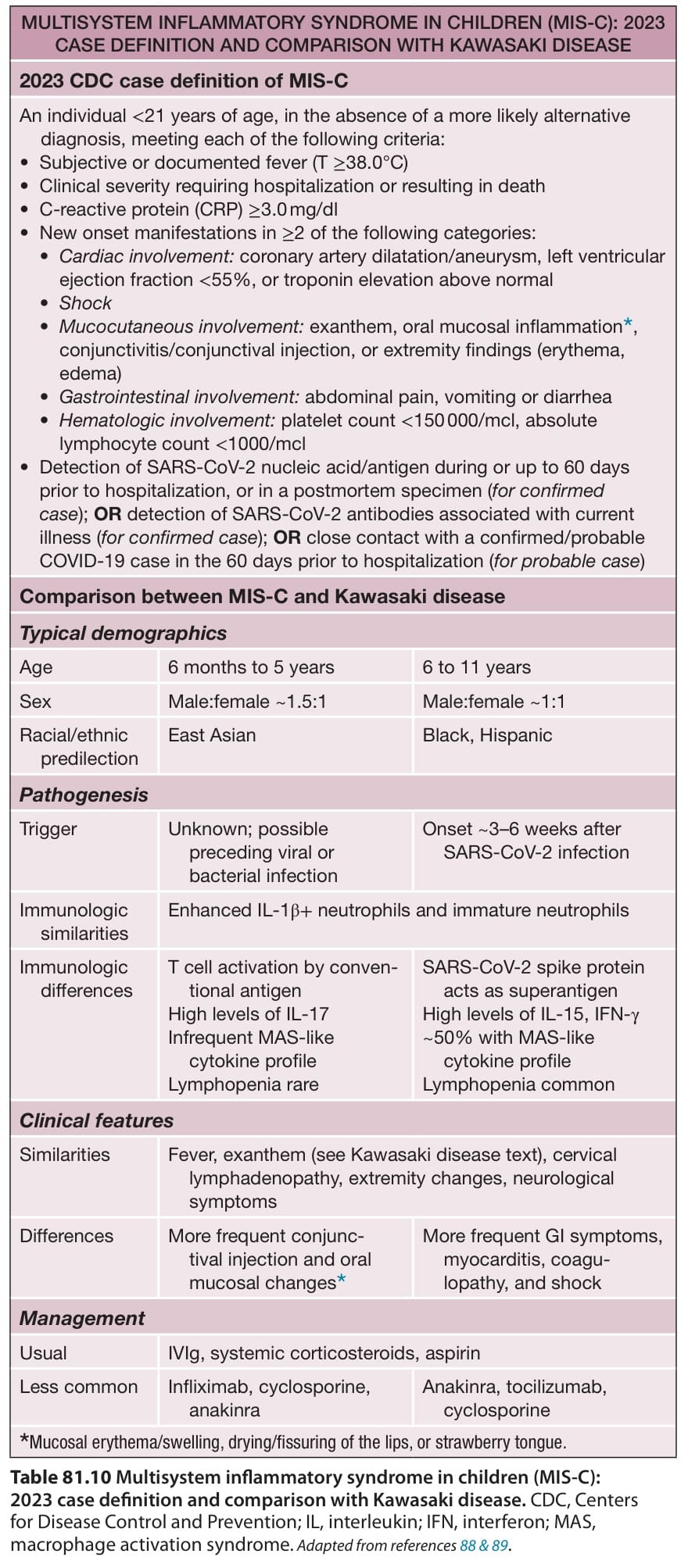
Table 81.10 Multisystem inflammatory syndrome in children (MIS-C):