PRURITUS VARIANTS
Aquagenic Pruritus
Aquagenic pruritus is usually secondary to a systemic disease (e.g. polycythemia vera) or another skin disorder (e.g. urticaria, dermographism; Table 6.5), whereas primary (idiopathic) aquagenic pruritus is relatively uncommon. Aquagenic pruritus presents with prickling, tingling, burning, or stinging sensations within 30 minutes of water contact, irrespective of its temperature or salinity, and lasts for up to 2 hours. Typically, symptoms begin on the lower extremities and then generalize, with sparing of the head, palms, soles, and mucosae; on examination, specific skin lesions are not seen. The pathologic mechanism is unknown, although elevated dermal and epidermal levels of acetylcholine, histamine, serotonin, and prostaglandin E have been described.
Treatment of aquagenic pruritus is difficult. Aspirin (300–500 mg daily) was of benefit in one RCT. Treatment with narrowband or broadband UVB or PUVA may also be effective. Based upon case reports and case series, alkalization of bath water with baking soda, capsaicin cream (0.025%–0.1% applied 3–6 times daily for ≥4 weeks), and systemic agents including β-blockers (e.g. propranolol, atenolol), clonidine, ibuprofen prior to bathing, pregabalin, H2-blockers, opioid receptor antagonists, antidepressants, and interferon-α may be helpful. In secondary forms of aquagenic pruritus, treatments should target any underlying condition, e.g. antihistamines for dermographism.
Pruritus in Scars
Scar remodeling can last from 6 months to 2 years. Pruritus associated with wound healing is common and usually resolves over time, but it is occasionally prolonged, especially in hypertrophic or keloidal scarring. The pruritus in immature or abnormal scars is most likely a consequence of physical and chemical stimuli as well as nerve regeneration. Physical stimuli include direct mechanical stimulation of nerve endings during scar remodeling. Histamine, vasoactive peptides (e.g. kinins), and prostaglandins E1/E2 may account for a “chemogenic” pruritus. Nerve regeneration occurs in all healing wounds, and a disproportionate number of thinly myelinated and unmyelinated C-fibers in immature or abnormal scars may contribute to increased itch perception. The observation of abnormalities in small nerve fiber morphology and function within keloids has raised the possibility of a small nerve fiber neuropathy.
Therapy includes emollients, topical and intralesional corticosteroids, cryotherapy, brachytherapy, and silicone gel sheets. Oral antihistamines do not have a significant benefit. Relief of pain and pruritus associated with giant keloids was observed with oral pentoxifylline (400 mg 2–3 times daily).
Post-Thermal Burn Pruritus
Approximately 85% of patients with burns experience pruritus during the healing phase, particularly when the burns involve the limbs. A gradual decrease in pruritus usually occurs, but it may persist for years. Both neuropathic and pruritogenic mechanisms are thought to contribute to the development of itch after a burn. Reported predictors of pruritus include a deep dermal burn injury, female sex, and psychological distress. Morphine therapy may also contribute to postburn pruritus. Emollients, topical anesthetics (e.g. lidocaine/prilocaine) or doxepin, massage therapy, bathing in oiled water or with colloidal oatmeal, extracorporeal shockwave therapy, and botulinum toxin may be of benefit. In an RCT, oral gabapentin was found to be more effective than cetirizine for postburn pruritus. Other systemic therapy options include ondansetron, opioid modulators, and antidepressants.
Fiberglass Dermatitis
Fiberglass exposure is common in individuals who work in manufacturing or construction. Deposition of fiberglass particles on the skin may provoke severe pruritus, sometimes in the absence of visible skin lesions (see Ch. 16). Involvement of the hands and other non-covered sites such as the arms, face, and upper trunk is typical. Cutaneous findings vary and include erythema, papules, vesicles, excoriations, and lichenification. The clinical presentation may resemble scabies, eczematous dermatitis, folliculitis, or urticaria. Tolerance often develops with prolonged fiberglass exposure.
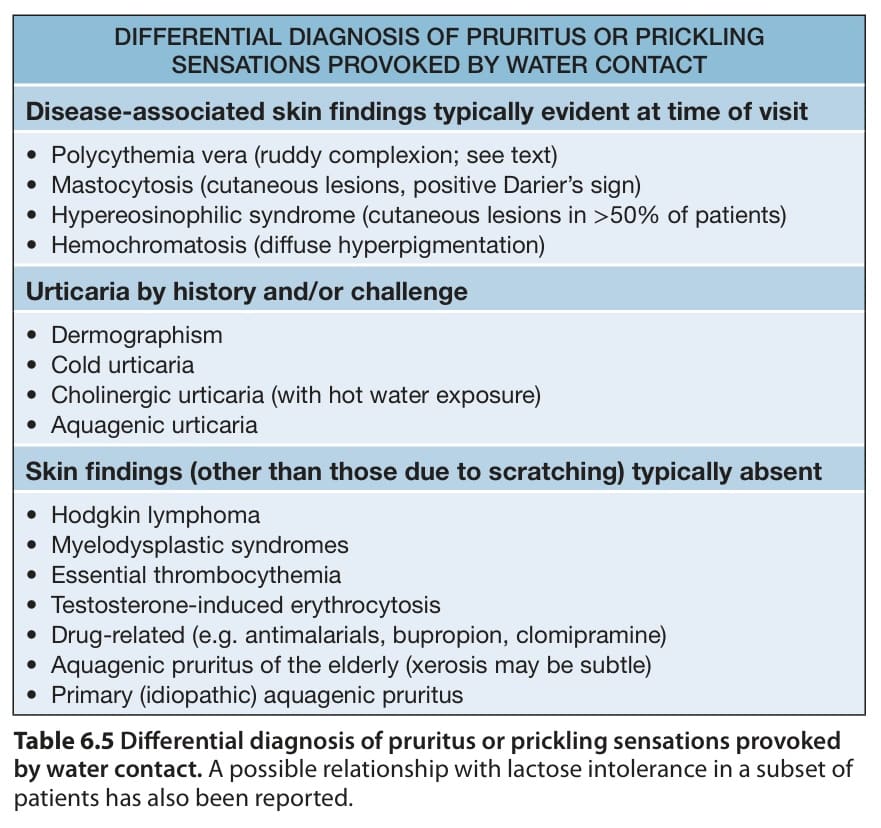
Table 6.5 Differential diagnosis of pruritus or prickling sensations provoked by water contact. A possible relationship with lactose intolerance in a subset of patients has also been reported.