TREATMENT
Thus far, no antipruritic drug is indicated for relief of itch irrespective of its origin. Thus, individualized management of each patient and pruritic disease process is necessary. General measures and specific treatments that can be selected according to the patient’s complaints are discussed below and summarized in Table 6.11.
General Measures
Patient education and elimination of provocative factors are important, including wearing soft breathable clothing (i.e. no wool or rough fabrics), avoiding excessive bathing (lukewarm baths or showers with mild synthetic detergents [syndets]), using emollients on a daily basis with application immediately after bathing, and managing dermographism if present. Patients can be taught methods of interrupting the itch–scratch cycle, such as application of a cold washcloth or gentle pressure. Controlled physical exercise, relaxation therapy, and minimization of exposure to heat as well as reduction of stress and anxiety are beneficial. Avoid telling patients “don’t scratch” given how difficult it is to follow this advice.
Topical Treatment
A large variety of topical compounds that have antipruritic properties are available, including corticosteroids, anesthetics (e.g. pramoxine, polidocanol), and counterirritants (e.g. menthol, camphor).
Topical anesthetic agents (e.g. lidocaine/prilocaine) decrease pain and pruritic sensations and they may relieve tingling and dysesthesias.
Topical doxepin has demonstrated antipruritic effects in atopic dermatitis and other eczematous dermatoses, including lichen simplex chronicus, nummular eczema, and contact dermatitis. However, side effects such as drowsiness can occur when it is applied to large portions of the body or in young children. In addition, the possibility of allergic contact dermatitis to topical doxepin and potentially systemic contact dermatitis with subsequent oral administration should be considered. Compounded topical cromolyn sodium has been found to relieve allergen- and histamine-induced pruritus without blocking wheal formation, suggesting a mechanism other than prevention of mast cell degranulation.
Capsaicin is a naturally occurring alkaloid found in many species of the nightshade family (Solanaceae), especially chili peppers. Capsaicin enhances the release and secondarily inhibits the re-accumulation of neuropeptides such as substance P. It also transiently destroys intraepidermal nerve fibers. Topical capsaicin has successfully been used in several dermatologic disorders, although it is not beneficial in atopic dermatitis. Concentrations usually range from 0.025%– 0.1%, and it needs to be applied three to six times daily for maximal effect. While capsaicin can be safely applied to large areas of skin, and its side effects of stinging, burning, pain, erythema, and irritation decrease with continued use, it is typically utilized to treat localized pruritus.
Topical tacrolimus and pimecrolimus have both anti-inflammatory and antipruritic effects and are successfully used in pruritic conditions including atopic dermatitis (see Ch. 128). Burning and erythema at the application site are the most commonly reported adverse events. Rapid improvement of pruritus has also been reported in patients with atopic dermatitis treated with topical ruxolitinib.
Systemic Treatment
Systemic drugs with antipruritic properties often act centrally and have sedating effects. With progress in understanding the pathophysiology of pruritus, treatments targeting specific mediators and pathways have become possible, such as κ-opioid receptor agonists (e.g. difelikefalin, nalfurafine) and/or μ-opioid receptor antagonists (e.g. naloxone, naltrexone); NK1 receptor antagonists (e.g. aprepitant); and antibodies targeting IL-31 signaling (e.g. nemolizumab). However, placebo responses in pruritus patients are often substantial (e.g. 66% in one study), demonstrating the powerful central modulation of pruritus. Placebo-controlled studies are therefore essential to evaluate drugs with potential antipruritic effects.
Physical Treatment Modalities
UV light therapies (broadband and narrowband UVB, UVA, UVA-1, UVA/UVB, PUVA) have beneficial effects in pruritic inflammatory dermatoses, maculopapular cutaneous mastocytosis, renal and cholestatic pruritus, pruritus associated with HIV infection, aquagenic pruritus, and prurigo nodularis.
Transcutaneous electronic nerve stimulation has been reported as beneficial in different types of pruritus, such as that found in aged
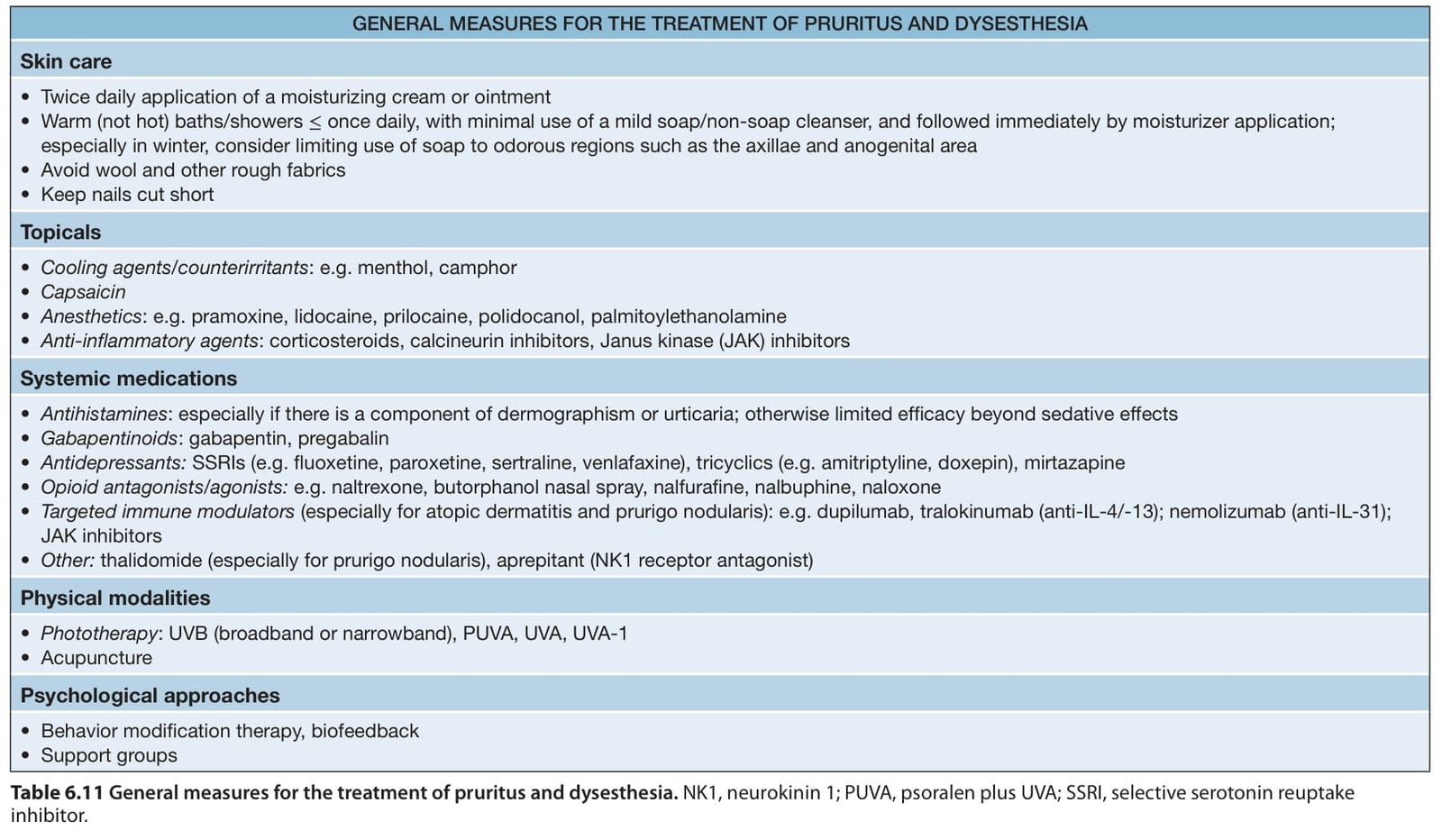
Table 6.11 General measures for the treatment of pruritus and dysesthesia. NK1, neurokinin 1; PUVA, psoralen plus UVA; SSRI, selective serotonin reuptake inhibitor.
skin. This may be partially a placebo effect as it tends to decline with continued therapy. Acupuncture has also been described as a successful treatment for pruritus vulvae, allergic contact dermatitis, and renal pruritus. Acupuncture was reported to decrease experimental histamine-induced pruritus but had no effect on maximal pruritus intensity or onset time.
Pruritus may be precipitated, prolonged, or enhanced by a number of stress-related mediators such as histamine and neuropeptides. There are also multiple secondary psychosomatic mechanisms through which pruritus may be generated or exacerbated, e.g. sweating, alterations in cutaneous blood flow, and scratching. Of note, psychological factors are thought to be able to diminish as well as augment pruritus.
Studies have shown that group psychotherapy, behavioral therapy, controlled physical exercise, support groups, and biofeedback can help to stop scratching and improve quality of life.
Pruritus. New York: McGraw-Hill; 1994.2. Weisshaar E, Matterne U. Epidemiology of itch. In: Carstens