OVERVIEW
Psychodermatologic disorders can be conceptualized in two ways: (1) by the specific psychodermatologic condition; or (2) by the symptom complex and diagnostic pattern of the underlying psychopathology, including anxiety, depression, psychosis, and obsession–compulsion. The latter approach is useful because knowledge of the psychopathologic manifestations enables the clinician to choose the most appropriate psychopharmacologic agent (Table 7.1). For example, if the underlying psychopathology involves obsessions and/or compulsions, a selective serotonin reuptake inhibitor (SSRI; e.g. fluoxetine) would be a logical choice of therapy.
In the classification method based on psychodermatologic conditions, most patients can be grouped into one of four categories (see Fig. 7.1):
●primary psychodermatologic disorders, in which the patient typically has no primary skin disease and cutaneous lesions are self-induced (e.g. delusional infestation, body-focused repetitive behaviors)
●secondary psychodermatologic disorders, in which the patient develops psychologic distress or a psychologic disorder as a result of a skin disease
●psychogenic pruritus and dysesthesia, in which the patient presents with a purely sensory complaint (e.g. pruritus, burning, stinging) without evidence of a delusional component, primary skin disease, or underlying medical condition (see Ch. 6)
●psychophysiologic disorders, in which a primary skin disorder (e.g. atopic dermatitis, psoriasis) is exacerbated by psychologic or behavioral factors (e.g. stress, anxiety)
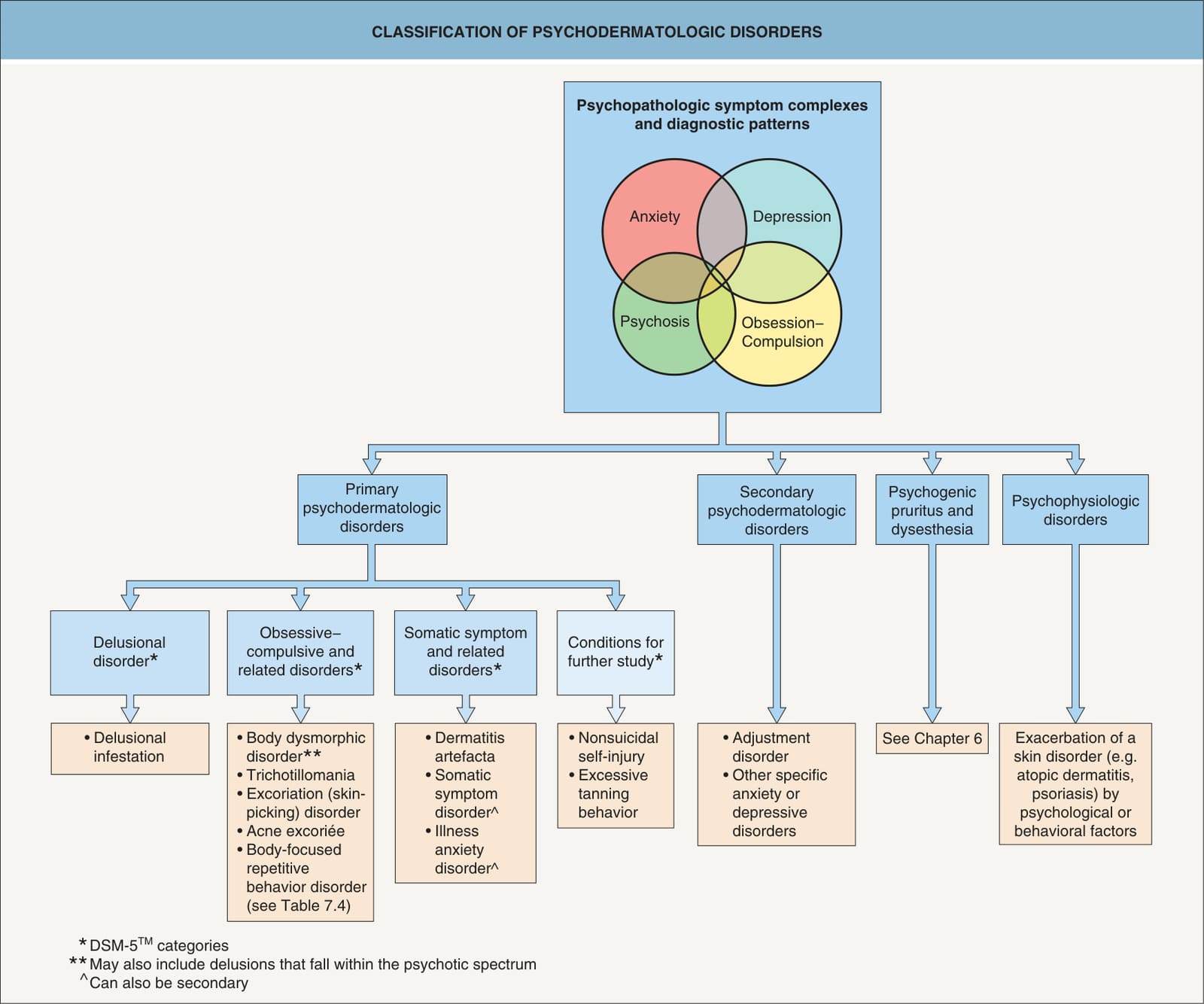
Fig. 7.1 Classification of psychodermatologic disorders. Psychocutaneous disorders can be conceptualized by: (1) the specific psychodermatologic condition and its classification; and (2) the presenting symptom complex of the underlying psychopathology. Primary psychodermatologic disorders are those in which the patient typically has no primary skin disease and cutaneous lesions are self-induced. Secondary psychodermatologic disorders are those in which the patient develops psychological distress or a psychologic disorder as a result of a skin disease. Psychophysiologic disorders are those in which a primary skin condition, such as psoriasis, is exacerbated by psychological or behavioral factors (e.g. stress, anxiety). A particular patient with a psychodermatologic disorder can have a presenting symptom complex with features from one or more of the four major psychopathologic patterns of anxiety, depression, psychosis, and obsessions/compulsions.
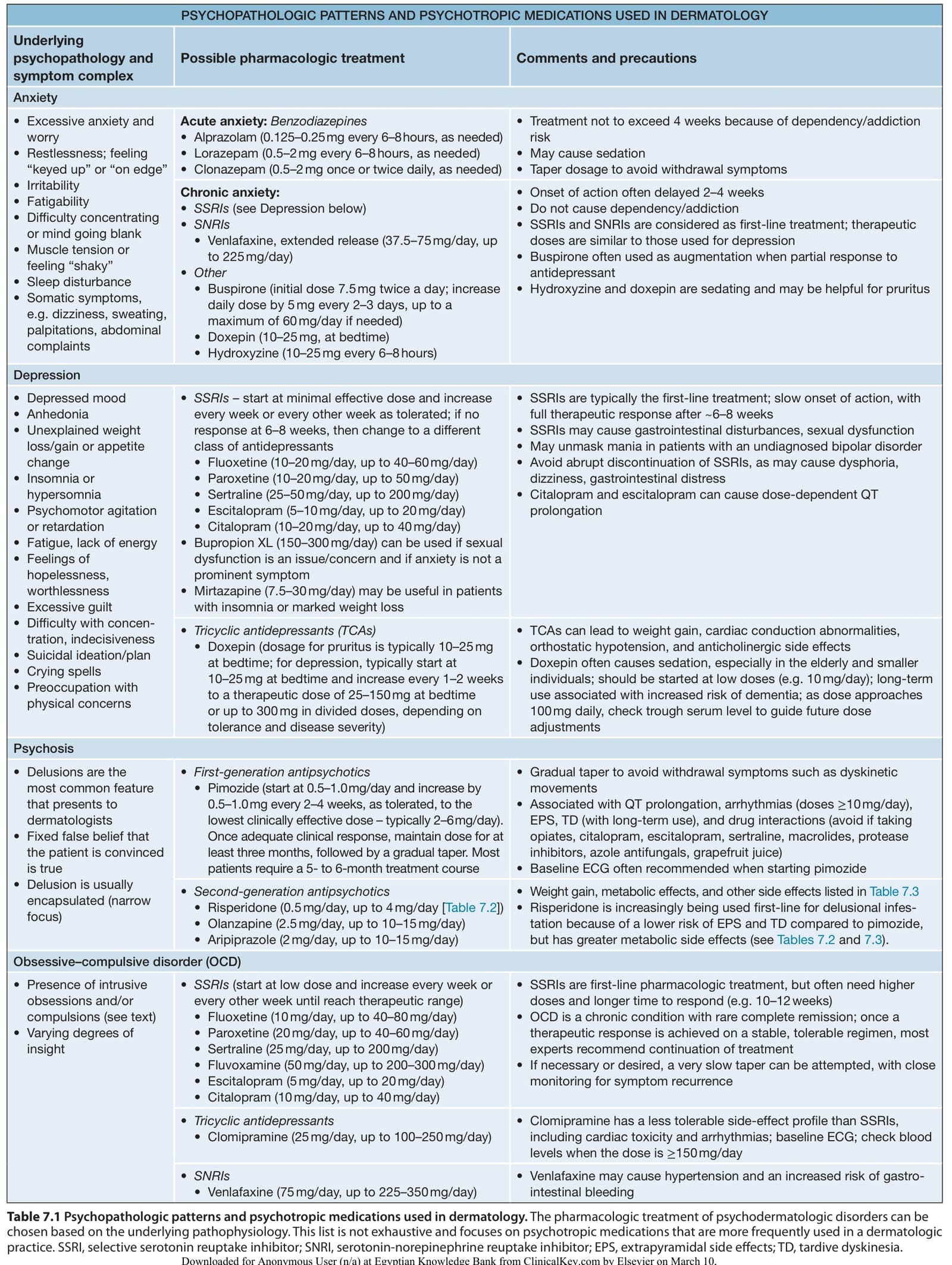
Table 7.1 Psychopathologic patterns and psychotropic medications used in dermatology. The pharmacologic treatment of psychodermatologic disorders can be chosen based on the underlying pathophysiology. This list is not exhaustive and focuses on psychotropic medications that are more frequently used in a dermatologic practice. SSRI, selective serotonin reuptake inhibitor; SNRI, serotonin-norepinephrine reuptake inhibitor; EPS, extrapyramidal side effects; TD, tardive dyskinesia.