Delusional Infestation
Synonyms: Delusional parasitosis Delusions of parasitosis Primary delusional disorder somatic type Morgellons disease
Key features
Fixed, false belief that the skin is infested with animate organisms
(e.g. insects, parasites) or inanimate materials (e.g. fibers) despite evidence to the contrary
Occurs spontaneously and is not secondary to another medical or psychiatric condition or medication/substance use
Requires establishment of a good patient–physician relationship and treatment with an antipsychotic medication
Introduction
The term “delusions of parasitosis” was introduced in 1946 to describe patients whose fixed false belief was that their skin was infested with what they believed to be parasites such as fleas, ticks, and various other organisms. More recently, the term “Morgellons disease” has been used by patients to describe what they falsely perceive as fibers extruding from their skin. To better encompass both of these conditions, which are felt to be along the same spectrum of delusional disorders, the term “delusional infestation” has been proposed and is currently more widely used.
Delusional infestation (DI) is classified as a somatic type of delusional disorder (previously referred to as monosymptomatic hypochondriacal psychosis) within the broad group of schizophrenia spectrum and other psychotic disorders. Delusions are defined as fixed false beliefs that are not amenable to change despite conflicting evidence, and somatic delusions are focused on bodily functions or sensations. Individuals with DI have the isolated and fixed belief that their skin is infested by animate organisms (e.g. insects, parasites) or inanimate materials (e.g. fibers) in the absence of any objective evidence.
Epidemiology
The average age of onset is 55–60 years. Among individuals over 50 years of age, women experience the disorder at least twice as often as men; however, prior to age 50, men and women are equally affected. Younger patients with this disorder are usually of a lower socioeconomic status and may have a history of substance abuse, while older patients are frequently of a higher socio-economic status.
Clinical features
Patients with DI do not meet criteria for a diagnosis of schizophrenia. However, they should fulfill the DSM-5™ diagnostic criteria for a delusional disorder, which are: (1) the delusion must be present for ≥1 month; (2) the patient does not exhibit impaired functioning or bizarre behavior apart from the impact of the delusion; and (3) the delusion cannot be attributable to the effects of a substance, medication, medical condition, or other psychiatric disorder. The delusional belief
is “encapsulated”, i.e. there is a narrow and specific focus on skin infestation. Patients may be able to state that others view their beliefs as irrational (“factual insight”), but they lack the true insight necessary to personally accept the valid explanation.
Individuals with DI typically present with a history of symptoms for months or even years. They have often already been evaluated by many physicians and have tried to eradicate alleged “parasites” by methods such as using pesticides, hiring exterminators, or changing their residence. Patients frequently bring in bits of skin, lint, and other samples that they believe represent “parasites”/fibers, which is referred to as the “matchbox sign” (Fig. 7.2). In addition to or in place of these samples, they may also bring in photographic documentation.
Skin findings in DI range from none to excoriations, lichenification, prurigo nodularis, and ulcerations (see Fig. 7.2). All of these are self-induced, usually resulting from the patient’s efforts to dig out “parasites”/ inanimate materials. Patients often report accompanying pruritus and stinging as well as biting and crawling sensations (formication).
One intriguing aspect of this disorder is the potential for a shared delusional system whereby the patient’s close contacts come to believe in the delusion as well. Folie à deux (“craziness for two”) is the term used to describe two people who share the same delusion. Occasionally, larger numbers of people harbor the same delusion, which may include the patient’s parent(s) and children.
Differential diagnosis
By definition, DI occurs spontaneously and is not caused by another psychiatric or medical disorder; however, the term “secondary DI” is sometimes used for the latter situation. It is essential to exclude an underlying condition before making the diagnosis of “primary” DI. Conditions to consider in the differential diagnosis include: an actual skin infestation (e.g. scabies); formication due to neurologic disease; an underlying psychiatric disorder (e.g. schizophrenia) or medical condition (e.g. dementia, B deficiency, pruritus related to systemic disease); and medication/substance use (e.g. dopamine agonists, amphetamines, cocaine [see Ch. 89]). A thorough history and physical examination should be accompanied by microscopic evaluation of samples brought by the patient. When indicated, skin scrapings, skin biopsies, and laboratory evaluation are also performed.
Treatment
After assessing the differential diagnosis, the first step in management is to establish rapport and address the patients’ concerns seriously without challenging their beliefs. Short follow-up visits and serial skin examinations can be helpful in building a strong therapeutic relationship. When discussing the diagnosis, communicate it in a matter-of-fact manner and refrain from making any statements that may be misinterpreted by patients as supporting their delusional ideation. It is important to validate the person’s experience, without validating the delusion itself, and to ensure that the patient does not feel dismissed in the process of treatment.
The most challenging aspect of treatment is getting patients to agree to a trial of an antipsychotic agent, which is the mainstay of therapy for DI. Systematic reviews have not demonstrated superior efficacy of any particular antipsychotic agent for treatment of DI, and to date there have been no randomized controlled trials. The choice of antipsychotic therapy should take into account patient characteristics and medication side effect profiles (Tables 7.1–7.3). First-line treatment has traditionally been pimozide, which is usually effective at a very low dose and may be better accepted by patients because it has no psychiatric FDA indication (see Table 7.1). However, second-generation antipsychotics (e.g. risperidone; see Table 7.2) have more recently gained favor because of their decreased risk for EPS, but they do have potential metabolic side effects (see Table 7.3). Compared to individuals with other psychotic disorders, patients with DI typically respond to lower doses of antipsychotic agents and can often be successfully tapered off medication after 2–6 months.
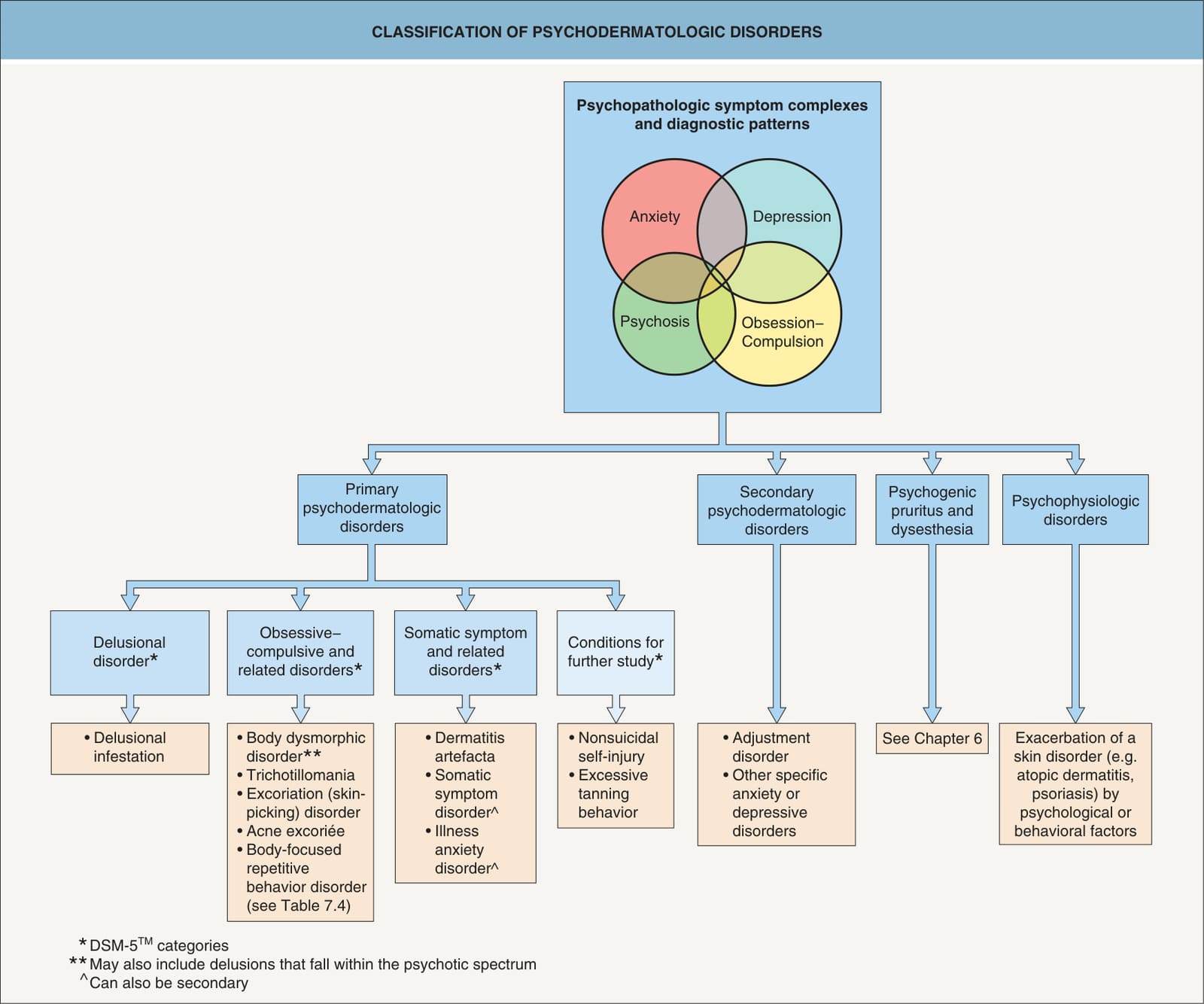
Fig. 7.1 Classification of psychodermatologic disorders. Psychocutaneous disorders can be conceptualized by: (1) the specific psychodermatologic condition and its classification; and (2) the presenting symptom complex of the underlying psychopathology. Primary psychodermatologic disorders are those in which the patient typically has no primary skin disease and cutaneous lesions are self-induced. Secondary psychodermatologic disorders are those in which the patient develops psychological distress or a psychologic disorder as a result of a skin disease. Psychophysiologic disorders are those in which a primary skin condition, such as psoriasis, is exacerbated by psychological or behavioral factors (e.g. stress, anxiety). A particular patient with a psychodermatologic disorder can have a presenting symptom complex with features from one or more of the four major psychopathologic patterns of anxiety, depression, psychosis, and obsessions/compulsions.
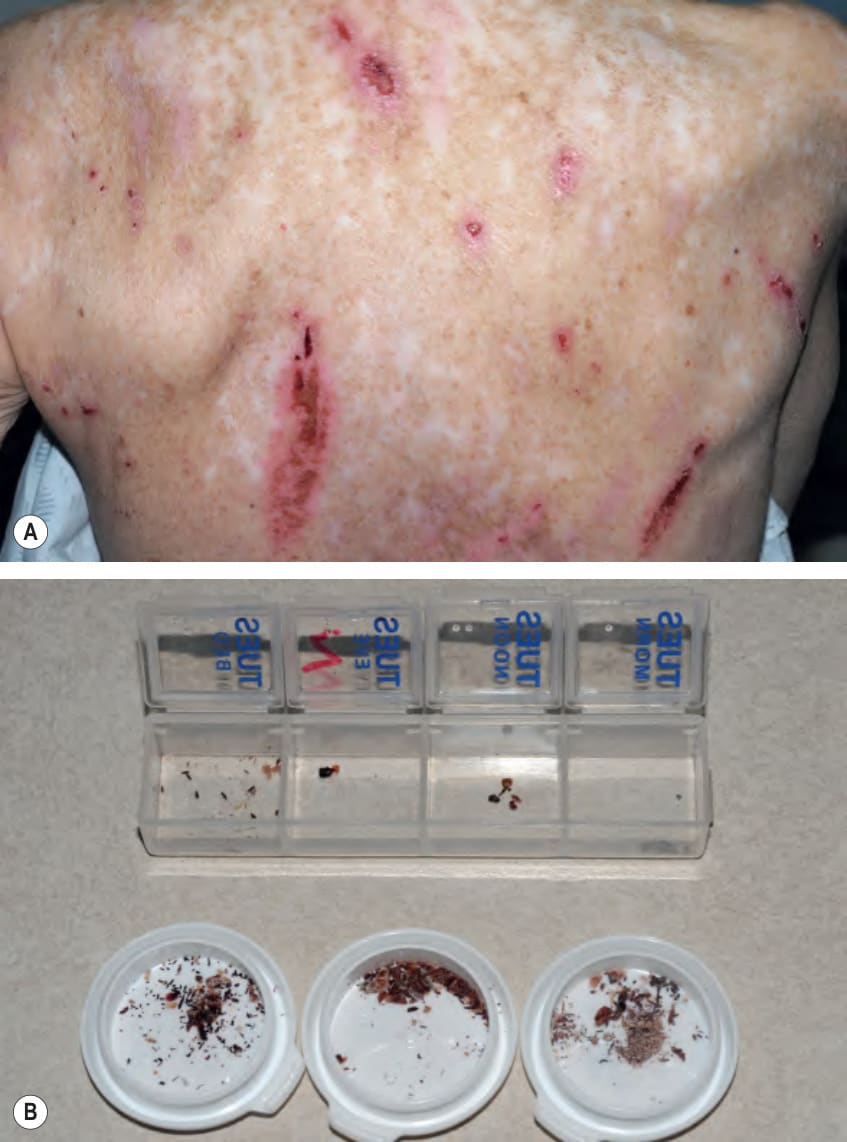
Fig. 7.2 Delusional infestation.A Multiple excoriations and hypopigmented scars resulting from the patient’s attempts to “dig out” parasites. B Samples of alleged “parasites” brought in by a patient (“matchbox sign” or “specimen sign”). Courtesy Kalman Watsky, MD.
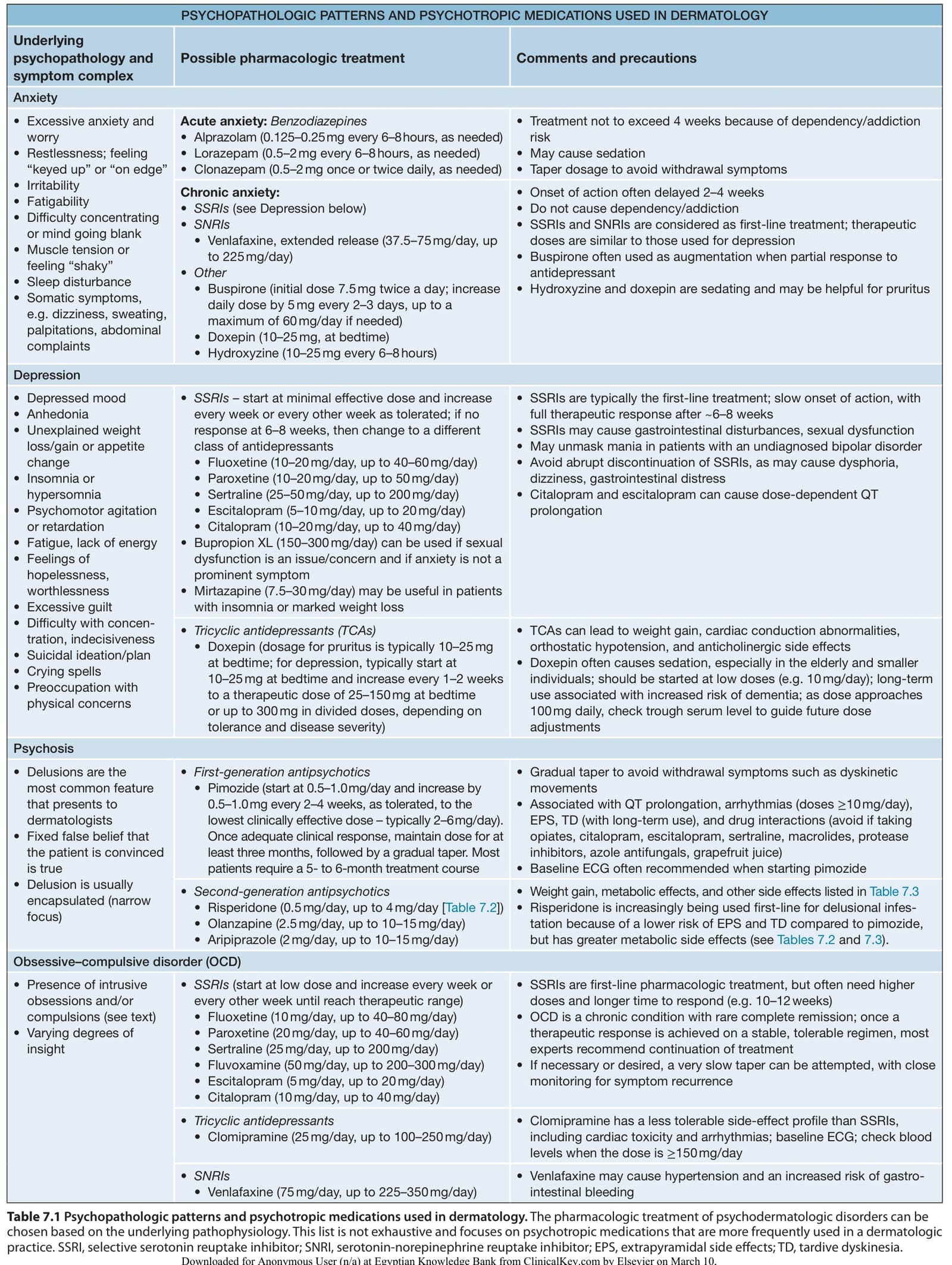
Table 7.1 Psychopathologic patterns and psychotropic medications used in dermatology. The pharmacologic treatment of psychodermatologic disorders can be chosen based on the underlying pathophysiology. This list is not exhaustive and focuses on psychotropic medications that are more frequently used in a dermatologic practice. SSRI, selective serotonin reuptake inhibitor; SNRI, serotonin-norepinephrine reuptake inhibitor; EPS, extrapyramidal side effects; TD, tardive dyskinesia.
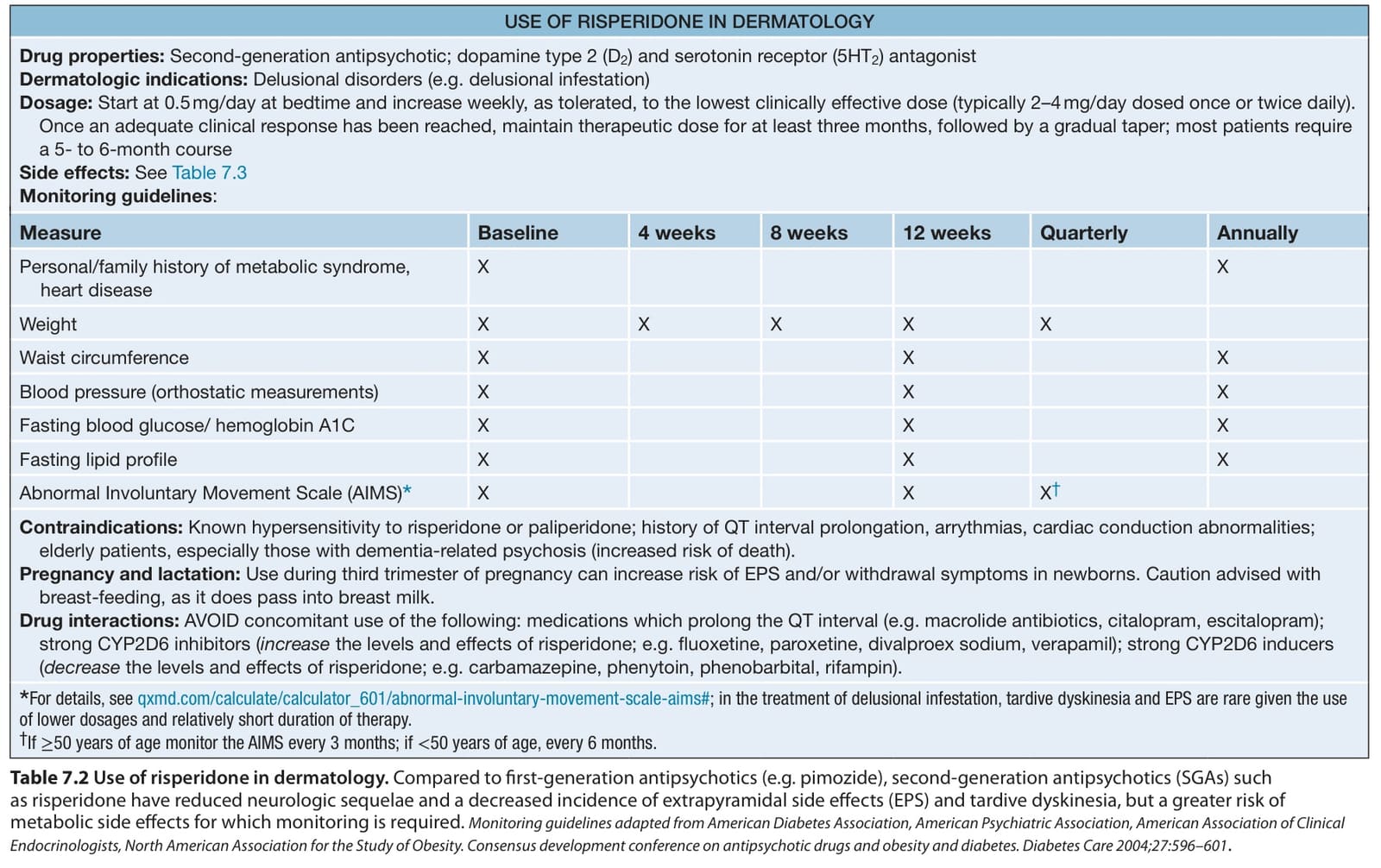
Table 7.2 Use of risperidone in dermatology. Compared to first-generation antipsychotics (e.g. pimozide), second-generation antipsychotics (SGAs) such as risperidone have reduced neurologic sequelae and a decreased incidence of extrapyramidal side effects (EPS) and tardive dyskinesia, but a greater risk of metabolic side effects for which monitoring is required. Monitoring guidelines adapted from American Diabetes Association, American Psychiatric Association, American Association of Clinical Endocrinologists, North American Association for the Study of Obesity. Consensus development conference on antipsychotic drugs and obesity and diabetes. Diabetes Care 2004;27:596–601.
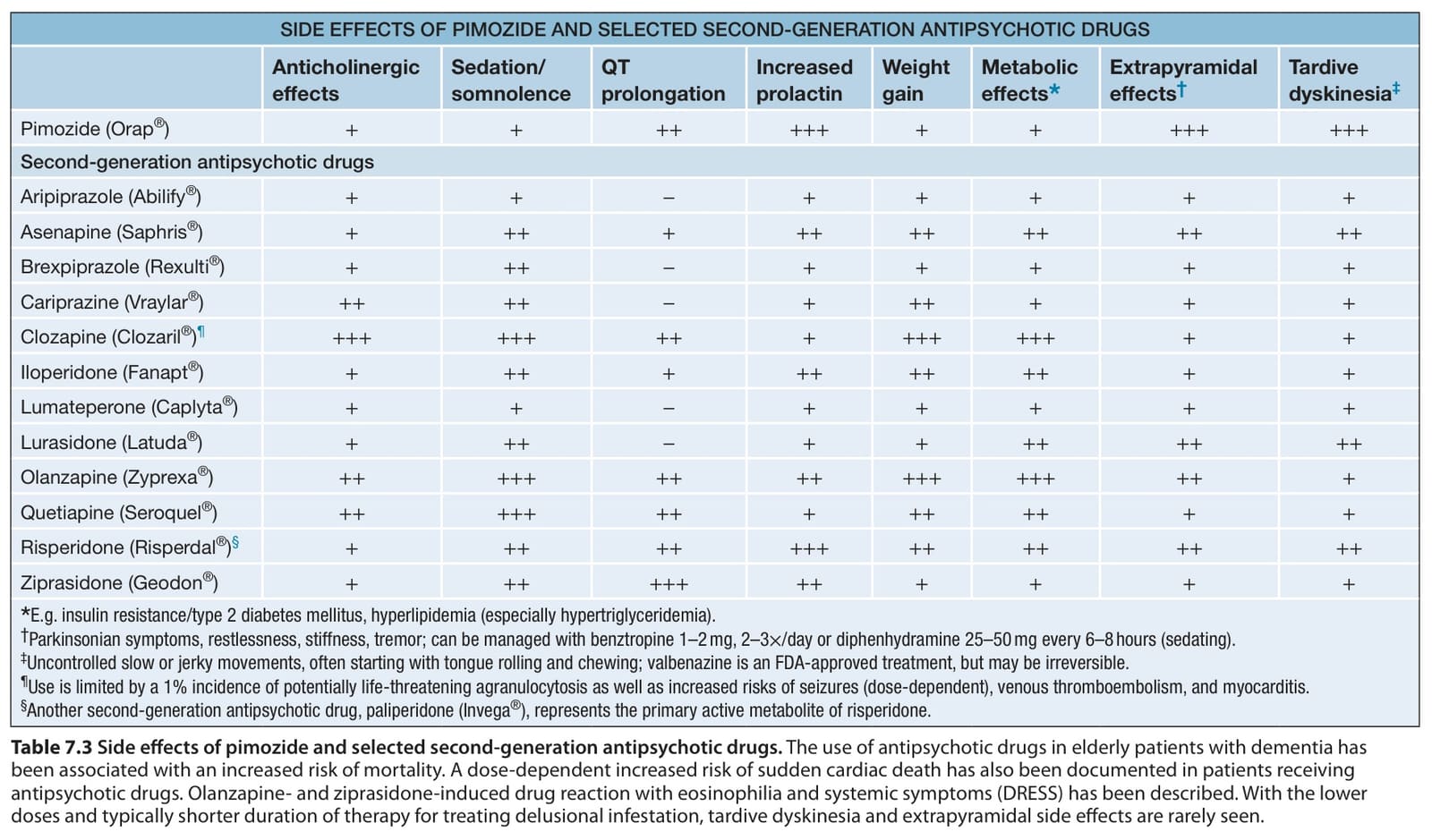
Table 7.3 Side effects of pimozide and selected second-generation antipsychotic drugs. The use of antipsychotic drugs in elderly patients with dementia has been associated with an increased risk of mortality. A dose-dependent increased risk of sudden cardiac death has also been documented in patients receiving antipsychotic drugs. Olanzapine- and ziprasidone-induced drug reaction with eosinophilia and systemic symptoms (DRESS) has been described. With the lower doses and typically shorter duration of therapy for treating delusional infestation, tardive dyskinesia and extrapyramidal side effects are rarely seen.