Body Dysmorphic Disorder
Synonym: Dysmorphophobia
Key features
May affect as many as 10%–15% of dermatology patients
Often begins in late adolescence or early adulthood
Preoccupation with a non-existent or slight defect in appearance
Frequent body sites of concern include the skin, hair, nose, breasts, and genitalia
Typically associated with compulsive or ritualistic behaviors
Introduction
Dermatologists, particularly those performing cosmetic procedures, and plastic surgeons are often consulted by patients with body dysmorphic disorder, a distressing and socially impairing preoccupation with a non-existent or slight defect in appearance.
Epidemiology
The prevalence of body dysmorphic disorder in the general US population is estimated to be ~2.5% in women and 2% in men, but it is as high as 10%–15% in dermatology and cosmetic surgery patients. The mean age at onset is late teens, and the course tends to be chronic.
Clinical features
Patients with body dysmorphic disorder have a fundamental disturbance in their body image. They focus on perceived faults in their skin (e.g. acne, wrinkles, scars), hair (e.g. thinning, excessive), or body structures such as the nose, mouth, breasts, and genitalia. These preoccupations are time-consuming and cause significant distress, frequently leading to social isolation or functional impairment. In addition, affected individuals often adopt compulsive or ritualistic behaviors such as spending an excessive amount of time in front of a mirror or repeatedly checking for perceived imperfections. Personal insight regarding this condition is usually poor.
Treatment
The spectrum of body dysmorphic disorder includes: (1) obsessions with perceived inadequacies, which fall within the obsessive–compulsive disorder (OCD) spectrum; and (2) delusions (fixed false beliefs) about their appearance, which fall within the psychotic spectrum. For the purpose of treatment, it is useful to classify patients into one of these two categories, although the distinction is not always clear and individual patients may fluctuate between delusional and non-delusional thinking. Patients with the delusional variant have no insight into their disease and often go to extraordinary lengths, such as multiple surgeries, to correct their perceived deformity. It is important for cosmetic surgeons to recognize this disorder and avoid performing unnecessary procedures. In addition, patients with body dysmorphic disorder are often dissatisfied with the results of any procedure that is performed.
The first-line therapy for patients with the OCD variant of this disease includes cognitive behavioral therapy (CBT), typically in conjunction
with an SSRI (often requiring a relatively high dose). Antipsychotics are the treatment of choice for patients who are truly delusional (see Tables 7.1–7.3). It is also important to treat any psychiatric comorbidities that may be contributing to the body dysmorphia, such as depression, anxiety, and panic disorder.
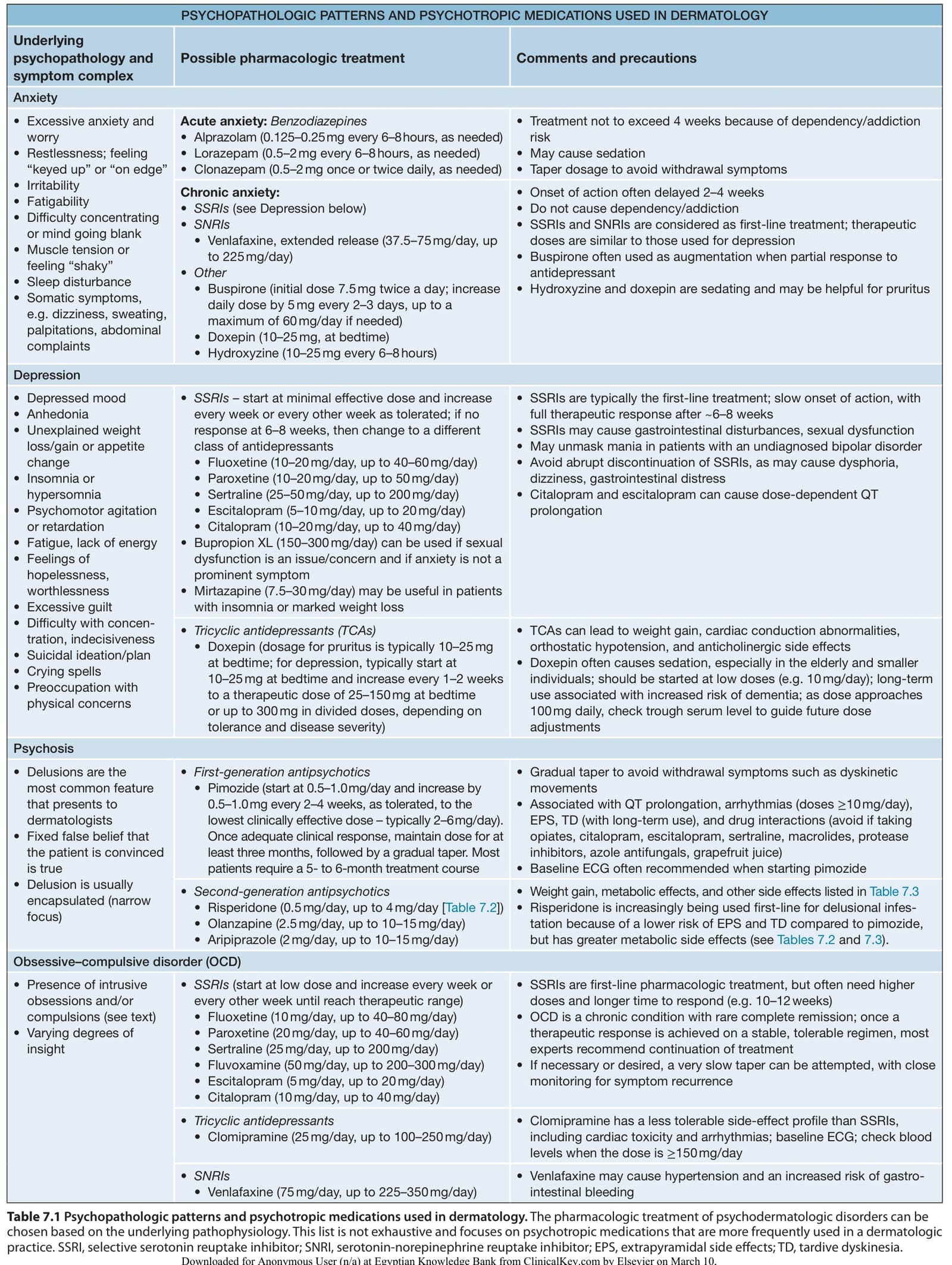
Table 7.1 Psychopathologic patterns and psychotropic medications used in dermatology. The pharmacologic treatment of psychodermatologic disorders can be chosen based on the underlying pathophysiology. This list is not exhaustive and focuses on psychotropic medications that are more frequently used in a dermatologic practice. SSRI, selective serotonin reuptake inhibitor; SNRI, serotonin-norepinephrine reuptake inhibitor; EPS, extrapyramidal side effects; TD, tardive dyskinesia.
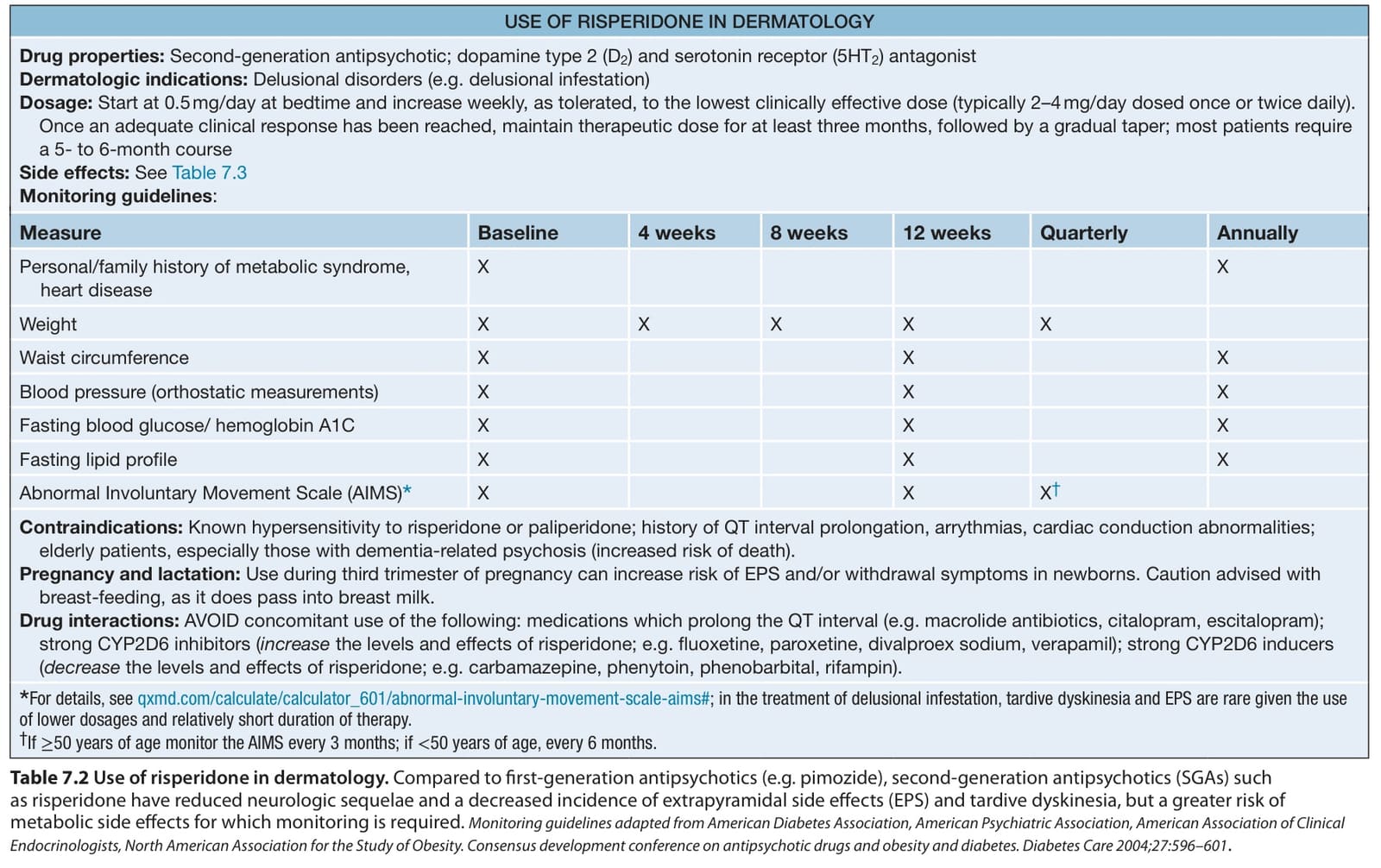
Table 7.2 Use of risperidone in dermatology. Compared to first-generation antipsychotics (e.g. pimozide), second-generation antipsychotics (SGAs) such as risperidone have reduced neurologic sequelae and a decreased incidence of extrapyramidal side effects (EPS) and tardive dyskinesia, but a greater risk of metabolic side effects for which monitoring is required. Monitoring guidelines adapted from American Diabetes Association, American Psychiatric Association, American Association of Clinical Endocrinologists, North American Association for the Study of Obesity. Consensus development conference on antipsychotic drugs and obesity and diabetes. Diabetes Care 2004;27:596–601.
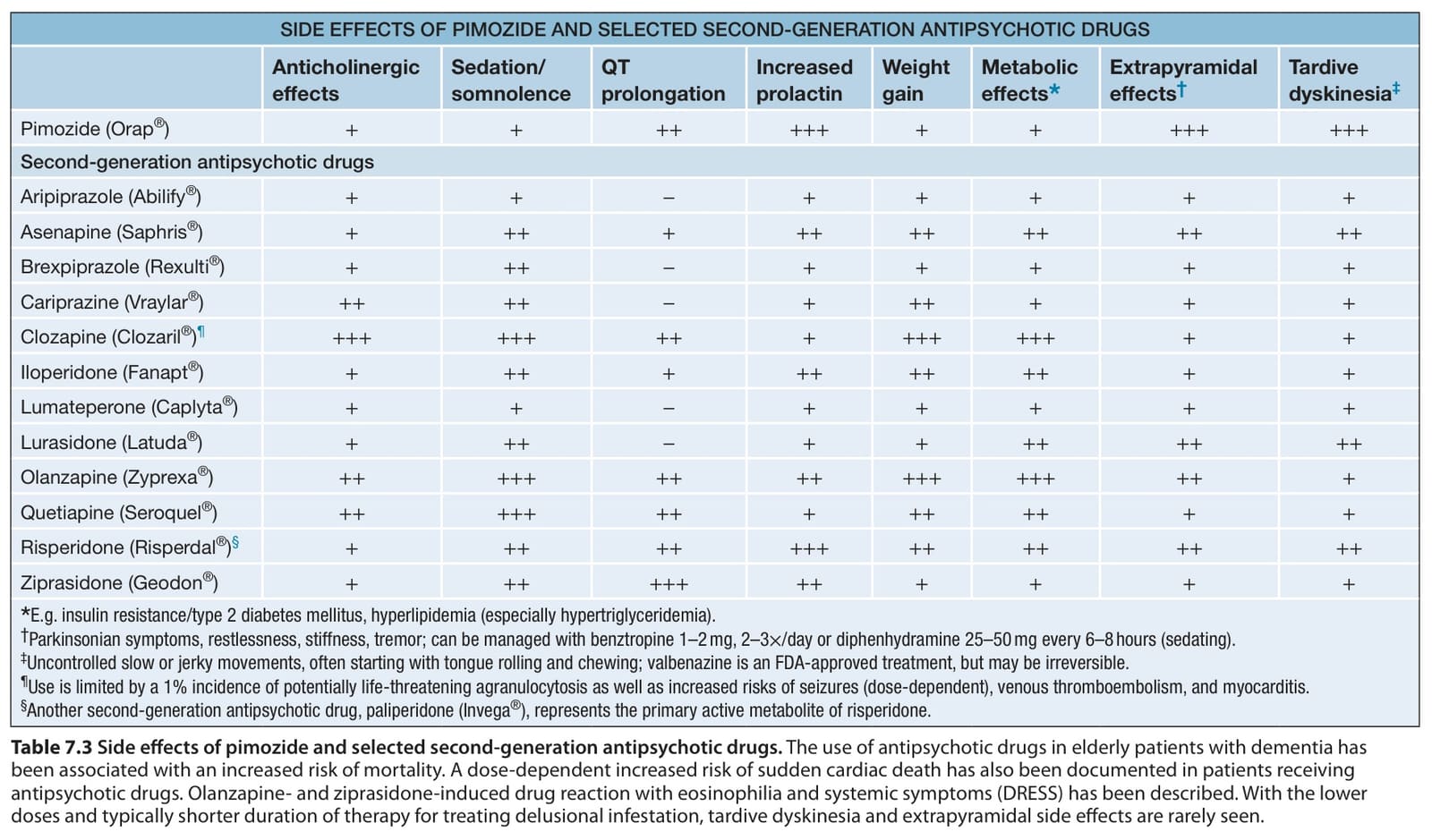
Table 7.3 Side effects of pimozide and selected second-generation antipsychotic drugs. The use of antipsychotic drugs in elderly patients with dementia has been associated with an increased risk of mortality. A dose-dependent increased risk of sudden cardiac death has also been documented in patients receiving antipsychotic drugs. Olanzapine- and ziprasidone-induced drug reaction with eosinophilia and systemic symptoms (DRESS) has been described. With the lower doses and typically shorter duration of therapy for treating delusional infestation, tardive dyskinesia and extrapyramidal side effects are rarely seen.
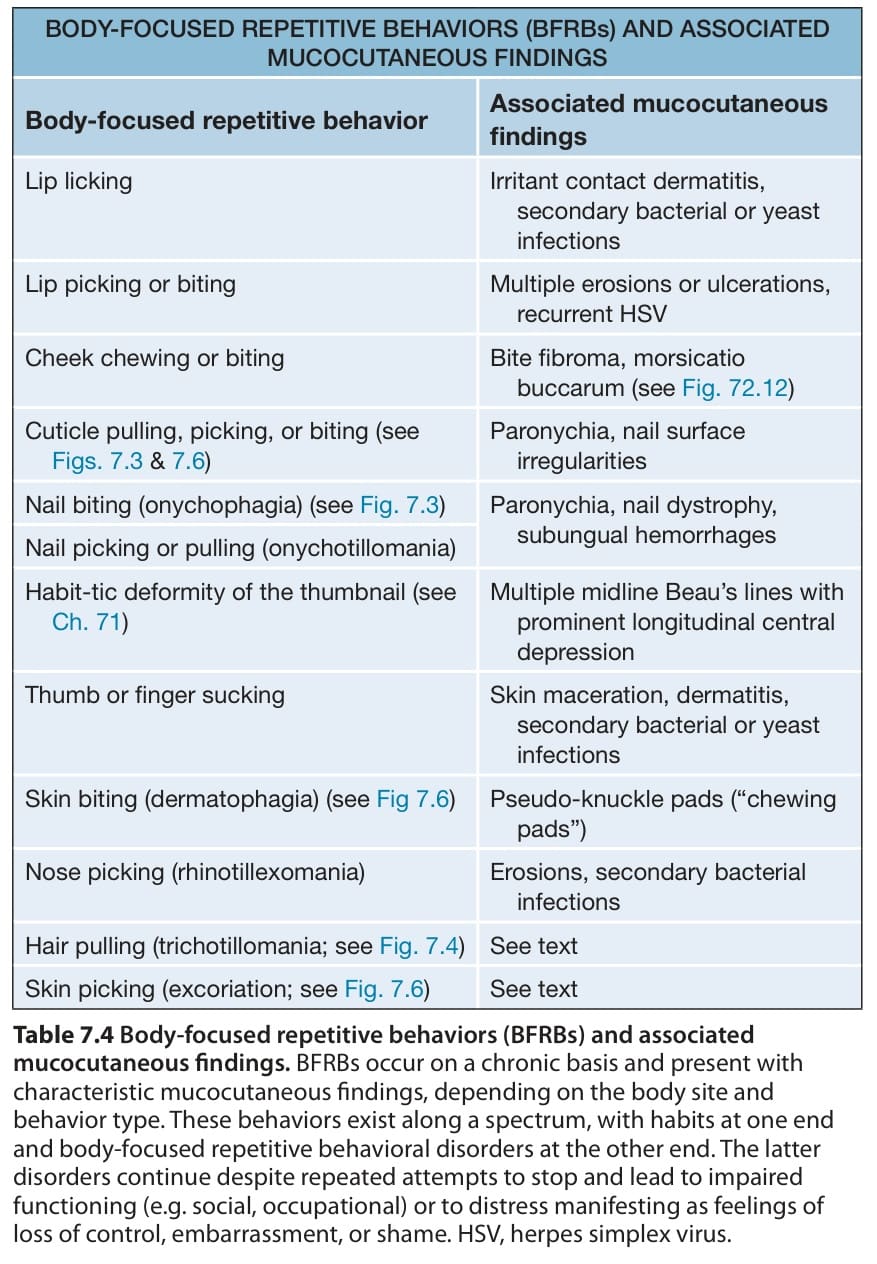
Table 7.4 Body-focused repetitive behaviors (BFRBs) and associated mucocutaneous findings. BFRBs occur on a chronic basis and present with characteristic mucocutaneous findings, depending on the body site and behavior type. These behaviors exist along a spectrum, with habits at one end and body-focused repetitive behavioral disorders at the other end. The latter disorders continue despite repeated attempts to stop and lead to impaired functioning (e.g. social, occupational) or to distress manifesting as feelings of loss of control, embarrassment, or shame. HSV, herpes simplex virus.