Nonsuicidal Self-Injury
Synonym: “Cutting”
Key features
Repeated infliction of cutaneous injuries, e.g. via cutting, stabbing, or burning
Represents a response to psychological distress without suicidal intent
Epidemiology and clinical features
Nonsuicidal self-injury features repeated infliction of shallow injuries to the surface of the body, typically via cutting, stabbing, or burning. There is no suicidal intent, and the purpose is usually to reduce negative emotions or resolve an interpersonal difficulty. The injury may be inflicted with a sharp object (e.g. knife, razor, needle), cigarette, or eraser that is rubbed vigorously. The most common sites are the dorsal forearms and anterior thighs. Most patients do not seek medical help and will admit that they inflicted the lesions on themselves; scars are often the only visible sign of the behavior (Fig. 7.9). Onset is usually in early adolescence and can continue for many years. The overall female : male ratio is approximately 1.5 : 1. Although nonsuicidal self-injury is classically associated with borderline personality disorder, depression and anxiety are more common in affected individuals.
Treatment
Initial management should focus on the patient’s safety and treatment of associated psychiatric conditions. Basic tenets of treatment include determining the patient’s psychologic needs and developing alternative methods to fulfill them. Dialectical behavioral therapy addressing impulse control, affect regulation, distress tolerance, and interpersonal effectiveness can be of benefit for patients with an underlying borderline personality disorder.
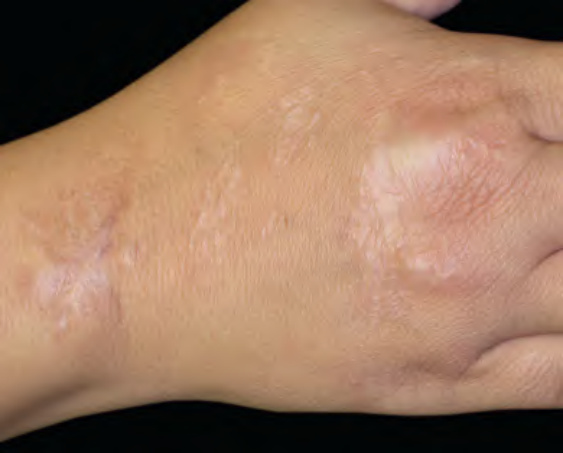
Fig. 7.9 Nonsuicidal self-injury. Repeated episodes of self-cutting with a razor blade caused these hypopigmented scars on the dorsal hand and forearm of this young woman.