ACQUIRED LIPODYSTROPHY DUE TO OTHER CAUSES
Medications
HIV/ART-associated lipodystrophy
Worldwide, HIV/ART-associated lipodystrophy is still the most common form of non-localized lipodystrophy. Fortunately, its incidence has fallen significantly with the advent of new ARTs and increased awareness of its association with protease inhibitors (PI) and nucleoside analogue reverse transcriptase inhibitors (NRTIs) such as stavudine and didanosine. There are several proposed mechanisms to explain this particular type of lipodystrophy (Fig. 101.14; Table 101.6) and they include:
●impaired pre-adipocyte differentiation and increased adipocyte apoptosis
●impaired insulin-stimulated lipogenesis and increased lipolysis, leading to decreased adipocyte size
●mitochondrial toxicity. HIV/ART-associated lipodystrophy reflects an interplay of several factors including the type of ART administered, direct effects of HIV proteins, and other host factors such as age and severity of HIV infection. The key contributor is extended use of higher-risk ARTs, in particular the older-generation NRTIs (e.g. stavudine, didanosine), early PIs (e.g. indinavir, full-dose ritonavir), and raltegravir (an integrase strand transfer inhibitor [INSTI]). Host risk factors include an age >40 years and more severe HIV infection (e.g. CD4+ count <200/mcl, higher nadir viral load) at the onset of therapy. Baseline subcutaneous body fat composition prior to ART also plays a role, with a higher risk of lipoatrophy in individuals with lower body fat and a higher risk of lipohypertrophy in those with higher body fat.
The clinical findings in HIV/ART-associated lipodystrophy include: (1) irreversible lipoatrophy of peripheral sites, primarily the face, extremities, heel pads, and buttocks (Fig. 101.15 & 101.16); (2) central lipohypertrophy or adipose tissue accumulation, especially dorsocervical, supraclavicular and mammary, as well as intra-abdominal and visceral (e.g. liver); and (3) development of metabolic abnormalities. In cross-sectional studies utilizing DEXA scans and computed tomography, a 15%–65% prevalence of central lipohypertrophy was noted within 1 to 2 years of initiation of ART. Patient self-report, in concert with physician examination, represent the earliest and best indicators of body contour changes. The latter are a major cause of both social stigmatization and reduced drug adherence.
Distinct clinical syndromes of fat redistribution can result, depending upon the particular drug or combination of drugs. In patients who developed lipohypertrophy, INSTIs were associated with increased weight
gain compared to PIs and NNRTIs. Amongst the NRTIs, tenofovir alafenamide led to more weight gain than did tenofovir disoproxil fumarate, abacavir, or zidovudine. With regard to lipoatrophy, NRTIs, especially stavudine, were more likely to result in peripheral fat wasting. Of note, older NRTIs are associated with multiple complications related to mitochondrial toxicity, including myopathy, polyneuropathy, liver steatosis, pancreatitis, hyperlactatemia, bone marrow toxicity and a Fanconi-like syndrome.
Similar to inherited lipodystrophy syndromes, fat redistribution in HIV/ ART-associated lipodystrophy may precede the development of metabolic complications. These include insulin resistance, diabetes, dyslipidemia, and bone disorders such as osteopenia, osteoporosis, and avascular necrosis. The insulin resistance may arise via either the direct effects of PIs on insulin-mediated whole-body glucose uptake or the indirect effects of dyslipidemia, mitochondrial toxicity, and changes in body fat composition. Adipocytokines, in particular leptin and adiponectin, affect insulin sensitivity, and low levels of both factors have been observed in HIV/ART-associated lipodystrophy. Genetic variation in resistin production by adipose tissue is also implicated in HIV/ART-associated obesity and insulin resistance. In HIV-infected patients receiving ART, the prevalence of metabolic syndrome has been reported to be 15%–25%, resulting in an increased risk for cardiovascular disease. For example, the Data Collection on Adverse Events of Anti-HIV Drugs (DAD) study found an ~25% increase in the rate of myocardial infarctions per year during the first 4–6 years of ART exposure.
Immune Checkpoint Inhibitor-Associated Lipodystrophy
Two anti-PD-1 antibodies, nivolumab and pembrolizumab, have been associated with the development of lipodystrophy. Following at least 10 months of administration, generalized lipoatrophy developed in
association with diabetes mellitus, insulin resistance, hypertriglyceridemia, and central obesity. These clinical manifestations persisted despite discontinuation of the medication.
POEMS Syndrome
Acquired partial lipodystrophy that preferentially affects the face is one of the more recently recognized cutaneous manifestations of POEMS syndrome (polyneuropathy, organomegaly, endocrinopathy, monoclonal gammopathy, and skin changes). Symmetric lipoatrophy of the face has been noted in up to half of patients. Treatment of the underlying paraproteinemia usually arrests its progression but does not lead to reversal.
Allogeneic Hematopoietic Stem Cell Transplantation-Associated Lipodystrophy
Acquired partial lipodystrophy and associated metabolic abnormalities have been observed following allogeneic hematopoietic stem
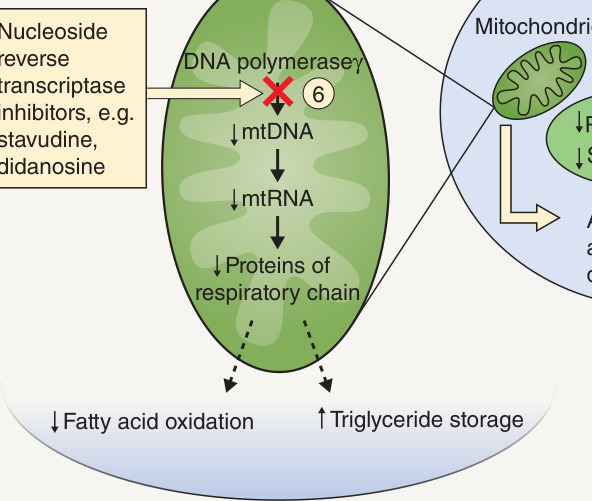
Fig. 101.14 Proposed mechanisms of HIV/ART-associated lipodystrophy. The combination of decreased PPAR-γ expression and decreased fatty acid oxidation capacity resulting from drug exposure could explain how these drugs cause adipocyte toxicity and lipoatrophy. See Table 101.6 for additional details. The numbers represent sites of drug effects. ART, antiretroviral therapy; at-RA, all-trans-retinoic acid; CRABP-1, cytoplasmic retinoic acid binding protein type 1; LPL, lipoprotein lipase; LRP, low-density lipoprotein receptor-related protein; mtRNA, mitochondrial RNA; mtDNA, mitochondrial DNA; PIs, protease inhibitors; PPAR-γ, peroxisome proliferator-activated receptor-γ; RXR, retinoid X receptor; SREBP-1c, sterol regulatory element-binding protein-1c. Adapted from Carr A. HIV protease inhibitor-related lipodystrophy syndrome. Clin Infect Dis 2000;30:S135–42.
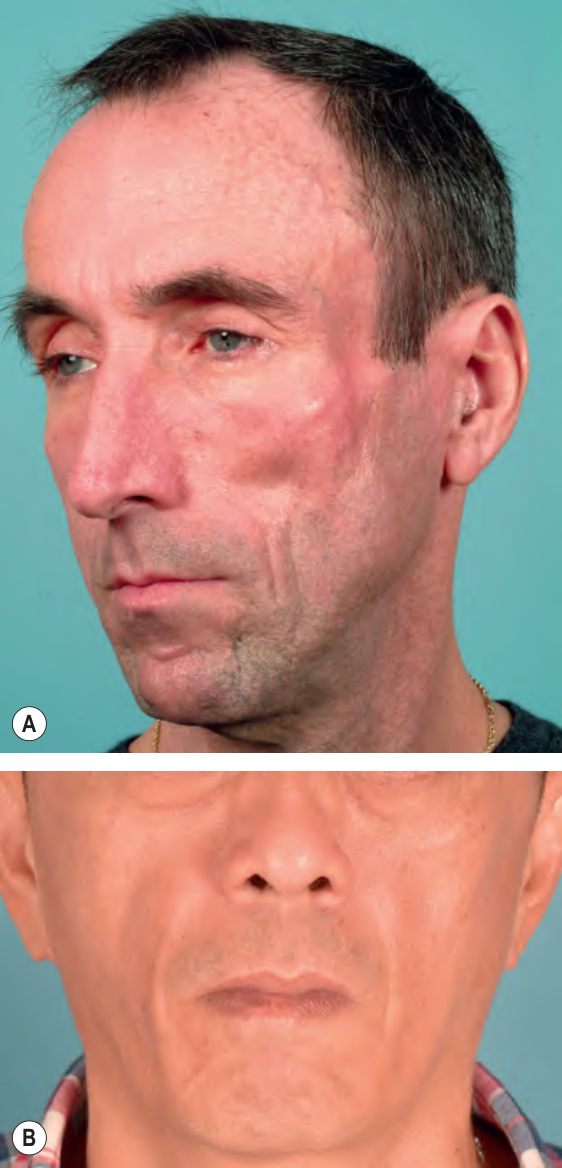
Fig. 101.15 HIV/ ART-associated lipoatrophy.A The side view highlights the loss of temporal fat. B There is symmetric loss of buccal and parotid fat, resulting in prominent zygomata and a cachectic appearance, in a second patient. A, Courtesy Ken Katz, MD; B, Courtesy National Skin Centre, Singapore.
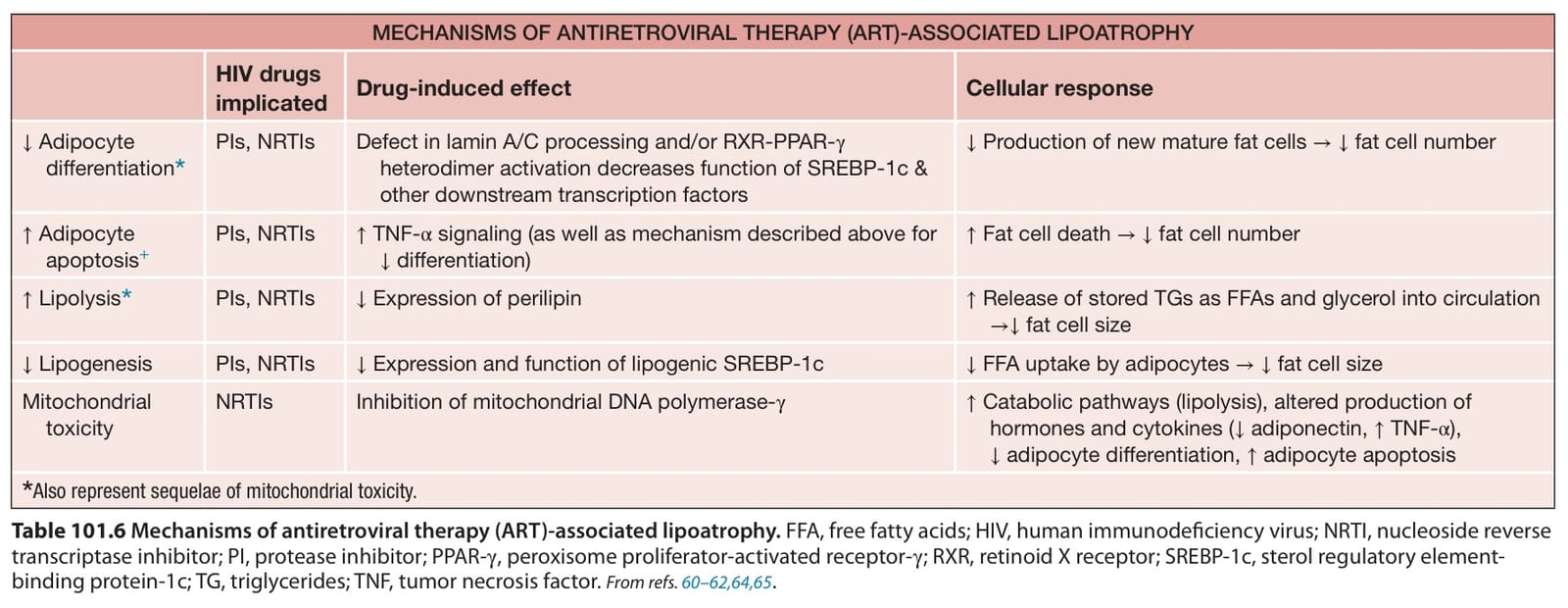
Table 101.6 Mechanisms of antiretroviral therapy (ART)-associated lipoatrophy. FFA, free fatty acids; HIV, human immunodeficiency virus; NRTI, nucleoside reverse transcriptase inhibitor; PI, protease inhibitor; PPAR-γ, peroxisome proliferator-activated receptor-γ; RXR, retinoid X receptor; SREBP-1c, sterol regulatory elementbinding protein-1c; TG, triglycerides; TNF, tumor necrosis factor. From refs. .
cell transplantation, primarily in children. The cutaneous findings resemble those of FPLD with lipoatrophy of the gluteal region and extremities and retention of fat in the face and abdomen. It may reflect a graft-versus-host (GVHD) reaction at the adipocyte level.
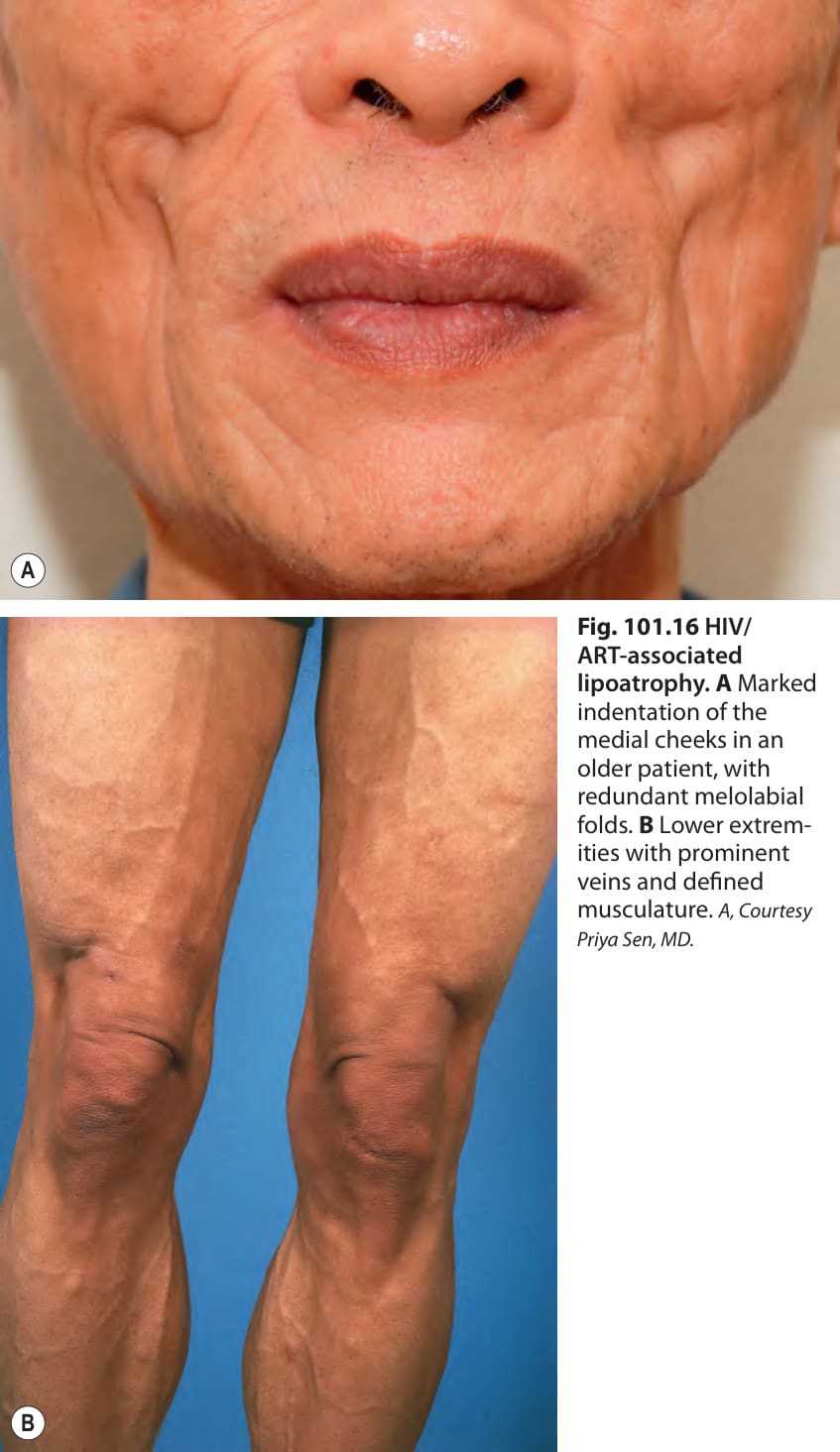
Fig. 101.16 HIV/ ART-associated lipoatrophy.A Marked indentation of the medial cheeks in an older patient, with redundant melolabial folds. B Lower extremities with prominent veins and defined musculature. A, Courtesy Priya Sen, MD.