ANGIOGENESIS- AND LYMPHANGIOGENESIS- RELATED DISEASES
Angiogenesis is a characteristic feature of tissue repair as well as numerous diseases, including inflammatory skin disorders (e.g. psoriasis, contact dermatitis), cutaneous neoplasias (e.g. SCC, melanoma, Kaposi sarcoma, infantile hemangiomas), and chronic wounds. Moreover, several other diseases are characterized by prominent visible blood vessels, including rosacea and basal cell carcinomas (BCCs). Genetic mutations that lead to dysfunction of the vascular Tie-2 receptor have been associated with vascular malformations (see Ch. 104), and mutations in the genes that encode the low-affinity TGF-β receptor endoglin and activin receptor-like kinase (ALK)-1 lead to the formation of vascular malformations in patients with hereditary hemorrhagic telangiectasia types I and II, respectively.
Impairment of lymphatic function leads to the development of several diseases, most prominently to lymphedema with its associated impaired immune function, impaired wound healing, and fibrotic changes. Heterozygous inactivating missense mutations of the gene
encoding VEGFR-3 have been found in families affected by primary lymphedema/lymphatic malformation 1 characterized by chronic swelling of the extremities (see Table 105.7). In lymphedema–distichiasis, lymphatic vessel function fails due to mutations in the gene that encodes the forkhead transcription factor FOXC2. Recessive and dominant forms of hypotrichosis–lymphedema–telangiectasia are also caused by dysfunction of a transcription factor, SOX18. Additional gene mutations involved in lymphatic anomalies include CCBE1, FAT4, or ADAMTS3 (Hennekam lymphangiectasia–lymphedema syndrome), GJC2 (hereditary lymphatic malformation 3), PTPN11 (Noonan syndrome), and GATA2 (primary lymphedema with myelodysplasia [Emberger syndrome]).
Insufficient angiogenesis has also been shown to play a fundamental role in chronic wounds, particularly in patients with diabetes mellitus. In diabetic wounds, VEGF-A levels and the Ang-1 : Ang-2 ratio are decreased, while systemic PEDF levels are increased. This results in a significant impairment of angiogenesis and wound healing.
Tumor-induced lymphangiogenesis promotes sentinel lymph node metastasis and reduces overall survival in patients with melanomas and various types of carcinomas. Finally, impaired function of lymphatic vessels has been identified in chronic inflammation, and activation of lymphatic vessel function has shown promising results in the treatment of chronic inflammatory diseases including experimental skin inflammation and arthritis.
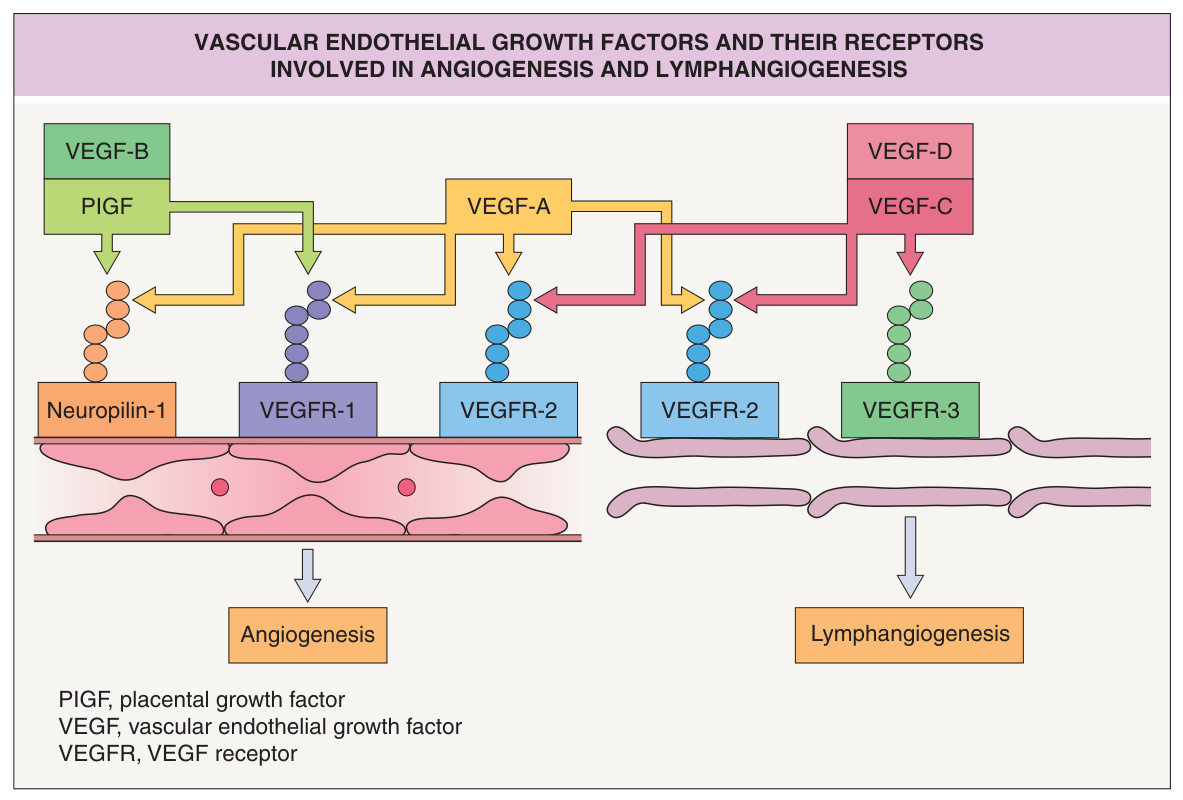
Fig. 102.14 Vascular endothelial growth factors and their receptors involved in angiogenesis and lymphangiogenesis. Heterozygous inactivating missense mutations of the gene encoding VEGFR-3, the receptor for the lymphangiogenesis factors VEGF-C and VEGF-D, have been found in families affected by primary lymphedema/lymphatic malformation 1, which is characterized by chronic swelling of the extremities.