HISTORY
The terms “infantile hemangioma” and “hemangioma of infancy” describe a specific group of vascular tumors that arise during infancy and demonstrate characteristic clinical and histologic features. IHs have been recognized in the medical literature for centuries, and they have been given various names such as strawberry nevus and capillary hemangioma. Despite early attempts to make distinctions among different types of vascular lesions, the term “hemangioma” was applied to a wide variety of congenital and acquired vascular anomalies including vascular malformations, without consideration of differences in their biologic behavior.
One of the important developments in the study of vascular “birthmarks”, including lesions that become apparent during early infancy, was the acceptance of a biologic classification scheme. In 1982, Mulliken and Glowacki first proposed that vascular birthmarks should be categorized according to their biologic and clinical behavior. The International Society for the Study of Vascular Anomalies has modified and periodically updated this classification to reflect new insights, including the genetic bases of multiple types of vascular anomalies (Table 103.2).
Under this organization scheme, vascular birthmarks are divided into three categories: vascular tumors, vascular malformations, and a smaller group of “provisionally unclassified” lesions. Vascular tumors are characterized by cellular proliferation and include IH, pyogenic granuloma, and less common neoplasms such as tufted angioma and kaposiform hemangioendothelioma (see Table 103.2 and Ch. 114). Vascular malformations, on the other hand, are believed to represent errors in vascular morphogenesis. They are frequently noted during the neonatal period, but, unlike IHs, they do not rapidly proliferate in the first year of life nor do they resolve spontaneously (see Table 103.1;
see Fig. 104.1). Vascular malformations are characterized by the type of anomalous vessels they contain and by their flow properties (see Ch. 104). The biologic classification includes histopathologic, immunohistochemical, and genetic features that aid in distinguishing IHs from other vascular anomalies as well as predicting the clinical behavior and prognosis of these vascular lesions. The current classification serves as a framework for understanding vascular birthmarks but is evolving as new insights emerge.
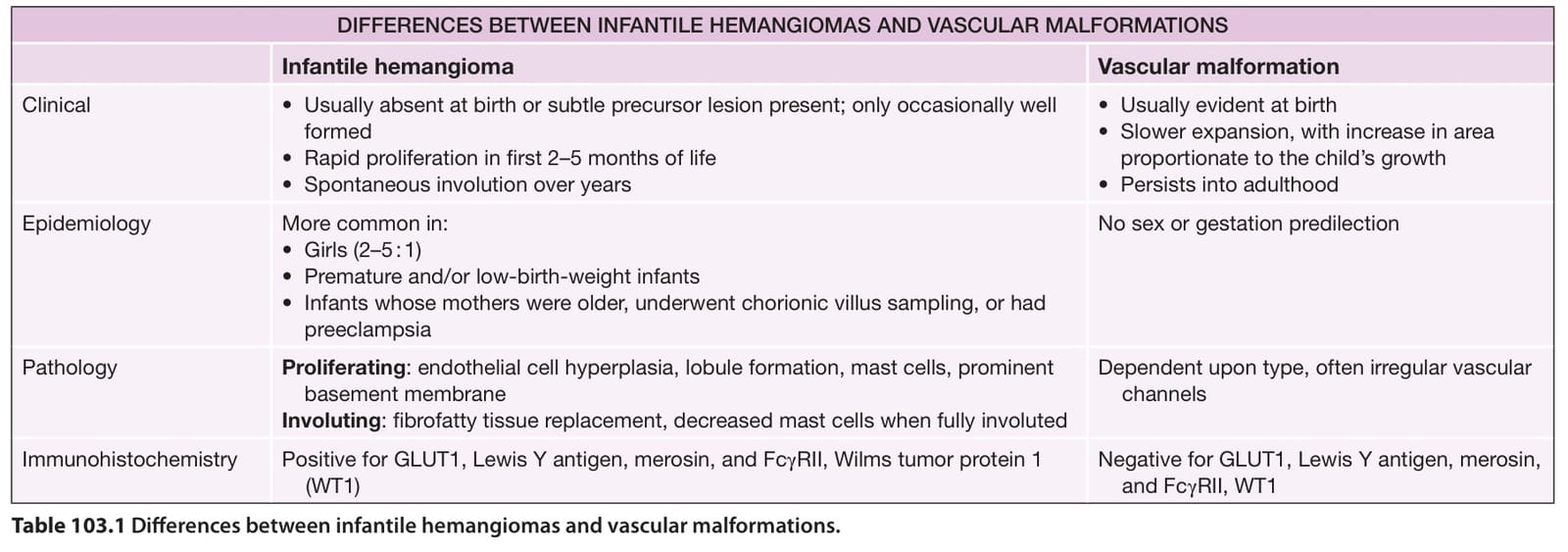
Table 103.1 Differences between infantile hemangiomas and vascular malformations.
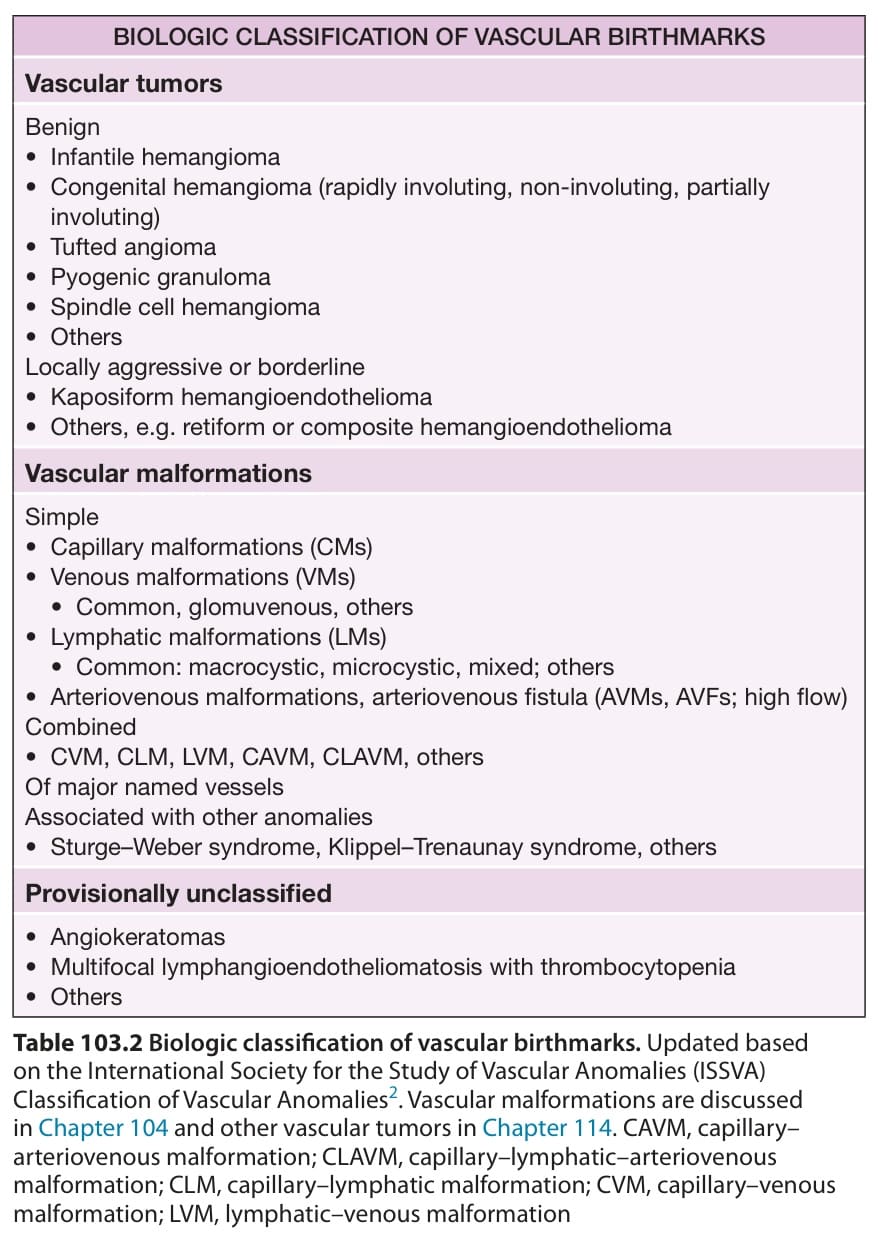
Table 103.2 Biologic classification of vascular birthmarks. Updated based on the International Society for the Study of Vascular Anomalies (ISSVA) Classification of Vascular Anomalies. Vascular malformations are discussed in Chapter 104 and other vascular tumors in Chapter 114. CAVM, capillary– arteriovenous malformation; CLAVM, capillary–lymphatic–arteriovenous malformation; CLM, capillary–lymphatic malformation; CVM, capillary–venous malformation; LVM, lymphatic–venous malformation