PROGNOSIS
The prognosis of a patient with melanoma depends upon the stage at diagnosis. Prognosis for patients with surgically resected localized primary cutaneous melanoma and no nodal or distant metastases (stage I or II) is generally excellent (see Table 113.12). Patients with stage IA melanoma have a 5-year survival expectancy of 99% per the AJCC-8 international database, compared to patients with thick (>4 mm), ulcerated melanoma (T4b N0) who have a 5-year survival rate of 82%. Although dermal mitotic rate is not incorporated into AJCC-8 staging, it is an independent prognostic factor for survival; for example, a mitotic rate of ≥11/mm decreases 5-year survival in node-negative T1–T4 melanoma to 84%. In addition to the microstaging variables discussed above, clinical variables with prognostic significance in stage I/II disease include sex, age, and anatomic site (Table 113.14). For example, women with stage I/II disease tend to have a better MSS than men. Location of the primary melanoma on the trunk, head (particularly scalp), or neck portends a poorer prognosis than melanoma on the extremities.
Stage III melanoma patients are a heterogeneous group with respect to risk for distant metastases and MSS. Per AJCC-8 data, the 5-year survival rates range from 93% for patients with pathologic stage IIIA melanoma (non-ulcerated primary tumor ≤2 mm in depth and up to 3 nodal micrometastases [T1a/b–T2a N1a–N2a M0]) to a low of ~32% for patients with pathologic stage IIID melanoma (ulcerated T4 primary tumor plus four or more clinically occult or detected lymph nodes ± lymphatic metastasis [T4b N3a/b/c M0]). However, with the advent of newer targeted agents and immune checkpoint inhibitors, survival rates for both stage III and IV melanoma have increased over the past decade. Major prognostic factors in stage III melanoma are primary tumor characteristics (thickness and ulceration), the number of lymph nodes with metastases, and tumor burden. The latter is based on whether nodal metastases are clinically occult (micrometastases, as detected by SLNB) or clinically palpable (macrometastases), in addition to the presence or absence of lymphatic (microsatellite/satellite/ in-transit) metastasis.
In stage IV patients, the major prognostic factor is the site of distant metastases, with a poorer prognosis for visceral than for non-visceral (e.g. skin, subcutaneous, distant lymph node) metastases. Prior to the use of more effective systemic agents over the past decade, the median survival for stage IV patients was 9 months, and the estimated 5-year survival rate was <10% when the serum LDH level was abnormally elevated. Variables that influence survival are initial site of metastasis, disease-free interval before distant metastases, stage of disease preceding distant metastases, and tumor burden at the time of diagnosis. Lower tumor burden in patients with unresectable stage III/IV melanoma (defined as normal serum LDH level and <3 organ sites with metastasis) is associated with improved response to targeted therapy, suggesting that earlier detection and treatment of metastatic disease may improve long-term survival.
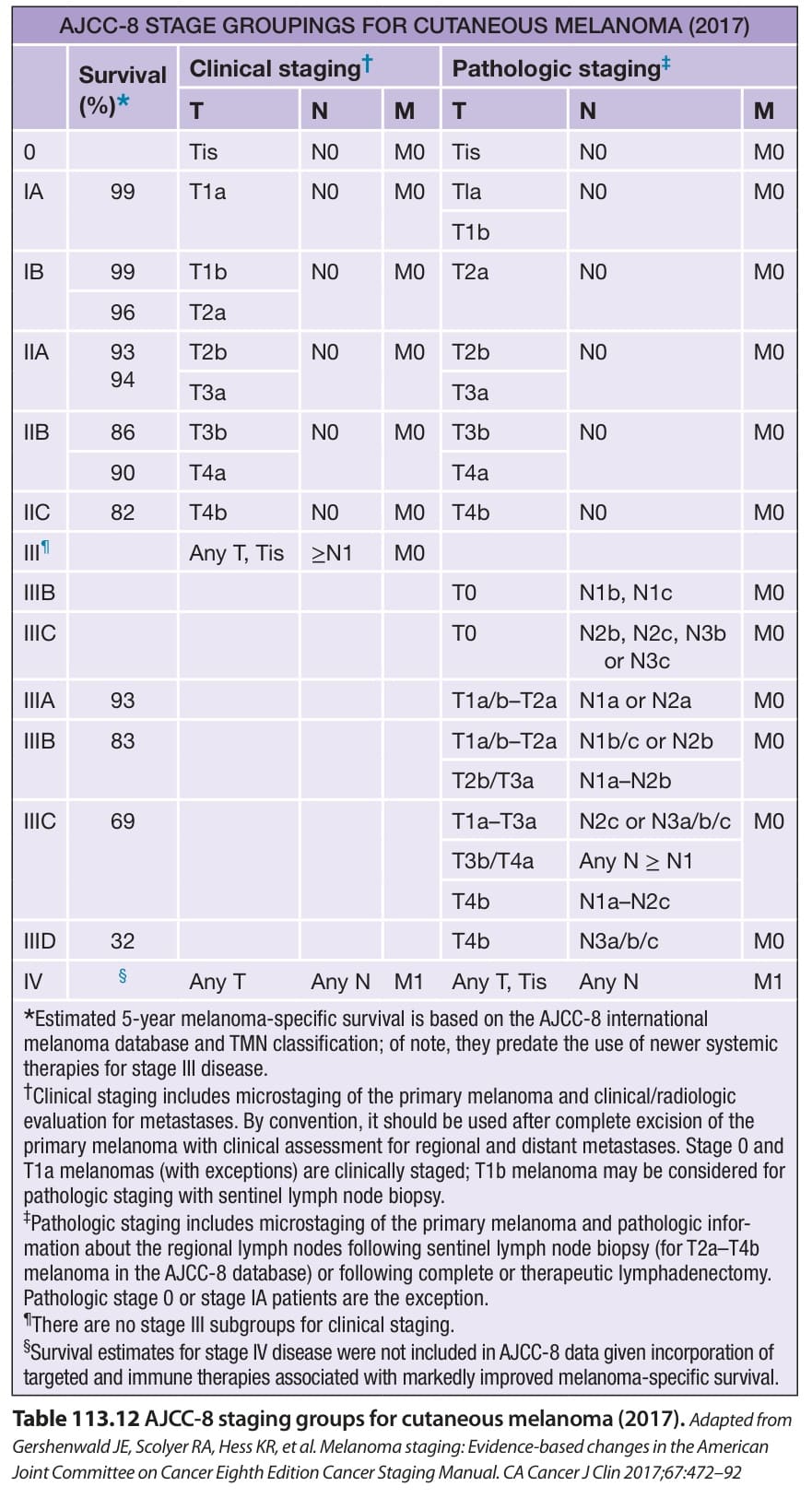
Table 113.12 AJCC-8 staging groups for cutaneous melanoma (2017).Adapted from Gershenwald JE, Scolyer RA, Hess KR, et al. Melanoma staging: Evidence-based changes in the American Joint Committee on Cancer Eighth Edition Cancer Staging Manual. CA Cancer J Clin 2017;67:472–92
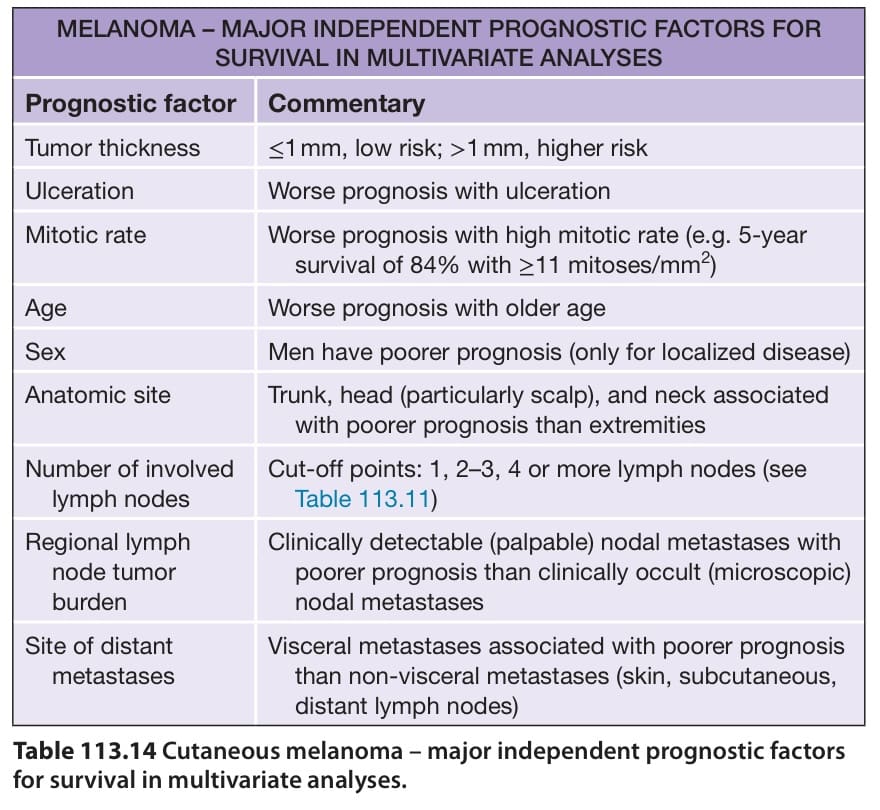
Table 113.14 Cutaneous melanoma – major independent prognostic factors for survival in multivariate analyses.