INTRODUCTION
Mastocytosis represents a spectrum of clinical disorders with a common phenotype of tissue mast cell hyperplasia that can involve the skin, bone marrow, and other organs. Despite significant advances in under-standing the pathogenesis of mastocytosis, explanations for the differences in clinical presentations and course between childhood-onset and adult-onset disease are still needed (Fig. 118.1). Childhood mastocytosis has an excellent prognosis, with ~50%–70% of affected children experiencing resolution by adolescence. In contrast, adult-onset mastocytosis typically has a chronic course and is more often associated with extracutaneous involvement and systemic symptoms. Therapy for mastocytosis usually centers on inhibiting the effects of secreted mast cell mediators, with tyrosine kinase inhibitors such as midostaurin, avapritinib, and imatinib representing options in patients with more advanced systemic disease. Cytoreductive therapies (e.g. cladribine) and rarely hematopoietic stem cell transplantation may also be utilized in advanced systemic disease.
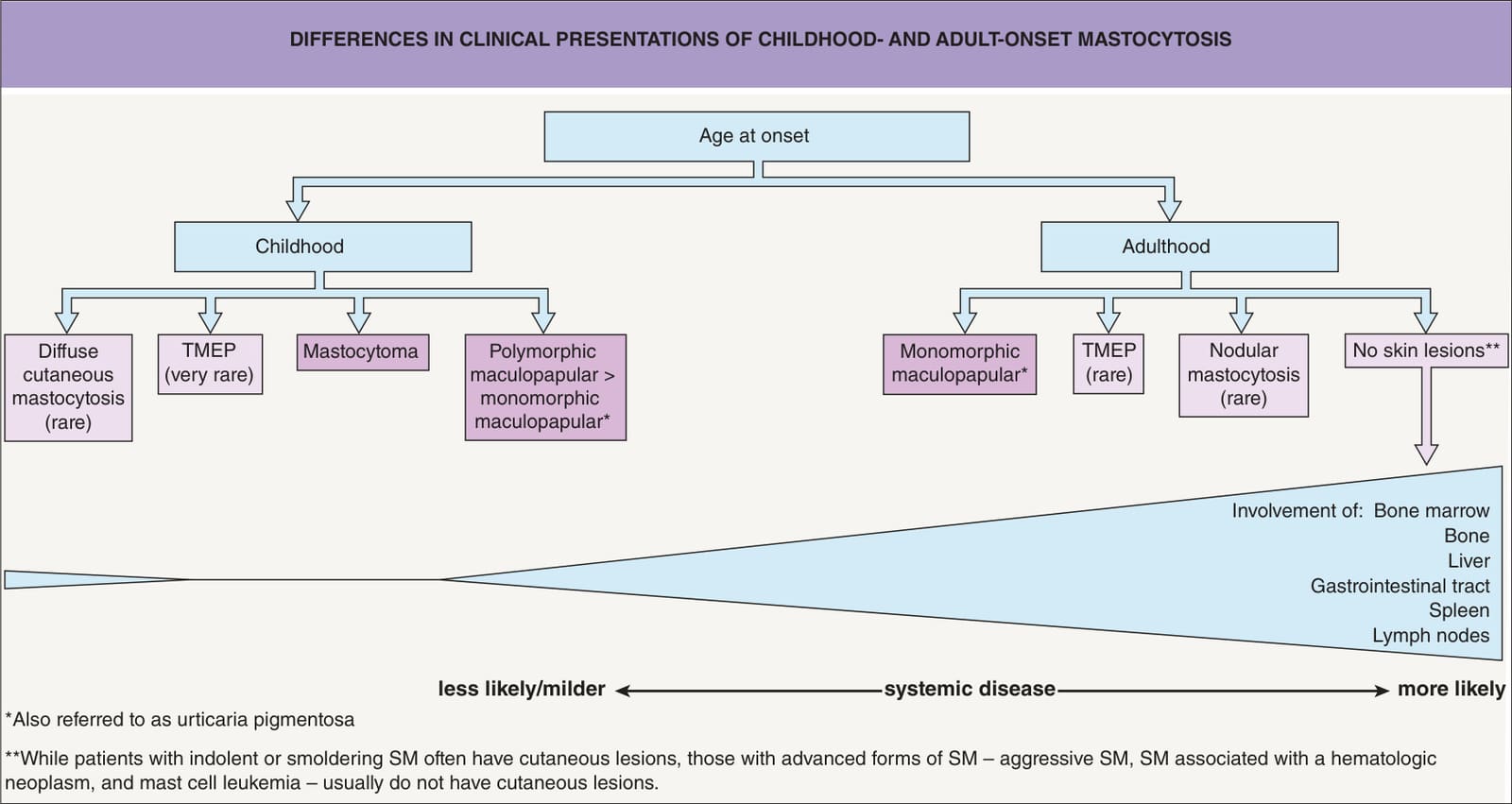
Fig. 118.1 Clinical presentations of childhood and adult-onset mastocytosis. The darker boxes represent the most common forms. Based upon the WHO classification scheme (see Tables 118.1 & 118.2), most children and a small proportion of adults have isolated cutaneous mastocytosis. Most adults with skin lesions have indolent systemic mastocytosis (SM), while those with advanced forms of SM usually do not have cutaneous involvement. In general, children have a benign course with a tendency for spontaneous remission. SM, systemic mastocytosis; TMEP, telangiectasis macularis eruptive perstans.