EPIDEMIOLOGY
Depending upon the series, cutaneous metastases occur in 1% to 10% of patients with metastatic disease (to any organ). Although uncommon, their recognition is important because they can be the first sign of metastatic disease and, as a result, have profound prognostic implications. The proportion of patients with metastatic disease who have cutaneous metastases depends upon the particular malignancy, e.g. the highest incidence is in individuals with metastatic melanoma, where up to 45% of patients can develop skin metastases (Table 122.1). Sex-specific cancer rates also influence the frequency of the various types of cutaneous metastases. In women, skin metastases are most often due to breast carcinoma (70%) and melanoma (12%), followed by carcinomas originating from the ovary, head and neck, and lung. In men with skin metastases, the most common underlying malignancies are melanoma (32%), followed by carcinomas of the head and neck (16%), lung (12%), and colon (11%).
The overall prevalence of a cancer is also an important determinant. For instance, although skin metastases develop in only 2.5% of patients with metastatic lung cancer, they account for 12% of all cutaneous metastases in men due to the high prevalence of lung cancer (Fig. 122.2).
Similarly, the age of the patient plays a role, with rhabdomyosarcoma and neuroblastoma responsible for the majority of cutaneous metastases seen in children.
Cutaneous metastases develop an average of 36 months (range, 1 to 177 months) after the initial diagnosis of the primary malignancy. Unfortunately, the vast majority (~95%) of patients with cutaneous metastases have advanced, stage III or IV disease. Rarely, cutaneous metastases can be the presenting sign of an internal malignancy (<1% of all new cancer diagnoses).
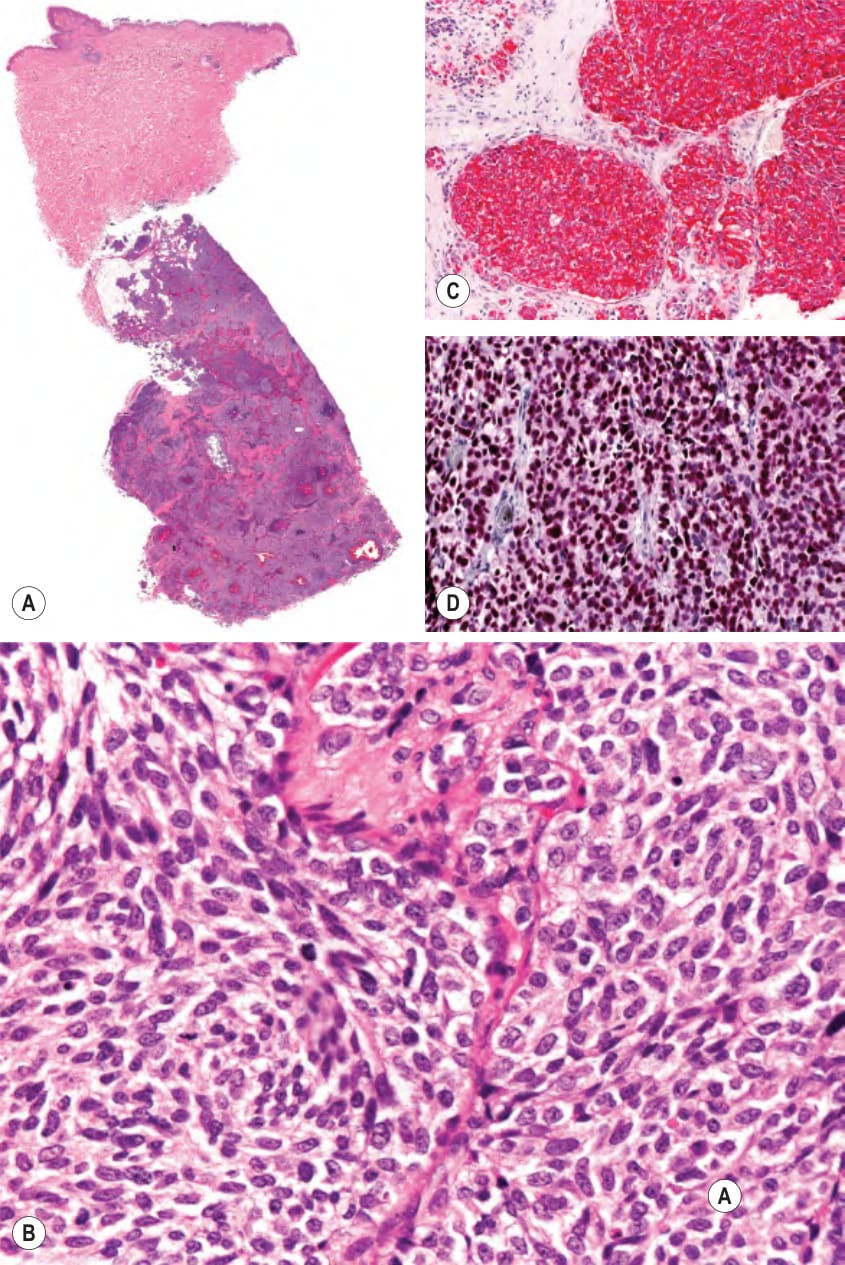
Fig. 122.2 Subcutaneous metastasis of small cell lung carcinoma.A Note sparing of the dermis. B Higher magnification demonstrating clusters of basaloid cells. C The tumor cells stain positively for CK7. D The tumor cells also stain positively for TTF-1 (thyroid transcription factor-1). Courtesy Lorenzo Cerroni, MD.
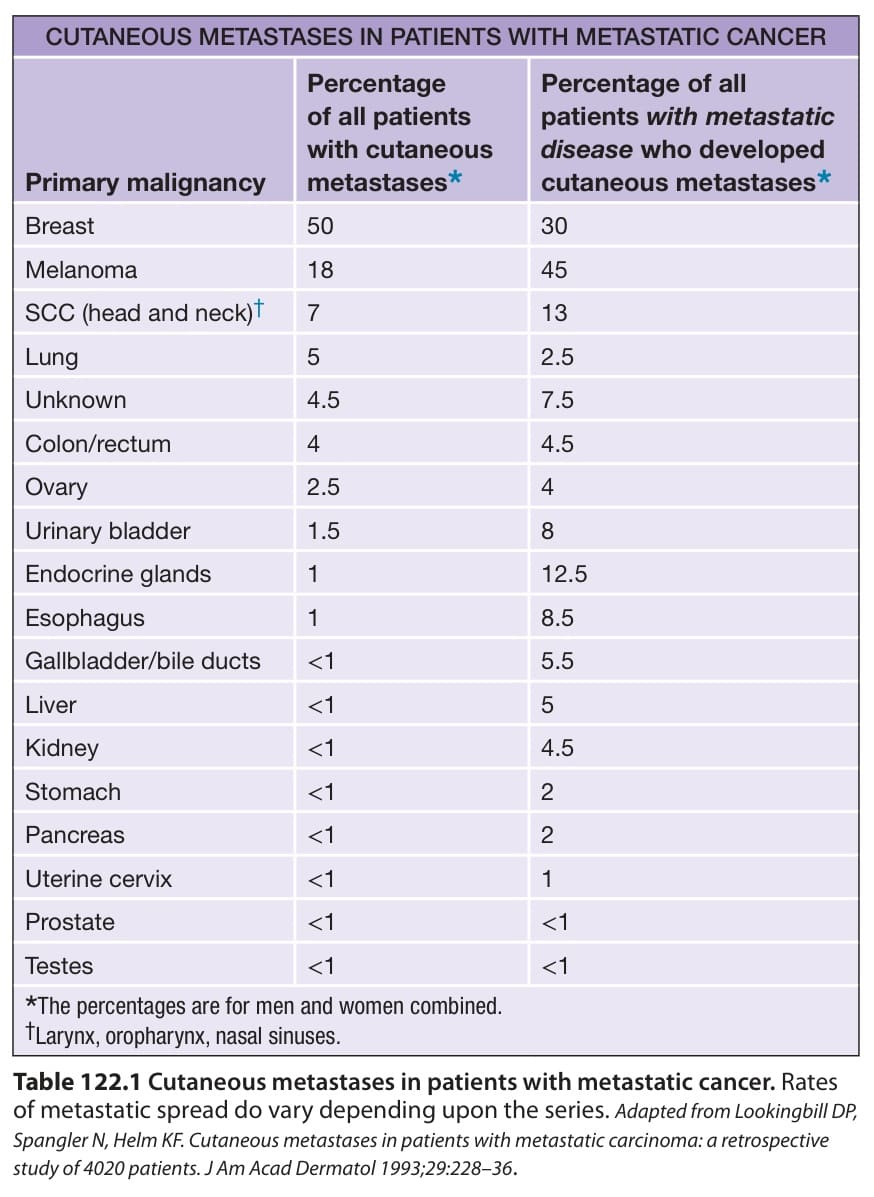
Table 122.1 Cutaneous metastases in patients with metastatic cancer. Rates of metastatic spread do vary depending upon the series. Adapted from Lookingbill DP, Spangler N, Helm KF. Cutaneous metastases in patients with metastatic carcinoma: a retrospective study of 4020 patients. J Am Acad Dermatol 1993;29:228–36.