INTRODUCTION
Vitamin A (retinol) and related compounds with either structural (retinol derivative) or functional (vitamin A activity) similarities are known as retinoids (Fig. 126.1). The importance of retinoids in cutaneous biology was first appreciated early in the twentieth century by Wolbach, who observed that vitamin A-deficient animals manifested altered keratinization, such as epidermal hyperkeratosis and squamous metaplasia of mucous membranes. The anti-keratinizing properties of vitamin A led von Stuettgen and Bollag to administer topical and systemic retinoids to treat disorders of cornification. In initial clinical trials with oral vitamin A, tolerable doses were ineffective but higher, potentially effective doses were too toxic. Because of this narrow therapeutic window, a program was launched to engineer synthetic retinoids with higher therapeutic activity and lower toxicity. Parallel to efforts with systemic agents, a growing interest in topical retinoids emerged.
All-trans-retinoic acid (at-RA; tretinoin), a naturally occurring metabolite of retinol (see Fig. 126.1), was the first retinoid to be synthesized. Orally, it did not have significant advantages over vitamin A, and, as a result, the primary dermatologic focus became its topical use, especially for acne vulgaris and photoaging.
Initially synthesized in 1955, 13-cis-retinoic acid (13-cis-RA; isotretinoin) was first studied clinically almost two decades later. Its use was delayed by concerns regarding its teratogenicity, which were amplified because of the thalidomide tragedy. Results of isotretinoin treatment of psoriasis were equivocal, and etretinate was subsequently found to be more effective. In the mid to late 1970s, Peck and colleagues described the effectiveness of oral isotretinoin in the treatment of lamellar ichthyosis and other disorders of cornification as well as its ability to produce complete responses with prolonged remissions in patients with treatment-resistant nodulocystic acne. Topical isotretinoin has also been formulated and has efficacy similar to that of topical tretinoin for acne. In 1999, the US Food and Drug Administration (FDA) approved 9-cis-retinoic acid (9-cis-RA; alitretinoin) 0.1% gel for the topical treatment of cutaneous Kaposi sarcoma. To date, oral alitretinoin has been approved outside of the US to treat severe, recalcitrant hand eczema.
Retinoids 126
Jean-Hilaire Saurat and Olivier Sorg
In 1972, Bollag developed two aromatic retinoids: etretinate and its free acid metabolite, acitretin. Both had a therapeutic index ten times more favorable than that of tretinoin in the chemically induced rodent papilloma test model. Etretinate and acitretin represent second-generation retinoids, and their development constituted a breakthrough in the systemic treatment of psoriasis and disorders of cornification.
A major advance in understanding the molecular pharmacologic features and mechanisms of action of retinoids came with the discovery of nuclear receptors known as retinoic acid receptors (RARs) and retinoid X receptors (RXRs). This allowed the development of new retinoids that target specific retinoid receptors. FDA-approved thirdand fourth-generation retinoids include topical adapalene (acne), topical tazarotene (psoriasis and acne), topical trifarotene (acne), and oral as well as topical bexarotene (cutaneous T cell lymphoma [CTCL]). Lastly, topical precursors of retinoic acid such as retinyl esters, retinol and retinaldehyde are included in cosmeceutical products.
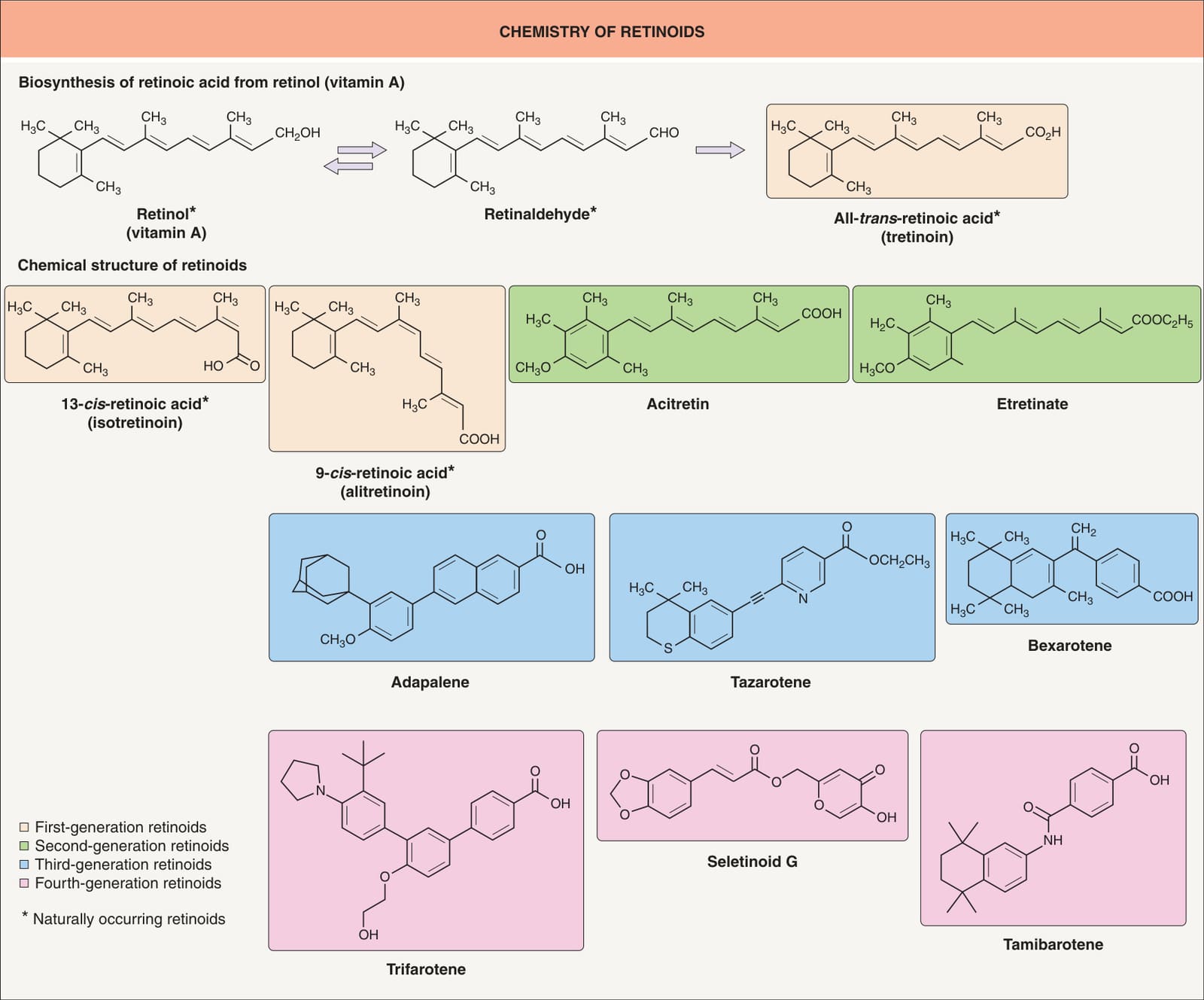
Fig. 126.1 Chemical structure of natural and synthetic retinoids. Motretinide is an additional second-generation retinoid.