INTERACTIONS
Concurrent use of systemic retinoids with alcohol or other medications having similar side effects may increase the incidence of adverse events. The following should be avoided or used with caution:
●tetracycline, doxycycline, minocycline (may increase intracranial pressure)
●alcohol (increased conversion of acitretin to etretinate and hepatotoxicity)
●methotrexate (synergistic liver toxicity with retinoids; however, combination may be used with caution in patients with PRP or severe psoriasis)
●vitamin A supplements (risk of hypervitaminosis A).
Retinoid drug levels and resultant potential for toxicity may increase with CYP3A4 inhibitors such as azoles and macrolides. In contrast, medications and herbal supplements including antituberculous drugs (e.g. rifampin), anticonvulsants (e.g. phenytoin, carbamazepine), and St. John’s wort may decrease the drug levels of retinoids via CYP3A4 induction (see Table 131.8). Retinoids may also increase the drug levels of cyclosporine via competition for CYP3A4 metabolism. Concomitant administration of bexarotene and gemfibrozil results in a substantial increase in plasma concentrations of bexarotene, at least partially because of cytochrome P450 CYP3A4 inhibition that is induced by gemfibrozil. Concomitant administration of fenofibrate (for hypertriglyceridemia) or atorvastatin (for hypercholesterolemia) does not affect bexarotene plasma levels and, therefore, can be utilized together with bexarotene (see Table 126.4).
In rare instances, patients with diabetes mellitus may have more difficult glucose control while taking a retinoid; however, the causal relationship remains uncertain. Acitretin has been shown to possibly reduce the efficacy of progestin-only contraceptives. Also, unprotected UVR exposure or photosensitizing medications should be avoided because of the potential for increased photosensitivity related to retinoid therapy. Since retinoids act through nuclear receptor dimers, cross-talk with other nuclear receptors may provide synergistic effects: for example, interactions between RXR and vitamin D receptor (VDR) positively influence the action of vitamin D, and cross-talk with PPAR and its ligands is under investigation.
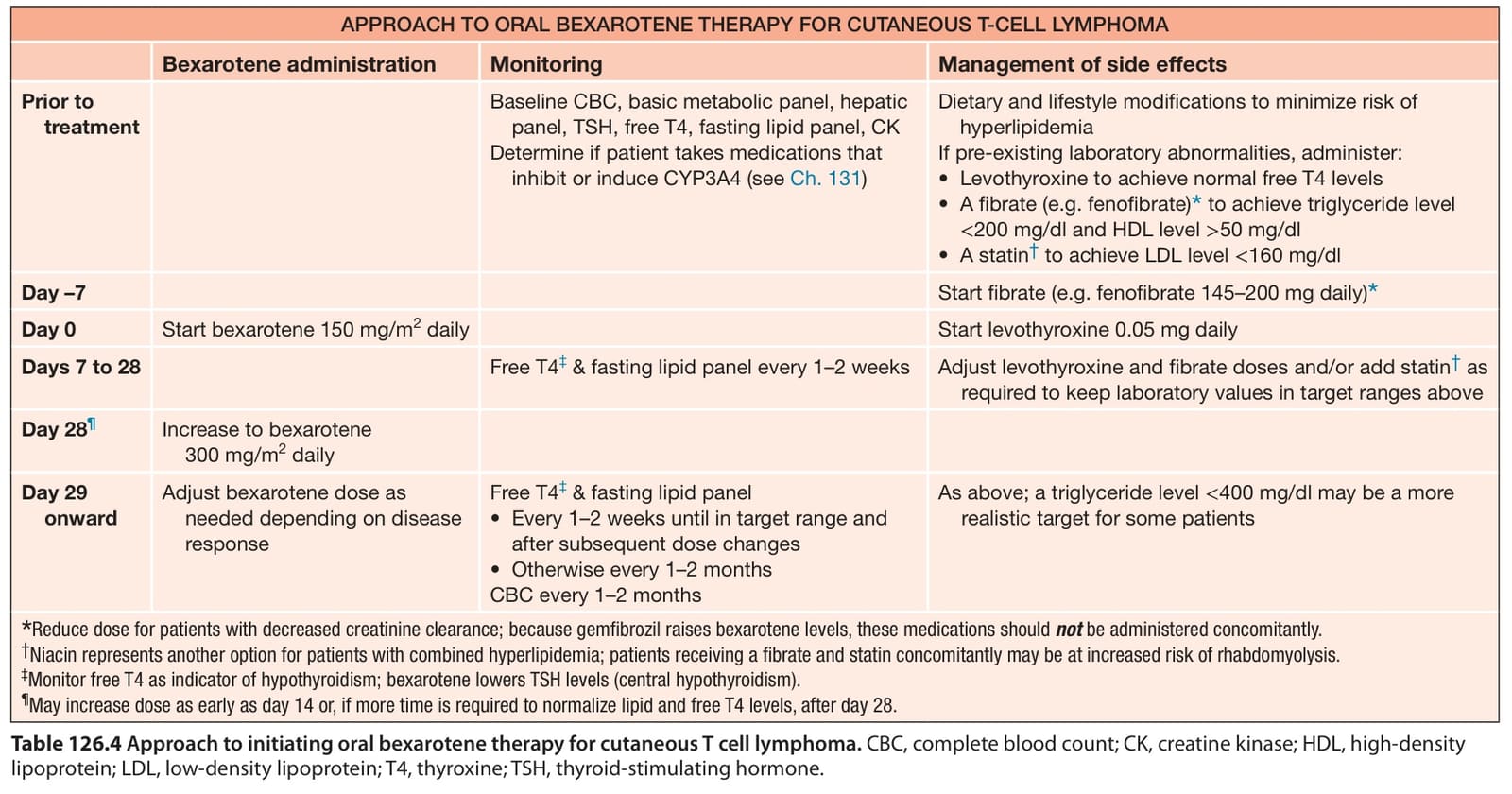
Table 126.4 Approach to initiating oral bexarotene therapy for cutaneous T cell lymphoma. CBC, complete blood count; CK, creatine kinase; HDL, high-density lipoprotein; LDL, low-density lipoprotein; T4, thyroxine; TSH, thyroid-stimulating hormone.