INTRODUCTION
With hundreds of antibiotics now available, physicians have abundant therapeutic options, which can potentially be confusing and overwhelming. Selection of the most appropriate antibiotic depends upon identification of the infecting microorganism and its sensitivity to antimicrobial agents. When possible and practical, a culture should be obtained prior to starting therapy.
In acutely ill patients, empiric therapy with broad-spectrum antibiotics may initially be necessary. Knowledge of local bacterial resistance patterns should guide antibiotic selection. Once the microbe is identified, preferably along with antibiotic sensitivities, medications can be adjusted accordingly. Indiscriminate use of broad-spectrum antibiotics leads to development of resistant bacteria. The site and extent of the infection; the side effect profiles and costs of possible medication choices; and patient characteristics, including age and medical comorbidities (e.g. impaired renal or hepatic function) as well as pregnancy and lactation status, also influence drug selection.
Antibacterial drugs are characterized as either bacteriostatic or bactericidal (Table 127.1). Bacteriostatic drugs inhibit growth and replication of bacteria and limit spread of infection, allowing the immune system to eliminate the pathogen. Bactericidal agents kill bacteria directly.
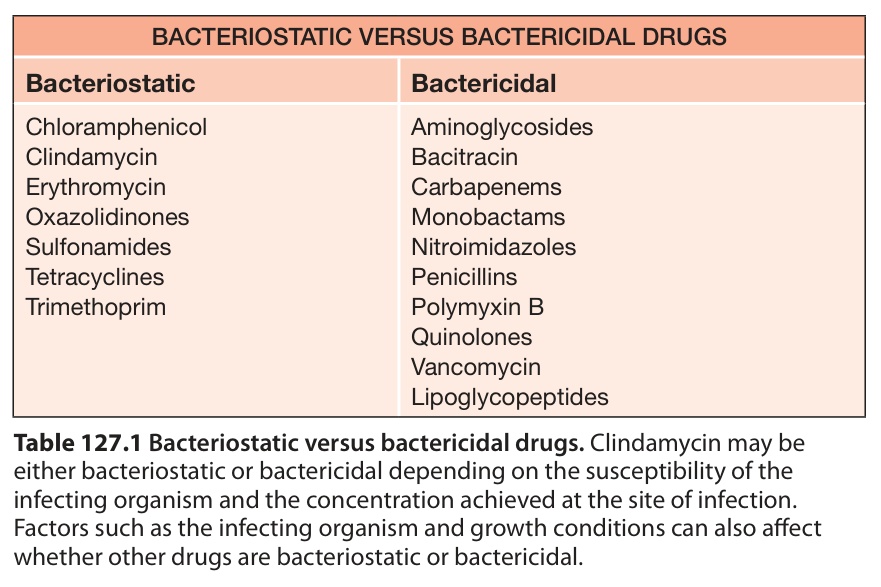
Table 127.1 Bacteriostatic versus bactericidal drugs. Clindamycin may be either bacteriostatic or bactericidal depending on the susceptibility of the infecting organism and the concentration achieved at the site of infection. Factors such as the infecting organism and growth conditions can also affect whether other drugs are bacteriostatic or bactericidal.