ANTIVIRAL AGENTS
This section reviews antiviral agents used for infections with herpes simplex virus (HSV), varicella–zoster virus (VZV), and cytomegalovirus (CMV). Table 127.21 lists the topical antiherpetic antiviral medications. Antiretroviral medications are addressed in Chapter 78.
Mechanisms of Action
Fig. 127.11 illustrates the mechanism of action of antiherpetic drugs utilized for HSV and VZV infections.
Valacyclovir is the prodrug of acyclovir. It is almost completely converted to acyclovir by valacyclovir hydrolase while passing through the gastrointestinal tract and liver. It has an oral bioavailability approximately three times greater than that of acyclovir (55% vs 15%–30%) and more convenient dosing.
Penciclovir is an acyclic guanosine analogue with a mechanism of action similar to acyclovir. It reaches higher intracellular concentrations and has a longer intracellular half-life than acyclovir (2.3–3 hours vs 1.3–1.5 hours). However, it is less potent because it does not cause chain termination of viral DNA, and it has a poor oral bioavailability. For these reasons, this medication is only available in topical form. Famciclovir is the prodrug of penciclovir. The bioavailability of famciclovir is about 77%. Like valacyclovir, it is converted to its active form in the gastrointestinal tract and liver. In vitro studies show that penciclovir is at least as effective as acyclovir against HSV-1 and HSV-2.
Docosanol, also known as behenyl alcohol, is a saturated 22-carbon aliphatic alcohol that exhibits antiviral activity against several lipidenveloped viruses, including HSV. After the virus has attached to the host cell, n-docosanol prevents the fusion of the HSV envelope with the plasma membrane of uninfected cells.
Indications
Topical antiviral agents
Topical acyclovir 5% ointment is indicated for the initial episode of genital herpes. It decreases the duration of viral shedding from 7 days to 4 days. In some studies, it has also been shown to be effective in recurrent genital herpes. Acyclovir 5% cream and an acyclovir 5% plus hydrocortisone 1% combination cream are indicated for recurrent orolabial herpes in immunocompetent individuals ages ≥12 years and ≥6 years, respectively; mean healing times are shortened by ~0.5 days
for acyclovir alone and 1.5 days for the combination. Although acyclovir ointment is also indicated for limited, non-life-threatening mucocutaneous herpes simplex infections in immunocompromised individuals, these patients often require systemic therapy.
Penciclovir is active against HSV-1, HSV-2, VZV, and EBV. Penciclovir 1% cream is indicated for treatment of recurrent orolabial herpes simplex infections in immunocompetent patients ≥12 years of age. Compared to placebo, topical penciclovir shortens healing time by ~0.5 days and decreases pain and viral shedding in herpes labialis. Docosanol is available in the US as a non-prescription topical treatment for recurrent orolabial herpes in patients ≥12 years of age, shortening healing time by almost 1 day.
Systemic antiviral agents
Oral acyclovir and valacyclovir are indicated for initial and recurrent episodes of genital herpes, herpes simplex suppression, varicella (acyclovir for both children and adults, valacyclovir for children), and herpes zoster; valacyclovir and a single-dose acyclovir mucoadhesive buccal tablet are also indicated for recurrent orolabial herpes.
CMV, cytomegalovirus; HSV, herpes simplex virus; VZV, varicella–zoster virus.
Intravenous acyclovir is used for HSV and VZV infections in immunocompromised patients, neonatal HSV infection, and other severe or disseminated HSV and VZV infections. Off-label uses of acyclovir and valacyclovir include prevention of recurrent herpes-associated erythema multiforme and treatment of eczema herpeticum, primary herpes gingivostomatitis, and herpetic whitlow. Famciclovir is indicated for herpes zoster, recurrent genital and orolabial herpes, and herpes suppression in immunocompetent adults as well as recurrent herpes simplex infections in HIV-infected adults.
Acyclovir, valacyclovir, and famciclovir are considered equivalent in safety and efficacy (time to healing, duration of pain, and viral shedding) for initial episodes of genital herpes. Famciclovir and valacyclovir have the advantage of greater oral bioavailability and more convenient dosing. Valacyclovir is at least as effective as acyclovir in decreasing the duration of pain in herpes zoster. Table 127.22 lists the relative susceptibilities of herpesviruses to the antiviral drugs.
Dosages
Antiviral therapy (topical or systemic) should be started as soon as possible after the onset of signs and symptoms. A glove or applicator should be used to apply topical antivirals to prevent autoinoculation of the finger. Table 127.21 details the dosing regimens of the topical antiviral drugs. Table 127.23 lists the available formulations of systemic antiviral medications. Table 80.4 outlines the dosages of the systemic antiherpetic medications for their various indications. Intravenous, rather than oral, treatment may be required in severely immunosuppressed patients, patients who cannot take medications orally, and those who cannot be relied upon to take the medication correctly.
The majority of people who are seropositive for HSV-2 are asymptomatic, and it is thought that asymptomatic viral shedding leads to most transmission of genital herpes. The physician must decide whether to treat on an episodic basis or in a continuous suppressive fashion. Factors that influence this decision include the number of outbreaks per year, the severity of outbreaks, a lack of prodromal symptoms, and an HSV-seronegative sexual partner. Suppression with acyclovir 400 mg twice daily can decrease recurrences by 80%–90% and asymptomatic shedding by 95%. A year-long, double-blind, placebo-controlled study demonstrated that 1 g of valacyclovir taken daily reduced recurrence rates by 78%. In addition, a multicenter, randomized, placebocontrolled study showed that daily valacyclovir significantly lowered the risk of transmission of genital herpes in heterosexual, immunocompetent, monogamous, HSV-2 discordant couples.
Acyclovir, valacyclovir, and famciclovir are all effective against herpes labialis when used intermittently or suppressively, and they are all effective in treating herpes zoster. Treatment of varicella in healthy children is controversial, but it does not alter antibody production at 28 days or at 1 year. Oral therapy is recommended for healthy adolescents and adults as well as children with chronic skin or lung disease or on long-term salicylates; intravenous administration is indicated for immunocompromised individuals, including those receiving chronic systemic corticosteroid therapy.
Contraindications
As with other medications, antiviral agents are contraindicated in patients with hypersensitivity to the drug or any components of the formulation. Systemic antivirals need to be dose-adjusted for patients with impaired renal function (see Table 80.5); renal function should be monitored in patients taking nephrotoxic medications. Thrombotic thrombocytopenic purpura and hemolytic uremic syndrome have been reported in immunocompromised patients receiving valacyclovir.
Major Side Effects
Table 127.21 lists the side effects of topical antiviral agents, which have limited systemic absorption, and Table 127.24 lists the side effects of systemic antiherpetic medications.
Interactions
No clinically important drug interactions with topical antivirals have been identified. Table 127.25 lists the interactions of the systemic antiviral agents with other medications.
Pregnancy and Lactation
Topical antiviral agents
There are no adequate studies of topical antiviral agents in pregnant or lactating women. Small amounts of topical acyclovir are absorbed through the skin and mucous membranes. Topical docosanol has not been shown to cause birth defects or other problems in animal studies using rats or rabbits. Although it is not known if topically applied antivirals pass into breast milk, to date, no problems in nursing infants due to these agents have been reported.
Systemic antiviral agents
Systemic acyclovir, valacyclovir, and famciclovir have not been shown to be teratogenic in animal studies and historically were FDA pregnancy category B. Acyclovir is traditionally the drug of choice for genital herpes in pregnant women because of its long history of safe use. Varicella in pregnant women should be treated with acyclovir due to the high risk of maternal mortality from varicella pneumonia as well as fetal death or premature delivery. It is not known, however, whether acyclovir prevents congenital varicella syndrome. Acyclovir is excreted in breast milk; acyclovir and valacyclovir are considered to be compatible with breastfeeding, and they are preferred over famciclovir during lactation.
Other Antiviral Agents
Herpes infection resistant to commonly used drugs is a problem in immunocompromised patients. Foscarnet and cidofovir are two alternative treatments in this situation (see Table 127.22 and Fig. 127.11).
Foscarnet is an intravenous antiviral used for cytomegalovirus (CMV) retinitis or CMV skin infections in patients with HIV as well as for acyclovir-resistant herpes simplex infections. Foscarnet is an inorganic pyrophosphate analogue that selectively inhibits viral DNA polymerase
by blocking its pyrophosphate binding sites, preventing cleavage of pyrophosphate from deoxyadenosine triphosphate. Foscarnet does not require phosphorylation to be activated, and thus it circumvents the commonest mode of viral resistance involving viral thymidine kinase (see Fig. 127.11). Foscarnet is active against all herpesviruses. Side effects of the intravenous form include nephrotoxicity, anemia, erosive penile lesions, thrombophlebitis, seizures, gastrointestinal disturbances, and changes in serum calcium, magnesium, and phosphate levels.
Cidofovir is an acyclic nucleoside phosphate analogue of deoxycytosine monophosphate. It inhibits viral DNA polymerase and causes DNA chain termination. It differs from acyclovir and penciclovir in that it does not require viral thymidine kinase to become activated. It is also used for CMV retinitis in patients with HIV. Cidofovir is currently available in intravenous form only, and side effects include nephrotoxicity, iritis, neutropenia, metabolic acidosis, and gastrointestinal disturbances. However, a compounded topical form has been used with some success for herpes simplex resistant to acyclovir, molluscum contagiosum, condyloma acuminata, verruca vulgaris, and viral-associated trichodysplasia spinulosa. In vitro, cidofovir is active against DNA viruses including mpox, variola, and vaccinia.
Ganciclovir (oral and intravenous) and its prodrug valganciclovir (oral) are deoxynucleotide analogue CMV DNA polymerase inhibitors that are approved for the treatment of CMV retinitis in patients with HIV and prevention of CMV disease in transplant recipients. Side effects include diarrhea, nausea/vomiting, cytopenias, and impaired renal function.
Maribavir, an inhibitor of the CMV UL97 protein kinase, is an oral medication that is approved for patients ≥12 years of age with post-transplant CMV infections that fail to respond to other medications. Side effects include taste disturbance, nausea/vomiting, diarrhea, and fatigue.
Letermovir is an inhibitor of the CMV DNA terminase complex, which is necessary for the packaging and processing of CMV viral
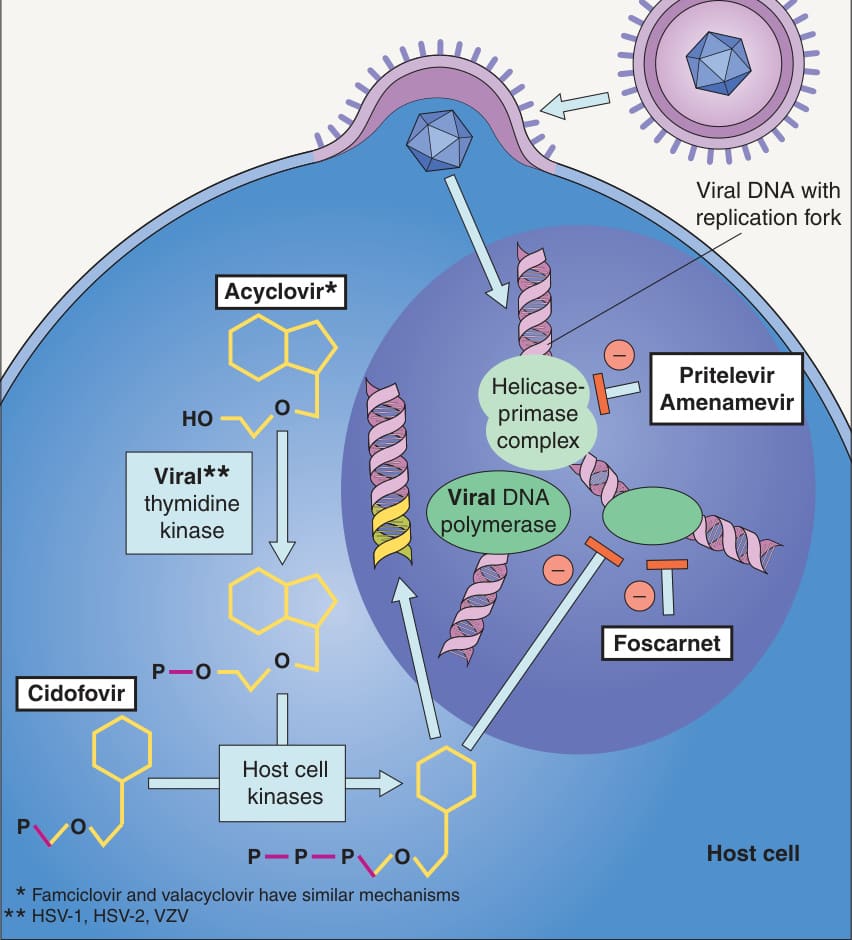
Fig. 127.11 Mechanism of action of antivirals utilized for herpes simplex virus (HSV) and varicella–zoster virus (VZV) infections. Acyclovir is a synthetic purine nucleoside analogue (similar in chemical structure to deoxyguanosine) that has a high affinity for HSV-1, HSV-2, and VZV thymidine kinase, which phosphorylates and activates the drug. Human cellular guanylate kinase then phosphorylates acyclovir twice, to transform it into acyclovir triphosphate, which blocks viral DNA synthesis by competitively inhibiting and inactivating viral DNA polymerase and by becoming irreversibly incorporated into the viral DNA chain, causing DNA chain termination. Valacyclovir, penciclovir, and famciclovir have similar mechanisms of action. Cidofovir is an acyclic nucleoside phosphate analogue of deoxycytosine monophosphate that does not require viral thymidine kinase to become activated, but otherwise also has a similar mechanism. Foscarnet, an inorganic pyrophosphate analogue, selectively inhibits viral DNA polymerase by blocking its pyrophosphate binding sites. Helicase-primase inhibitors (pritelivir, amenamevir) block DNA unwinding at the replication fork and synthesis of primers during viral replication. Pritelivir is being investigated as a treatment for acyclovir-resistant mucocutaneous HSV infections in immunocompromised hosts, and amenamevir is approved in Japan for the treatment of herpes zoster.
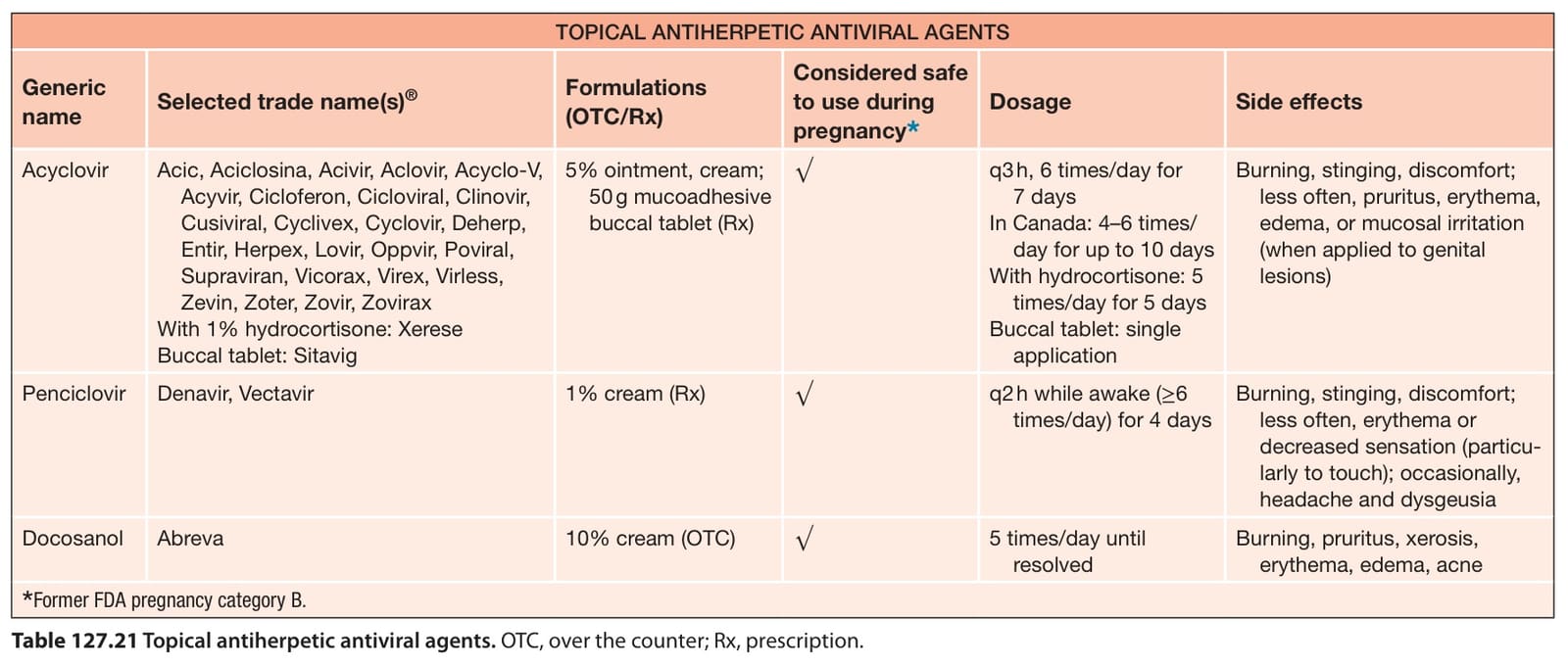
Table 127.21 Topical antiherpetic antiviral agents. OTC, over the counter; Rx, prescription.
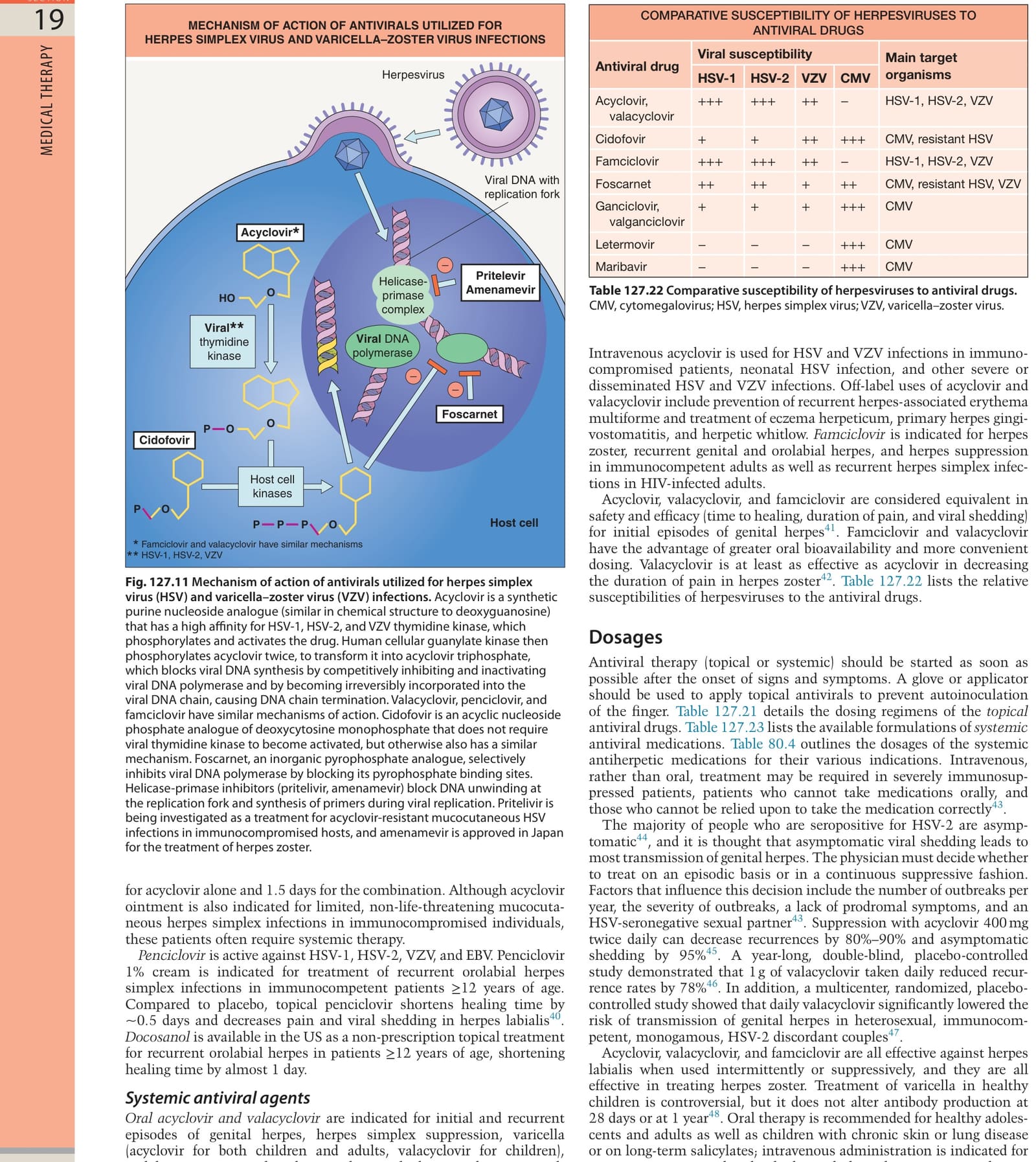
Table 127.22 Comparative susceptibility of herpesviruses to antiviral drugs.
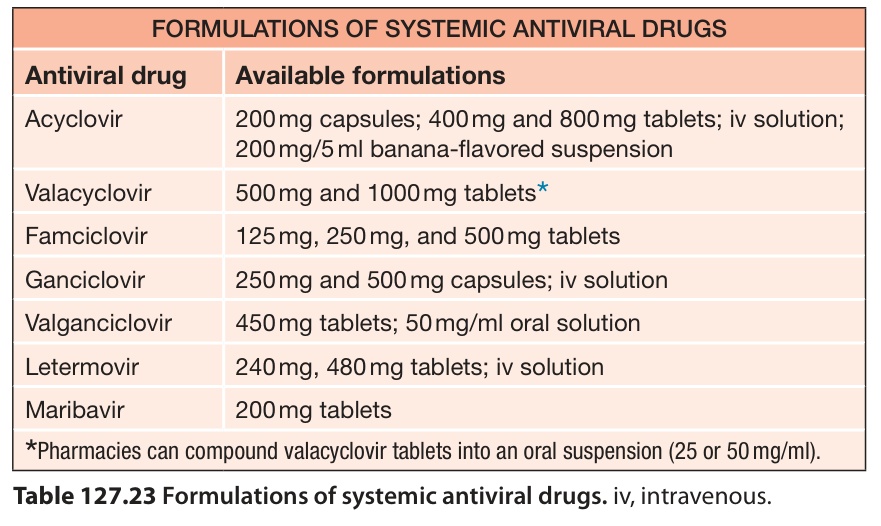
Table 127.23 Formulations of systemic antiviral drugs. iv, intravenous.
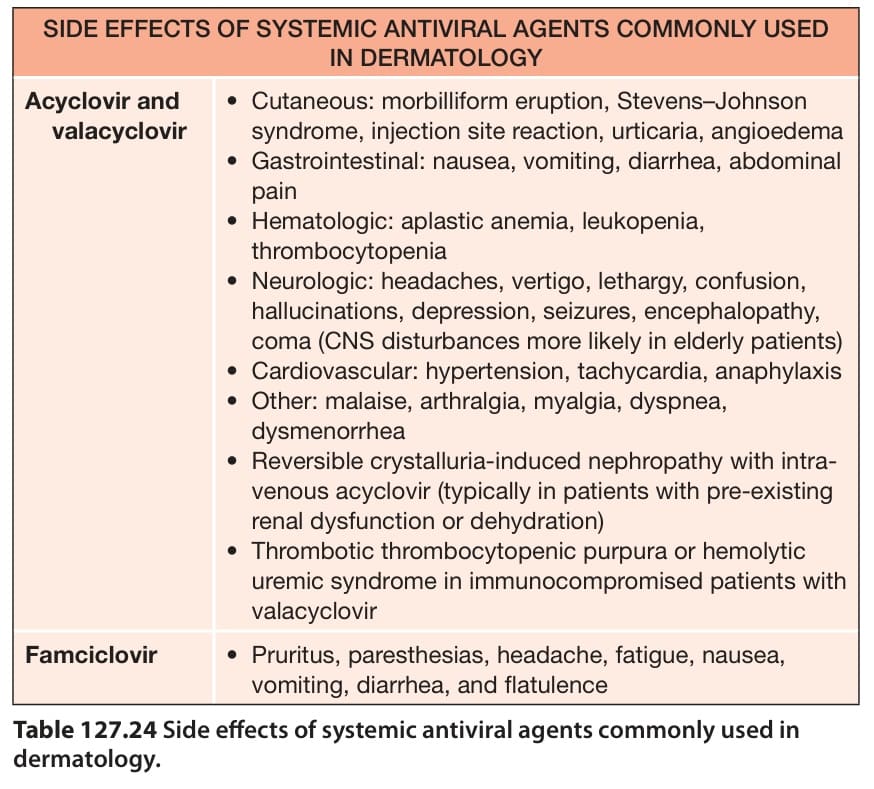
Table 127.24 Side effects of systemic antiviral agents commonly used in dermatology.
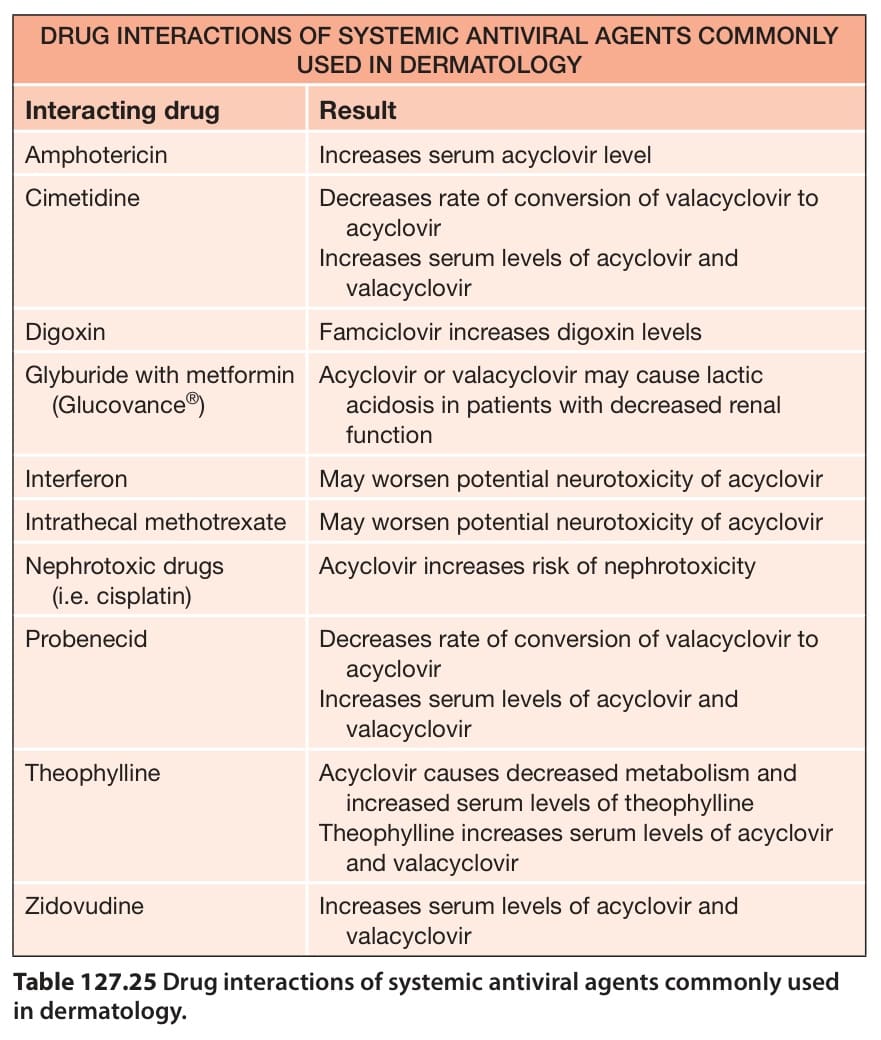
Table 127.25 Drug interactions of systemic antiviral agents commonly used in dermatology.
DNA. Available in oral and IV formulations, it is currently approved for prophylaxis against CMV disease in adult CMV-seropositive allogeneic hematopoietic stem cell transplant recipients. Uncommon side effects include nausea/vomiting, abdominal pain, diarrhea, peripheral edema, cough, headache, fatigue, cardiac adverse events (tachycardia, atrial fibrillation), and rarely hypersensitivity reactions.
Drugs such as pritelivir and amenamevir that target the HSV helicase– primase complex (composed of three proteins that unravel DNA) have been shown to be effective in vitro as well as in animal models (see Fig. 127.11). In randomized controlled trials (RCTs), adults with a history of genital herpes due to HSV-2 who received pritelivir had significantly fewer days with genital lesions and decreased HSV shedding compared to those who received placebo. Pritelivir received FDA Breakthrough Therapy designation in 2020 and is being investigated for acyclovir-resistant mucocutaneous HSV infections in immunocompromised hosts. Amenamevir is approved in Japan for the treatment of herpes zoster, and in a Japanese RCT, 7-day courses of amenamevir and valacyclovir had similar efficacy and safety for the treatment of herpes zoster in immunocompetent patients.
(AHFS) Drug Information. Bethesda: American Society of Health-System Pharmacists; 2001:539–541. 3322–4.10. Manuel MA, Kurtz Saiphoo CS, Nedzelski JM.
agents. In: Wolverton SE, ed. Comprehensive Dermatologic Drug Therapy. 2nd ed. Philadelphia: Saunders; 2007:101–112.44. Centers for Disease Control and Protection (CDC).
Fig. 127.11 Mechanism of action of antivirals utilized for herpes simplex virus (HSV) and varicella–zoster virus (VZV) infections. Acyclovir is a synthetic purine nucleoside analogue (similar in chemical structure to deoxyguanosine) that has a high affinity for HSV-1, HSV-2, and VZV thymidine kinase, which phosphorylates and activates the drug. Human cellular guanylate kinase then phosphorylates acyclovir twice, to transform it into acyclovir triphosphate, which blocks viral DNA synthesis by competitively inhibiting and inactivating viral DNA polymerase and by becoming irreversibly incorporated into the viral DNA chain, causing DNA chain termination. Valacyclovir, penciclovir, and famciclovir have similar mechanisms of action. Cidofovir is an acyclic nucleoside phosphate analogue of deoxycytosine monophosphate that does not require viral thymidine kinase to become activated, but otherwise also has a similar mechanism. Foscarnet, an inorganic pyrophosphate analogue, selectively inhibits viral DNA polymerase by blocking its pyrophosphate binding sites. Helicase-primase inhibitors (pritelivir, amenamevir) block DNA unwinding at the replication fork and synthesis of primers during viral replication. Pritelivir is being investigated as a treatment for acyclovir-resistant mucocutaneous HSV infections in immunocompromised hosts, and amenamevir is approved in Japan for the treatment of herpes zoster.