SKIN-LIGHTENING AGENTS
Hydroquinone
Introduction, dosages, and indications
Hydroquinone (1,4-dihydroxybenzene) is used to treat melasma and other disorders of hyperpigmentation (see Ch. 67). In the US, 2% formulations are available over the counter, while 3% solution and 4% cream or gel require a prescription. Although twice-daily application is commonly recommended, irritant contact dermatitis can limit frequency of application. Some products contain hydroquinone combined with a sunscreen or with tretinoin (0.05%–0.1%) and a class 5–7 corticosteroid.
Mechanism of action
Hydroquinone reduces skin pigmentation by competing with tyrosine as a substrate for tyrosinase (the initial enzyme in melanin biosynthesis; see Ch. 65) and via selective damage to melanosomes and melanocytes via production of reactive oxygen radicals.
Side effects
Irritant or (less often) allergic contact dermatitis can develop. Exogenous ochronosis occasionally occurs with prolonged use of higher concentrations of hydroquinone. A variety of neoplasms have been noted to develop in rodents that received large systemic doses of the medication, but the relevance to topical therapy in humans has not been determined. Concern regarding potential adverse effects related to misuse of hydroquinone led to its removal from Japanese and European markets.
Use in pregnancy
Animal reproduction studies have not consistently shown adverse fetal effects, and there are no adequate studies in pregnant women. Because of the potential for substantial systemic absorption (~30%–50%), it is recommended that hydroquinone use be avoided during pregnancy.
Monobenzyl Ether of Hydroquinone
Monobenzyl ether of hydroquinone (MBEH) 20% is infrequently used to depigment remaining uninvolved skin in patients with extensive, treatment-resistant vitiligo so as to achieve a uniform appearance (see Ch. 66). It is thought to act via competitive inhibition of tyrosinase and free radical-mediated damage of melanocytes. Depigmentation is typically long-lasting, but repigmentation (especially in a perifollicular distribution) can occur following sun exposure. Both irritant and allergic contact dermatitis are possible side effects.
Mequinol
Mequinol (4-hydroxyanisole) is a skin-lightening agent. A solution composed of mequinol 2% and tretinoin 0.01% is FDA-approved for
treatment of solar lentigines (formerly pregnancy category X). However, the latter product is no longer commercially available in the US. Mequinol is a substrate of tyrosinase and may serve as a competitive inhibitor of melanin biosynthesis.
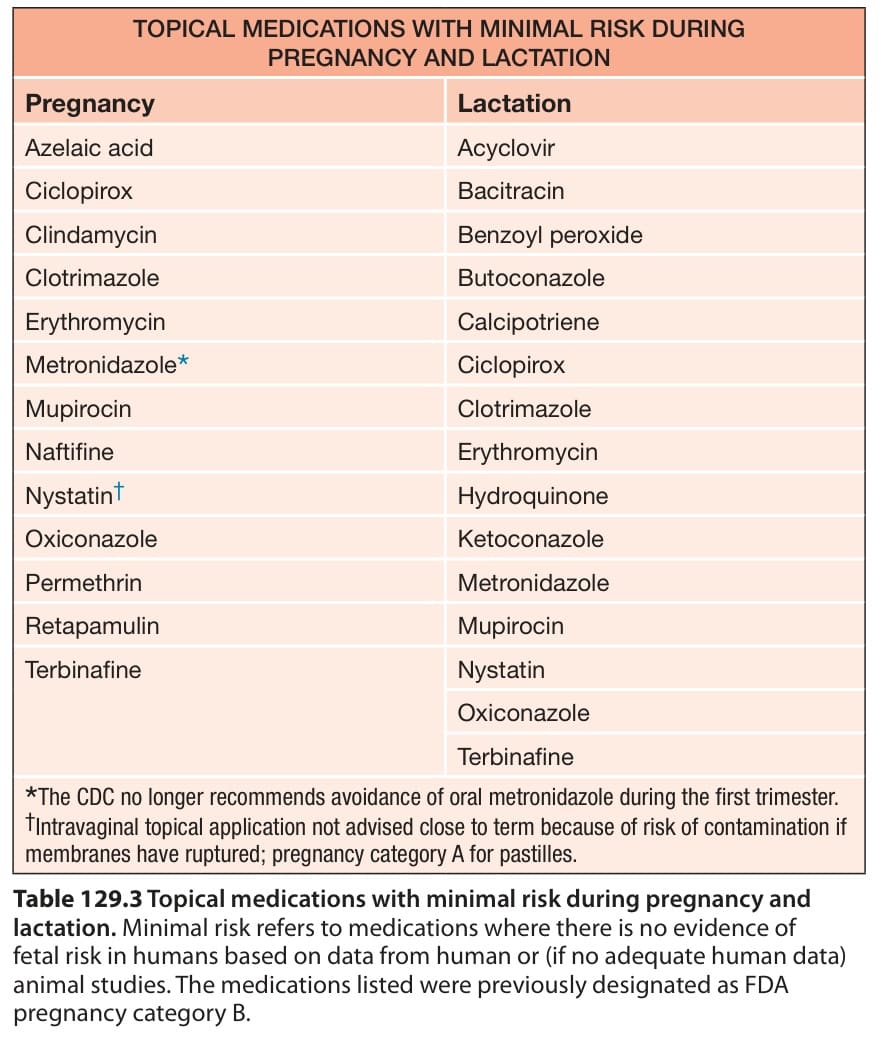
Table 129.3 Topical medications with minimal risk during pregnancy and lactation. Minimal risk refers to medications where there is no evidence of fetal risk in humans based on data from human or (if no adequate human data) animal studies. The medications listed were previously designated as FDA pregnancy category B.
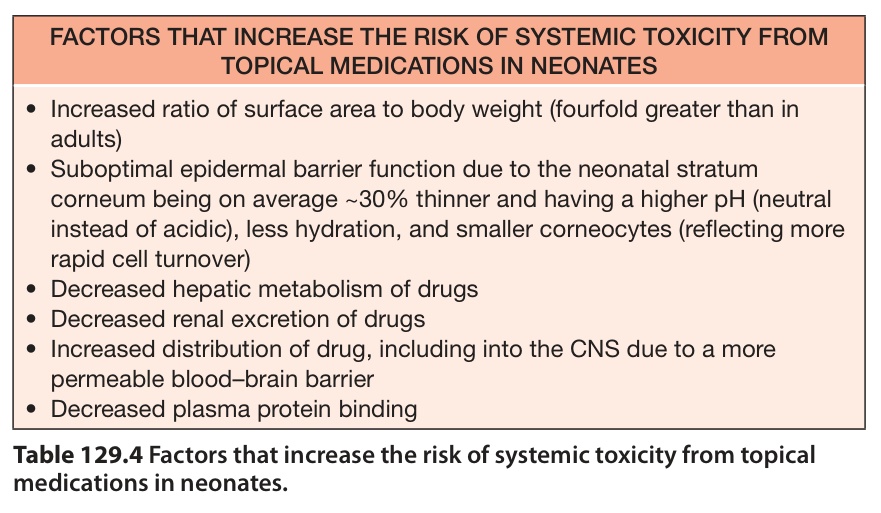
Table 129.4 Factors that increase the risk of systemic toxicity from topical medications in neonates.