IMMUNOMODULATORY AGENTS
Imiquimod
Introduction, dosages, and indications
Imiquimod stimulates innate and adaptive immune response pathways, resulting in antiviral, antitumor, and immunoregulatory properties. Commercially available as 2.5%, 3.75%, and 5% creams, it is FDA-approved for the treatment of: (1) anogenital warts; (2) actinic keratoses (AKs) on the face or scalp; and (3) superficial basal cell carcinoma (BCC) measuring up to 2 cm in diameter on the trunk, neck, or extremities (excluding the hands and feet). Off-label cutaneous uses with variable efficacy include treatment of common warts, Bowen disease (squamous cell carcinoma in situ), nodular BCC, lentigo maligna, melanoma metastases, T cell lymphoma, Paget disease, and leishmaniasis as well as prevention of keloid recurrence following surgical excision. Although imiquimod has been utilized to treat molluscum contagiosum, unpublished randomized controlled trials (RCTs) showed no difference in its efficacy compared to that of placebo.
FDA-approved regimens for imiquimod application are as follows: (1) for anogenital warts – 5% cream three times weekly for up to 16 weeks, or 3.75% cream daily for up to 8 weeks (~50% and ~30% clearance, respectively); (2) for AKs – 5% cream twice weekly for 16 weeks, or 2.5%–3.75% cream daily for two 2-week cycles separated by 2 weeks without treatment (~50% and ~35% clearance, respectively); and (3) for superficial BCC – 5% cream five times weekly for 6 weeks (~75% clearance). The frequency of application and duration of therapy for off-label uses vary.
Mechanism of action
The mechanism of action is depicted in Fig. 129.5. In animal models, imiquimod’s antiviral and antitumor activity is explained at least in part by the effects of IFN-α.
Side effects
The most common adverse reactions to imiquimod cream are erythema, edema, scaling, erosion, and ulceration at the site of application (Figs. 129.6 & 129.7). These reactions tend to be more intense and frequent in patients with actinic damage. Development of erosive pustular dermatosis of the scalp has been associated with the use of imiquimod for AKs of the scalp, and reactions with histologic findings mimicking those of lupus erythematosus have been described. Flu-like symptoms such as fatigue, fever, headache, diarrhea, and myalgias occur in ~1%–2% of patients, but systemic immune alterations have not been described.
Use in pregnancy
Animal reproduction studies with systemic imiquimod administration have shown adverse fetal effects, but percutaneous absorption of imiquimod cream is minimal. There are no adequate studies in pregnant women.
Topical Calcineurin Inhibitors (TCIs)
Introduction, dosages, and indications
Tacrolimus ointment and pimecrolimus cream are anti-inflammatory agents that allow treatment of eczematous and other inflammatory dermatoses without the side effects of topical corticosteroids. Tacrolimus 0.1% and 0.03% ointments are indicated for treatment of “moderate to severe” atopic dermatitis in patients ≥16 and ≥2 years of age, respectively, while pimecrolimus 1% cream is indicated for treatment of “mild to moderate” atopic dermatitis in individuals ≥2 years of age. Pimecrolimus has also been studied extensively in infants 3–23 months of age, and the American Academy of Dermatology’s current guidelines recommend off-label use of pimecrolimus 1% cream and tacrolimus 0.03% ointment for children <2 years of age with mild to severe atopic dermatitis.
TCIs are also frequently used to treat other inflammatory skin conditions, especially when there is facial (including the eyelids) and inter-triginous involvement. Examples include eczematous and seborrheic dermatitis as well as psoriasis, lichen planus (oral and genital), vitiligo, pyoderma gangrenosum, perioral dermatitis, granulomatous rosacea, cutaneous Crohn disease, lichen sclerosus, and cutaneous lesions of dermatomyositis, lupus erythematosus, and chronic graft-versus-host disease (GVHD).
Mechanism of action
The mechanism of action is depicted in Fig. 129.8.
Contraindications
The TCI labels were revised in 2006 to include a boxed warning regarding a theoretical concern for risk of malignancy. However, there has been no short-term or long-term (>20 years) evidence of
Binding of imiquimod to Toll-like receptor 7 (TLR7) on antigen-presenting cells (e. g. Langerhans cells, other dendritic cells, macrophages) leads to interaction of the cytoplasmic portion of the receptor with MyD88. This facilitates association of MyD88 with interleukin (IL)-1 receptor-associated kinase (IRAK), which in turn activates TNF receptor-activated 6 (TRAF6) and ultimately results in stimulation of nuclear factor-κB-mediated signaling. Imiquimod thereby promotes antigen-presenting cell maturation and secretion of interferon (IFN)-α, IL-12, IL-18, and other cytokines, which induce IFN-γ production by naive T cells and result in enhancement of cell-mediated immunity via a Th1-type response. CSM, costimulatory molecule; MHC, major histocompatibility complex; TCR, T cell receptor.
A Inflammation and erosions developed after application of imiquimod to an actinic keratosis and actinically damaged skin. B Following discontinuation of imiquimod, the inflammation subsided and the actinic keratosis had cleared. Note the residual hypopigmentation. Courtesy J. Mark Jackson, MD and Jeffrey P. Callen, MD.
systemic immunosuppression or an increased risk for malignancy in clinical studies, systematic reviews, or post-marketing surveillance of either medication. A task force of international experts concluded that the boxed warning is not justified and recommended its removal.
Because TCIs shorten the time to skin tumor formation in animal photocarcinogenicity studies, the package inserts recommend that patients minimize or avoid natural or artificial sunlight exposure. TCIs generally have negligible systemic absorption even with use on extensive areas of dermatitis, although low systemic levels have been observed following application to ulcers or eroded mucosal surfaces. A rare exception is patients with Netherton syndrome, who have significant absorption of topical tacrolimus (but less so for pimecrolimus) that necessitates monitoring of blood levels or avoidance of TCI therapy.
Major side effects
Burning, stinging, or a sensation of warmth at sites of application are the most common side effects of TCIs. A local flushing reaction in association with alcohol consumption can also occur. There are scattered reports of allergic contact dermatitis and a rosacea-like granulomatous reaction on the face due to topical tacrolimus. Staphylococcus aureus colonization of the skin is actually reduced in atopic dermatitis patients treated with TCIs.
Use in pregnancy
Animal studies with systemically administered tacrolimus indicate harmful fetal effects only at doses that are toxic to the mother. There are no adequate studies in pregnant women.
Topical Janus Kinase (JAK) Inhibitors
Introduction, dosages, and indications
Janus kinase (JAK) inhibitors function by impeding proinflammatory cytokine-mediated signaling via the JAK-signal transducer and activator of transcription (STAT) pathway (see Ch. 128). Ruxolitinib 1.5% cream, a JAK1/2-selective inhibitor, is FDA-approved for the treatment of mild to moderate atopic dermatitis (short-term or non-continuous chronic use) and vitiligo in patients ≥12 years of age. Clear/almost clear skin and a ≥2-grade improvement were achieved by ~50% of individuals with mild to moderate atopic dermatitis treated with ruxolitinib 1.5% cream twice daily for 8 weeks, and >75% improvement of facial vitiligo was seen in ~30% of patients treated twice daily for 24 weeks.
Delgocitinib 0.25% or 0.5% ointment represents a pan-JAK inhibitor that is approved in Japan for the treatment of atopic dermatitis in adult and pediatric patients. Tofacitinib 2% cream, a JAK1/3 inhibitor, has also demonstrated efficacy for atopic dermatitis in a randomized controlled study. Additional dermatologic conditions for which topical JAK inhibitors have shown benefit include hand eczema, psoriasis, cutaneous lupus erythematosus, and alopecia areata.
Mechanism of action
The mechanism of action of JAK inhibitors is depicted in Fig. 128.11.
Major side effects
The most common side effects of topical JAK inhibitors include pruritus, erythema, and acne at application sites. However, the JAK inhibitor class-wide black box warning notes potential increased risks of serious infection, death, cancer, cardiovascular events, and thrombosis (see Ch. 128).
Use in pregnancy
Animal reproduction studies with high oral doses of tofacitinib and ruxolitinib have shown harmful fetal effects. There are no adequate studies in pregnant women.
Topical Phosphodiesterase-4 Inhibitors
Phosphodiesterase-4 (PDE-4) inhibitors function by inhibiting the degradation of cyclic AMP, which leads to decreased production of proinflammatory cytokines such as tumor necrosis factor (TNF), interferon-γ, and interleukins (ILs)-2, -4, -12, -23, and -31 (see Fig. 130.4). Crisaborole 2% ointment is a PDE-4 inhibitor that is FDA-approved for the treatment of mild to moderate AD in patients ≥3 months of age, with ~30% of these patients achieving clear/almost clear skin with a ≥2-grade improvement after 4 weeks of twice daily treatment. Another PDE-4 inhibitor, roflumilast 0.3% cream, was recently FDA-approved for the treatment of plaque psoriasis (including in intertriginous sites) in patients ≥12 years of age; ~40% of such individuals achieved clear/almost clear skin with a ≥2-grade improvement after 8 weeks of once daily treatment. The most common side effect of these medications is stinging or burning in the area of application. In animal reproduction studies, oral administration of crisaborole has not shown adverse fetal effects, but high oral doses of rofluminast have resulted in fetal harm. There are no adequate studies in pregnant women.
Aryl Hydrocarbon Receptor Agonists
Tapinarof is an aryl hydrocarbon receptor agonist that decreases expression of IL-17 and increases production of skin-barrier proteins such as filaggrin and loricrin as well as antioxidant enzymes. Tapinarof 1% cream is FDA-approved for the treatment of plaque psoriasis in adults, with ~40% of these patients achieving clear or almost clear skin after 12 weeks of once daily treatment. Topical tapinarof is currently under investigation as a treatment for atopic dermatitis. The most common side effects include folliculitis and contact dermatitis. Animal reproduction studies have not shown harmful fetal effects, and there are no adequate studies in pregnant women.
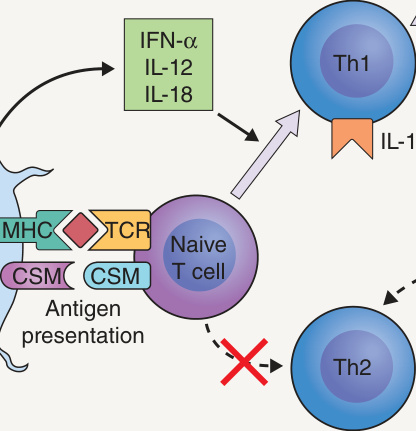
Fig. 129.5 Mechanism of action of imiquimod.
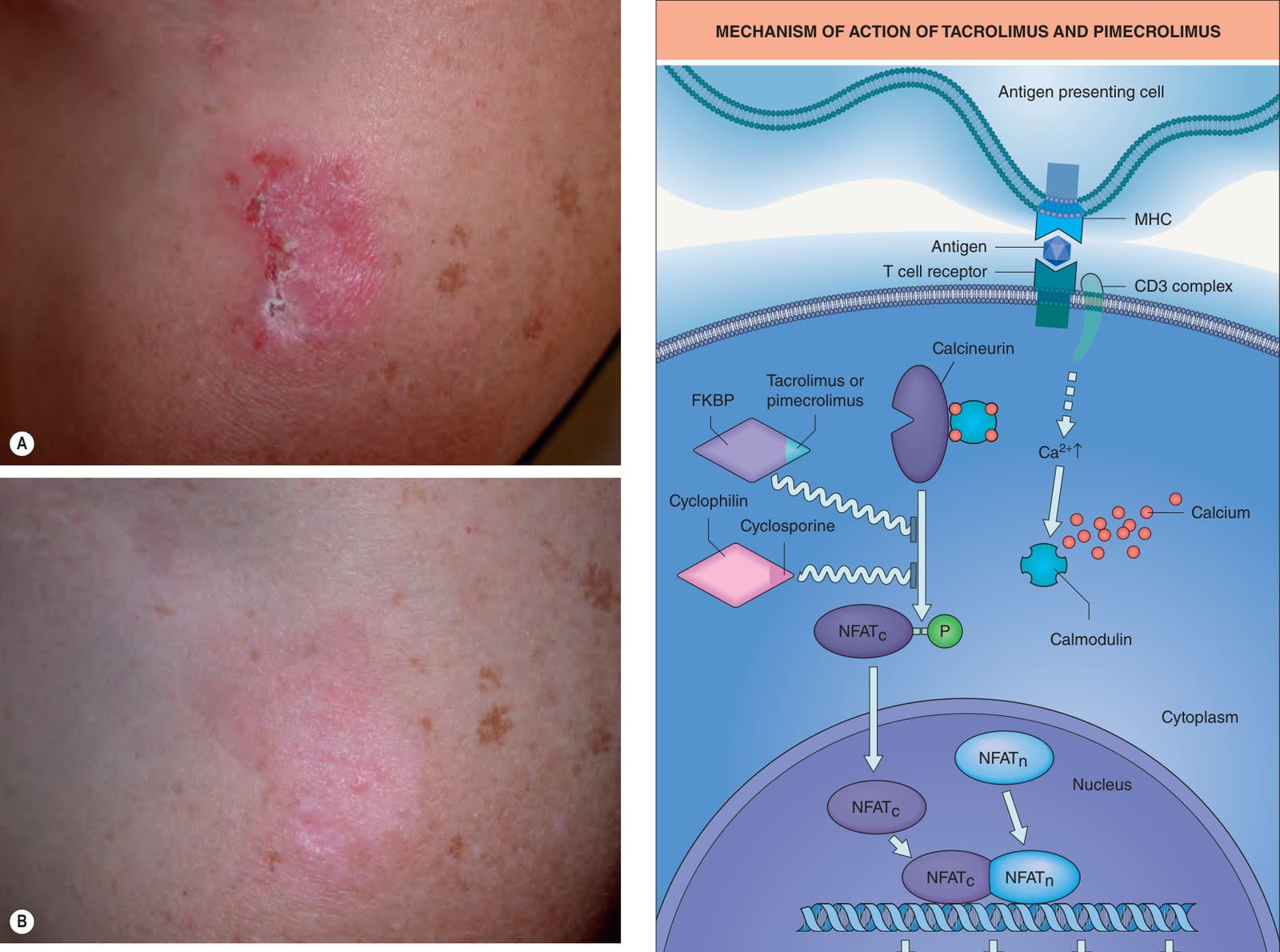
Fig. 129.6 Reaction to topical imiquimod treatment of an actinic keratosis.
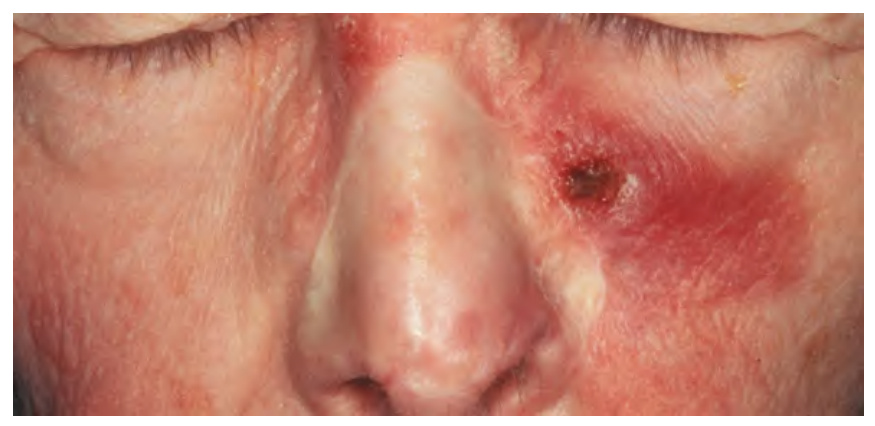
Fig. 129.7 Inflammation at the site of application of imiquimod to an amela- notic lentigo maligna. The patient had residual disease despite multiple surgical procedures including skin graft placement. The inflammation did not occur until the tenth month of application. Three years later, the lesion recurred, but only within the graft. Courtesy Jean L. Bolognia, MD.
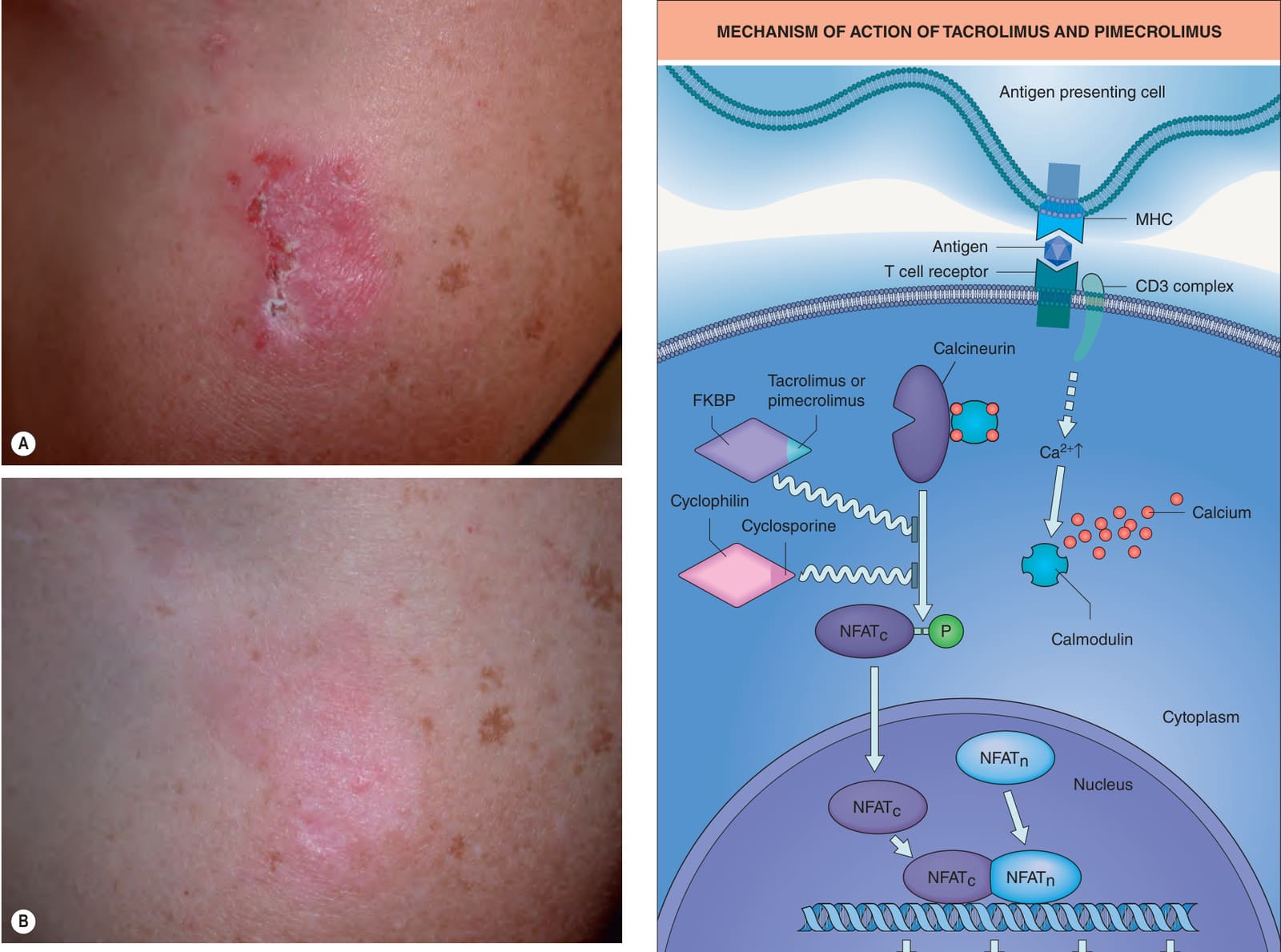
Fig. 129.8 Mechanism of action of tacrolimus and pimecrolimus. Both tacrolimus and pimecrolimus bind to the FK506-binding protein (FKBP), forming complexes that inhibit calcineurin. Calcineurin normally dephosphorylates the cytoplasmic subunit of nuclear factor of activated T cells (NFAT), which then translocates to the nucleus and forms a complex that promotes transcription of proinflammatory cytokines, including the T cell mitogen IL-2. From Nghiem P, Pearson G, Langley RG. Tacrolimus and pimecrolimus: from clever prokaryotes to inhibiting calcineurin and treating atopic dermatitis. J Am Acad Dermatol 2002:46:228–41.