VITAMIN D ANALOGUES
Mechanism of action
The skin serves as both a site of vitamin D biosynthesis (see Fig. 51.11) and a target organ for its ultimate activity. The cutaneous effects of 1,25-dihydroxyvitamin D (calcitriol, the active form of vitamin D) include inhibiting proliferation and promoting differentiation of keratinocytes, as well as decreasing production of inflammatory mediators such as IL-2, IL-6, IL-8, interferon-γ, and chemokines. Vitamin D exerts its regulatory functions by binding to vitamin D receptors (VDRs) on keratinocytes, melanocytes, Langerhans cells, macrophages, T cells, and fibroblasts.
Topical agents and their indications
Several topical vitamin D analogues are available for clinical use: calcipotriene, calcitriol, tacalcitol, and maxacalcitol; their formulations and dosing are outlined in Table 129.8. The primary indication for these agents is the treatment of psoriasis, but they have been used to treat other skin conditions such as vitiligo, morphea, ichthyoses, and Hailey–Hailey disease. Application of a vitamin D analogue in combination with a high-potency topical corticosteroid in patients with psoriasis can have greater efficacy and more rapid onset of action than either agent alone, as well as less irritation than the vitamin D analogue alone. Additive benefits can also occur when vitamin D analogues are used together with acitretin, cyclosporine, or phototherapy for psoriasis or with phototherapy for vitiligo; the vitamin D analogue should be applied after phototherapy sessions to avoid degradation by UV light.
Side effects
The most common side effects are irritation, burning, and stinging at the application site, which limits use of vitamin D analogues on the face and in intertriginous areas. Allergic contact dermatitis has been described with calcipotriene. The systemic effects of vitamin D and its analogues include releasing calcium from the bone, increasing renal tubular reabsorption and intestinal absorption of calcium, and decreasing parathyroid hormone release. Use of excessive amounts of topical vitamin D analogues can lead to hypercalcemia and hypercalciuria. Parathyroid hormone levels should be monitored if use exceeds recommended amounts (see Table 129.8). Patients with renal disease and those receiving medications that can increase the serum calcium level (e.g. thiazide diuretics, high doses of oral vitamin D) may be at increased risk of developing hypercalcemia.
Use in pregnancy
Animal reproduction studies with systemically administered calcipotriene and calcitriol have demonstrated fetal skeletal abnormalities. There are no adequate studies in pregnant women.
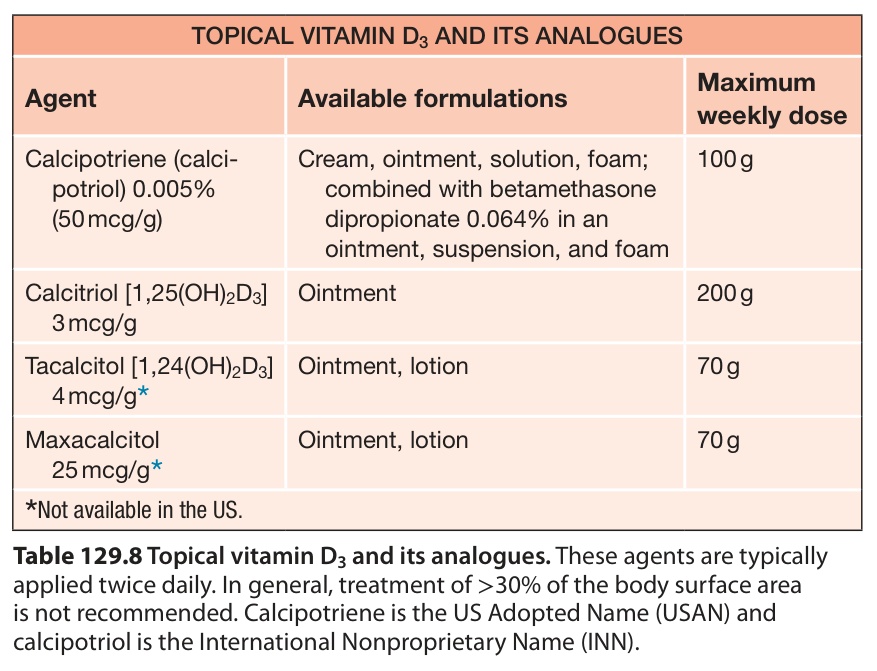
Table 129.8 Topical vitamin D and its analogues. These agents are typically applied twice daily. In general, treatment of >30% of the body surface area is not recommended. Calcipotriene is the US Adopted Name (USAN) and calcipotriol is the International Nonproprietary Name (INN).