INTRODUCTION
Atopic dermatitis (AD) is the most common chronic inflammatory skin disease, and its increasing prevalence presents a major public health problem worldwide. Characteristic features of AD include pruritus and a chronic or chronically relapsing course, usually beginning during infancy (early onset) but occasionally first developing in adulthood (late onset). AD is a complex genetic disease and is often accompanied by other atopic disorders such as allergic rhinoconjunctivitis, asthma, food allergies, and less often eosinophilic esophagitis. These conditions may appear simultaneously or develop in succession. AD and food allergy have a predilection for infants and young children, while asthma favors older children and rhinoconjunctivitis predominates in adolescents. This age-dependent sequence, referred to as the “atopic march” (Fig. 12.1), represents one of many potential pathways to atopic multi-morbidity in children with AD. Given that atopic disease usually starts with AD, management should not be concentrated solely on the treatment of acute flares, but also be directed towards ameliorating the underlying genetically determined epidermal barrier dysfunction and preventing active dermatitis via maintenance therapy.
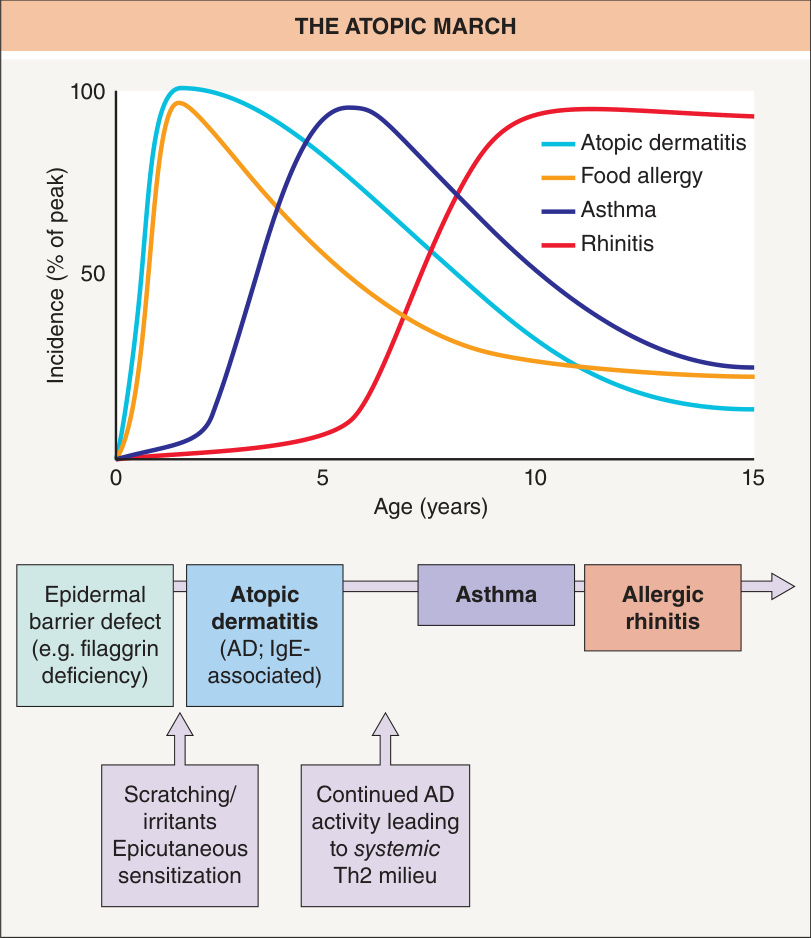
Fig. 12.1 The atopic march. This characteristic sequence represents one of many possible pathways to atopic multimorbidity in children with AD.