EPIDEMIOLOGY
The current prevalence of AD in most high-income and some low-income countries is ~10%–30% in children and 2%–10% in adults. This represents a two- to threefold increase over the past several decades. In general, the prevalence of AD in rural areas and low-income countries is significantly lower than in their urban and high-income counterparts. More recently, however, the prevalence of AD appears to be plateauing in many high-income countries, where there tends to be an inverse socioeconomic gradient in prevalence. These patterns illustrate the importance of lifestyle and environment in the pathogenesis of atopic disease.
Although it is clear that the incidence of AD peaks in infancy and chronic disease is frequently observed, clinical expression over time varies considerably. Recognized AD trajectories include transient, relapsing-remitting, and chronic persistent disease. Predictors of persistence into adulthood include a young age at onset, concurrent asthma and/or allergic rhinoconjunctivitis, low socioeconomic status, non-White ethnicity, and filaggrin mutations (see Pathogenesis below). However, it is unclear if these predictors are independent of disease severity. Three subsets of AD based on age of onset have been described based on epidemiologic studies:
●early-onset AD: defined as AD beginning in the first 2 years of life. This is the most common type of AD, which develops during the first 6 months of life in 45% of affected individuals, during the first year of life in 60%, and before 5 years of age in 85%. Approximately half of children with disease onset during the first 2 years of life develop allergen-specific IgE antibodies by 2 years of age. About 60% of infants and young children with AD go into remission by 12 years of age, including a group with resolution by 4–6 years of age, while in others disease activity persists into adolescence and adulthood.
●late-onset AD: defined as AD that starts after puberty. There are few epidemiological studies on AD with an onset in adulthood.
Approximately 30% of AD patients overall are in the non-IgE-associated category, and among adults, the vast majority of such patients are women.
●AD in the elderly: a subset of AD that begins after 60 years of age.
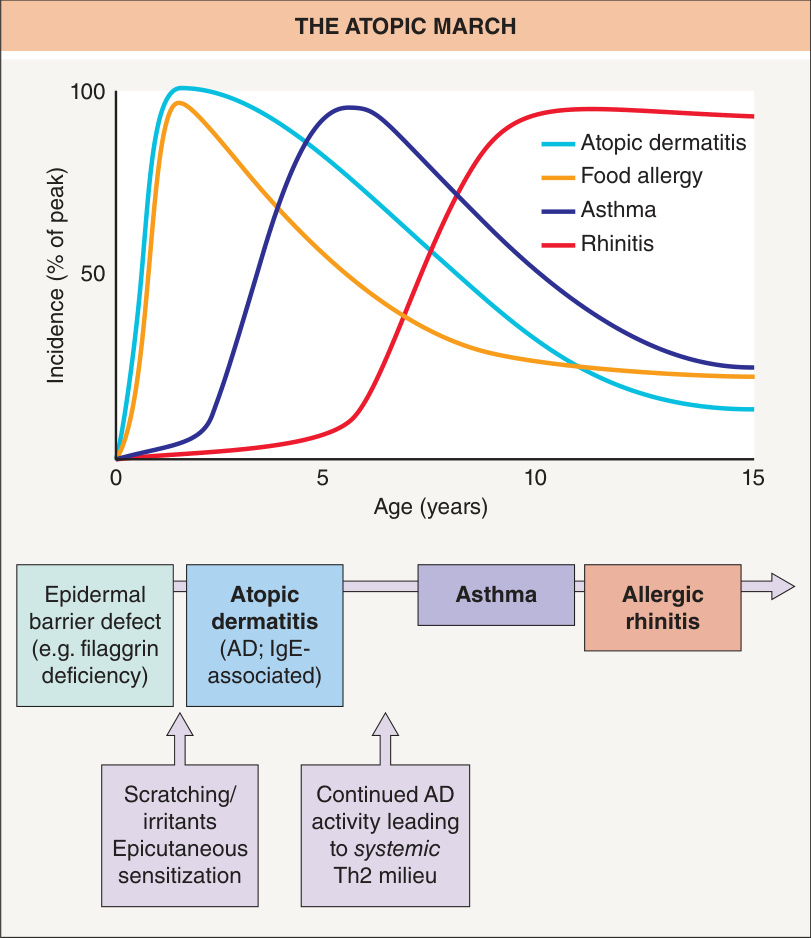
Fig. 12.1 The atopic march. This characteristic sequence represents one of many possible pathways to atopic multimorbidity in children with AD.
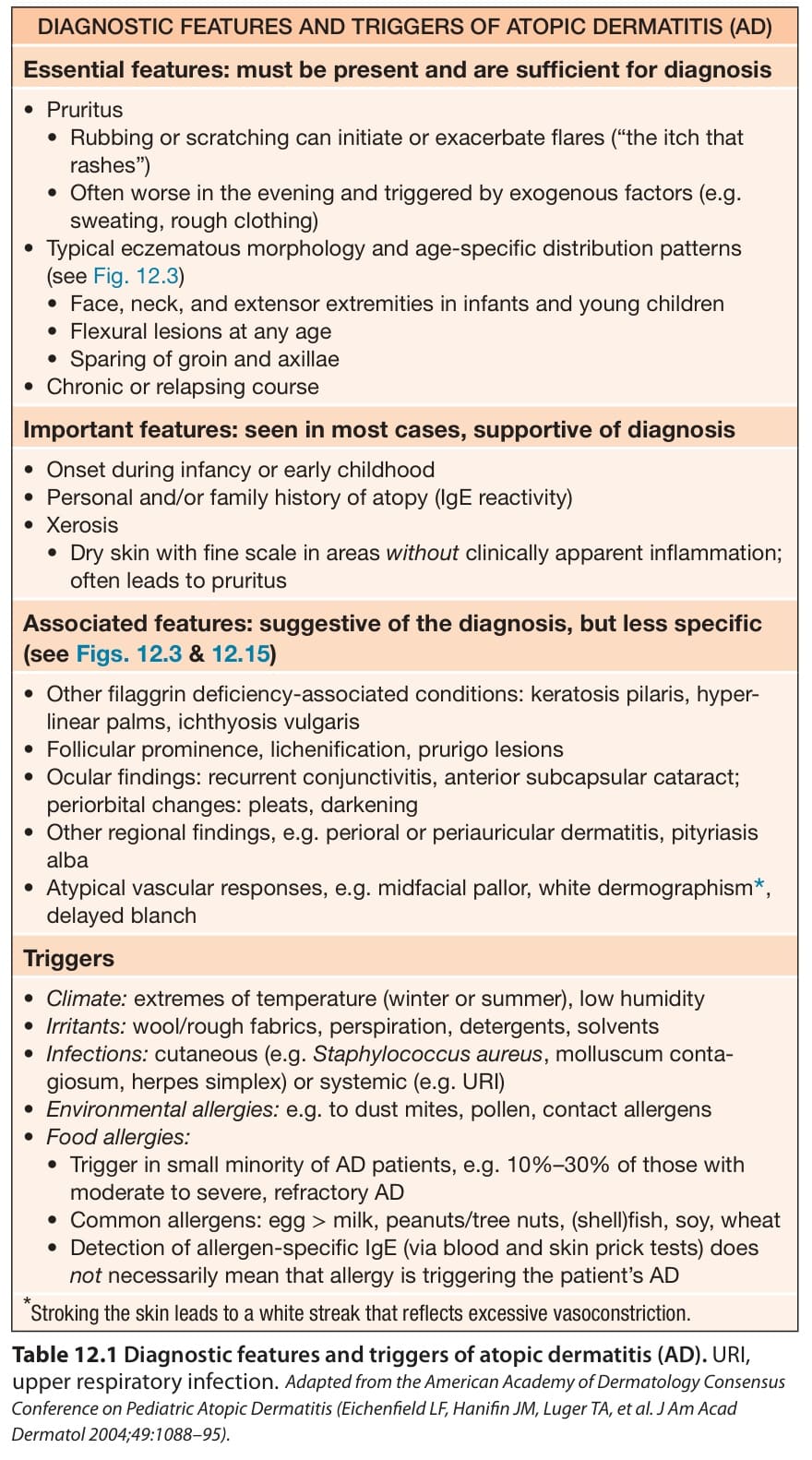
Table 12.1 Diagnostic features and triggers of atopic dermatitis (AD). URI, upper respiratory infection.Adapted from the American Academy of Dermatology Consensus Conference on Pediatric Atopic Dermatitis (Eichenfield LF, Hanifin JM, Luger TA, et al. J Am Acad Dermatol 2004;49:1088–95).