INTRODUCTION
This chapter is designed to be a broad overview of selected systemic therapies for dermatologic diseases. It provides an historical perspective for each drug, a discussion of its mechanism of action and side effects, and touches on indications and clinical use. This information should serve as a starting point, allowing the reader to readily compare and contrast treatment options. It is not a substitute for the in-depth knowledge and experience necessary to implement these therapies, nor is it a complete library of systemic drugs used in dermatology. Several systemic medications are reviewed in other chapters (Table 130.1) and not discussed here.
Systemic drugs discussed in this chapter may be subdivided into broad categories, such as immunosuppressive/anti-inflammatory, cytotoxic, and antiproliferative (Table 130.2). Drugs in a single category act in a relatively similar fashion and generally have similar important side effects. For example, immunosuppressive drugs suppress the body’s ability to recognize or eliminate infections and neoplastic cells. Patients may be at increased risk for opportunistic infections and selected lymphoproliferative malignancies as well as squamous cell carcinomas. Given this increased risk for infection, patients with either an active infection or one that may reactivate (e.g. latent tuberculosis, hepatitis B viral infection) should be cautiously given these drugs, with prior (when possible) or concomitant administration of antimicrobial or antiviral medications.
Most of the drugs discussed herein lack Food and Drug Administration (FDA) approval for dermatologic indications. However, in most instances, their use is based on the mechanism of action of the drug and the presumed pathogenesis of the disease, combined with published case series, case reports, and a limited number of clinical trials.
When choosing therapy for a patient, certain broad general principles apply. First, the physician should be aware of all common therapeutic modalities available that are likely to yield optimal results. Certain systemic medications will not be utilized frequently enough for a given clinician to become comfortable with their use; therefore, patients requiring more specialized drugs should be referred to colleagues experienced with their use. Patients should be advised of all reasonable therapeutic choices as well as the risk–benefit profile of each modality. Non-compliance is a relative contraindication for all medications discussed in this chapter.
Prior to initiation of several of these medications, based upon potential side effects, the patient should have a complete history and physical examination, with specific emphasis on organ systems that may be affected by the particular drug. Tuberculin skin testing and/or inter-feron-gamma release assays (IGRAs; e.g. QuantiFERON-TB Gold Plus, T-SPOT.TB) should be performed prior to using immunosuppressive medications, specifically corticosteroids (particularly when a prolonged course is anticipated) and systemic immunomodulators (“biologics”; see Ch. 128). Consultation with appropriate generalists or specialists in selected situations may be required prior to initiating therapy as well as for periodic screening for treatment complications. Table 130.3 outlines suggested monitoring guidelines for systemic medications discussed in this chapter. Some tests may need to be performed more frequently in high-risk patients or in patients with abnormal results. Additionally, each outpatient visit should include an appropriate review of systems and physical examination.
The use of each drug during pregnancy and lactation is reviewed. Wherever possible, this has been referenced with the eleventh edition of Drugs in Pregnancy and Lactation by Briggs and colleagues. Additionally, in 2015, under the Pregnancy and Lactation Labeling Rule (PLLR), the FDA abolished the letter rating system for drug safety in pregnant women and during lactation; the letters have been replaced by narrative-based labeling with three subsections: (1) pregnancy; (2) lactation; and (3) females and males of reproductive potential. In general, one should be circumspect in prescribing systemic medications to those with childbearing potential. It is not adequate to merely ask patients if they are utilizing birth control; each patient must be made acutely aware of the risks associated with medication use during pregnancy and risks of continuing therapy if one becomes pregnant.
Family planning consultation and communication with the patient’s obstetrician or primary care physician can prove helpful.
Several of the medications reviewed in this chapter, including mycophenolate mofetil, thalidomide, and lenalidomide, are subject to FDA-mandated Risk Evaluation and Mitigation Strategies (REMS). In addition to medication guides for patients, there are educational programs for health care providers and restrictive computerized programs to ensure compliance and safe medication use, especially as it pertains to pregnancy.
Lastly, several drugs discussed herein have parenteral formulations. Clinicians who administer parenteral medications in the ambulatory setting should be current in Advanced Cardiac Life Support (ACLS) training and keep emergency resuscitation supplies available.
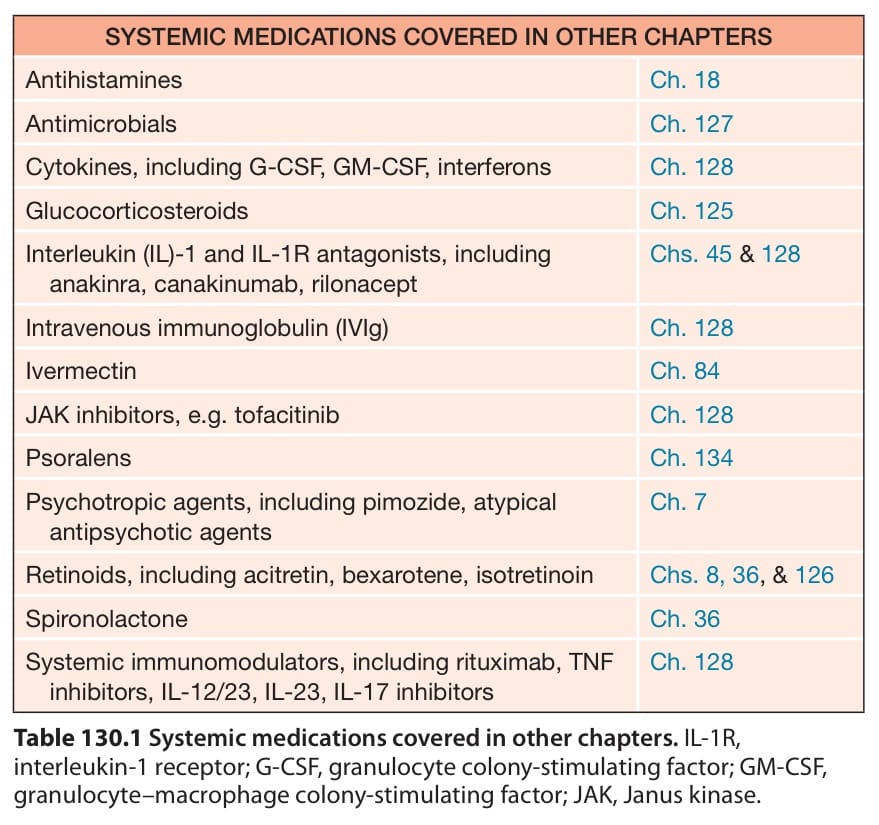
Table 130.1 Systemic medications covered in other chapters. IL-1R, interleukin-1 receptor; G-CSF, granulocyte colony-stimulating factor; GM-CSF, granulocyte–macrophage colony-stimulating factor; JAK, Janus kinase.
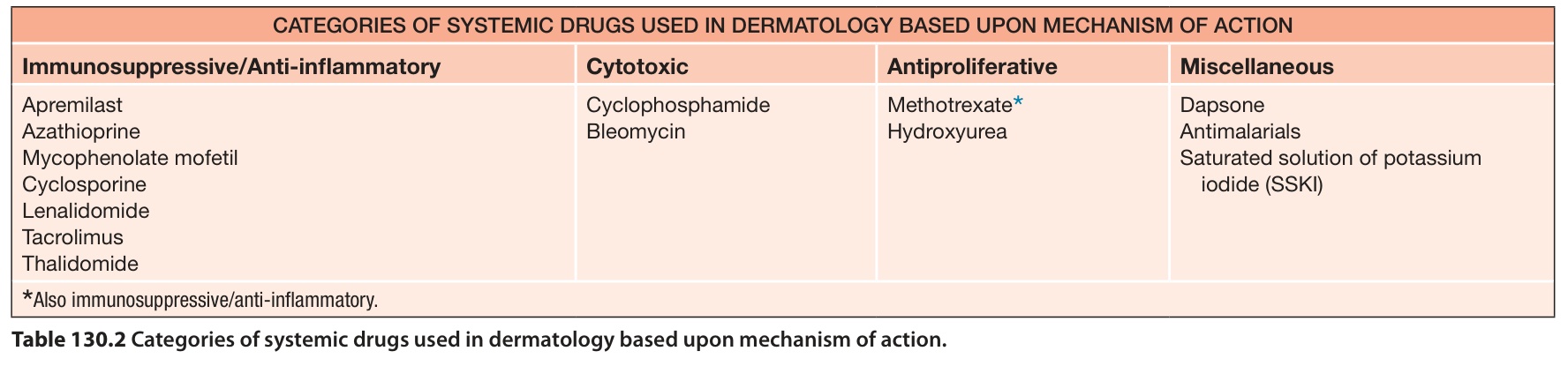
Table 130.2 Categories of systemic drugs used in dermatology based upon mechanism of action.

Table 130.3 Monitoring guidelines for systemic medications, as recommended by the authors.