ANTIMALARIALS
Quinine and its derivatives have been used since the 1600s to treat malaria. Quinine, derived from the bark of the cinchona tree in South America, was first used in dermatology by Payne in 1894 to treat discoid lesions in patients with lupus erythematosus (LE). The most common antimalarials are hydroxychloroquine (Plaquenil®), chloroquine (Aralen®), and quinacrine; currently the latter, which can lead to yellow skin discoloration, has limited availability in the US and will not be discussed in detail (see Ch. 41).
The antimalarials are absorbed extensively into tissues and slowly released, leading to a half-life of 40–50 days. A steady state is achieved slowly, and it may take 3–4 months to see adequate clinical effects. Hydroxychloroquine is catabolized into two metabolites, desethylhydroxychloroquine and desethylchloroquine. Chloroquine is only metabolized into the latter. The initial metabolites undergo further change into the primary amine form. Overall, 50% of each drug undergoes renal excretion.
Mechanism of Action
The mechanisms of action of antimalarials are complex and incompletely understood. Known endpoints include the following: stabilization of lysosomes within injured cells; inhibition of antigen presentation, cell-mediated immunity, and the synthesis of proinflammatory cytokines; and antithrombotic/antiplatelet effects. The photoprotective effect attributed to the antimalarials may result from their anti-inflammatory properties.
Dosages
Most conditions will respond to dosages between 200 and 400 mg/ day of hydroxychloroquine or 250 mg/day of chloroquine, with a maximum safe chronic dose (from an ocular standpoint) being 5 mg/ kg/day and 2.3 mg/kg/day, respectively, utilizing real body weight. After a suitable therapeutic response has been achieved, the response may be maintained with hydroxychloroquine 100–200 mg daily. If available, quinacrine (100 mg/day) can be added to 200 mg twice daily of hydroxychloroquine, to maximize the clinical benefit without increasing the risk of ocular toxicity. Lower doses of chloroquine (125 mg twice weekly) or hydroxychloroquine (100 mg three times weekly) must be used in patients with porphyria cutanea tarda, in order to minimize the risk of a toxic reaction (e.g. hepatotoxicity) in addition to a marked increase in urinary uroporphyrin output and flare of cutaneous disease (Fig. 130.1).
If no response is noted after 3–4 months, the specific antimalarial has failed and should be discontinued; however, a different antimalarial can be tried. In patients with porphyria cutanea tarda the antimalarial can be slowly increased to daily dosing if necessary and if laboratory monitoring of transaminases allows.
Monitoring guidelines are outlined in Table 130.3 and in the next section.
Major Side Effects
Antimalarials are highly concentrated in the iris and choroid, reaching levels 480 000 times that of plasma. However, irreversible retinopathy rarely occurs when dosages remain within the recommended range and patients are monitored by an ophthalmologist experienced with the ocular effects of antimalarials. As noted in Table 130.4, the risk of retinopathy is much less with hydroxychloroquine than with chloroquine.
Because of the risk of dose-related ocular toxicity, referral to an ophthalmologist for evaluation is required. The American Academy of Ophthalmology (AAO) guidelines recommend that a baseline examination be performed within the first year of antimalarial use. With the exception of higher risk individuals (e.g. the elderly, history of maculopathy, renal or hepatic dysfunction) and those patients with symptoms, annual screening is performed after five years of continuous use (see Table 130.4). Of note, more recent data regarding long-term usage suggest a significant potential for retinopathy after 10 years of continuous therapy.
Up to one-third of patients who receive antimalarials for over 4 months will develop a blue–gray to black hyperpigmentation on their shins (Fig. 130.2), face, palate, and/or nail beds (Table 130.5). The
While low doses of antimalarials (e.g. 100–200 mg of hydroxychloroquine 2–3 times per week) can be used in the management of PCT, higher doses, such as those used to treat cutaneous LE, can lead to flares of PCT. This patient developed skin fragility and bullous lesions six weeks after beginning hydroxychloroquine for rheumatoid arthritis. The eruption resolved with discontinuation of the medication.
discoloration fades after cessation of therapy but may take months to years to resolve completely. Reversible bleaching of the hair roots (achromotrichia) occurs in up to 10% of patients, presumably due to inter-ference with melanosomal function. Another 10%–20% may develop an exanthem, ranging from urticaria to lichenoid reactions to exfoliative erythroderma (Fig. 130.3). Of interest, morbilliform and urticarial exanthems have been observed with greater frequency in individuals with dermatomyositis as compared to those with LE.
Antimalarials have been reported to worsen psoriasis in some patients, even though in the past they were commonly used to treat psoriatic arthritis. Psoriatic patients traveling to malaria-endemic areas may take these drugs prophylactically.
Laboratory abnormalities do not commonly occur, but it is the practice of the authors to monitor patients as outlined in Table 130.3. An overdose of antimalarials can be fatal, and although pediatric usage is safe and effective, patients should be warned to keep the drug out of the reach of small children.
Indications
The most common dermatologic use for antimalarials is as first-line systemic therapy for cutaneous LE, after topical or intralesional corticosteroids. Antimalarials are especially useful in patients with widespread discoid lesions and in those with the annular or papulosquamous lesions of subacute cutaneous LE (SCLE). Antimalarial use has also been credited with fewer thromboembolic events in patients with systemic LE (SLE). Additional cutaneous disorders that may respond to antimalarial therapy include lichen planus, dermatomyositis, and polymorphous light eruption.
Contraindications
The only true contraindication is hypersensitivity to the drug. Caution should be used in patients with severe blood dyscrasias or hepatic disorders because bone marrow suppression and hepatitis can occasionally occur. Should ophthalmologic changes of pre-maculopathy develop, an alternative medication should be considered. Ocular changes at this stage are potentially reversible but could progress if the drug were continued. With the exception of halofantrine, antimalarial medications that prolong the QT/QTc interval have a low risk of cardiotoxicity. In patients with known cardiac disease including arrhythmias as well as those receiving other drugs that prolong the QT/QTc interval, consultation with a cardiologist is recommended.
Use in Pregnancy and Lactation
Chloroquine is thought to be safe for treatment and prophylaxis of malaria during pregnancy; however, there have been anecdotal reports of an increase in birth defects in pregnant women being treated for SLE.
Hydroxychloroquine is thought to be safer during pregnancy. Although excreted into breast milk, standard doses of either drug are not harmful to breastfed infants and are approved by the American Academy of Pediatrics for use during lactation.
Drug Interactions
Cimetidine may increase circulating levels of antimalarials, and antimalarials may increase digoxin levels. Kaolin and magnesium trisilicate, over-the-counter gastrointestinal drugs, decrease absorption of antimalarials. The most significant potential interaction is the additive risk of retinal toxicity when chloroquine and hydroxychloroquine are used concomitantly. Combined therapy consisting of chloroquine or hydroxychloroquine plus quinacrine is acceptable. As noted previously, assessment is required when antimalarials are coadministered with other medications that prolong the QT/QTc interval (e.g. azithromycin).
In patients with LE, cigarette smoking has been associated with decreased efficacy of antimalarials. It is unknown whether this represents a “drug–drug” interaction, decreased compliance (as a manifestation of high-risk behavior), or an unrecognized interplay. Suspected noncompliance can be confirmed by measuring serum levels of hydroxychloroquine.
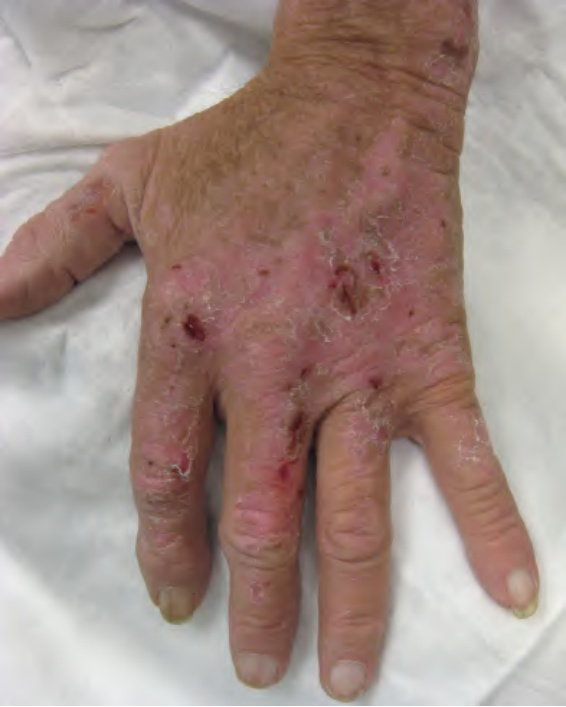
Fig. 130.1 Hydroxychloroquine-induced porphyria cutanea tarda (PCT).
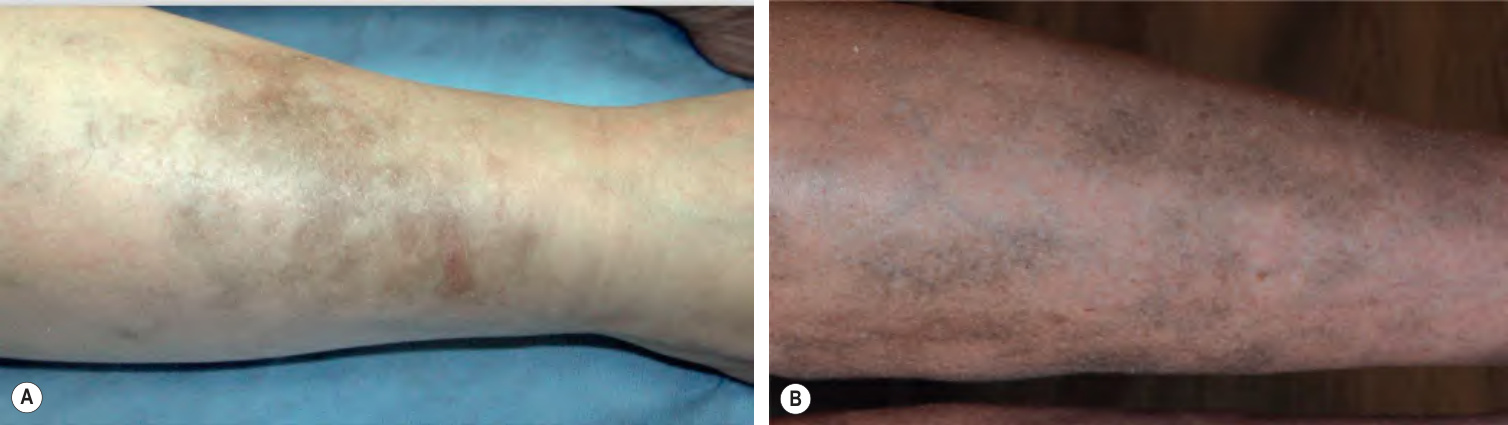
Fig. 130.2 Discoloration of the shins due to antimalarial drugs.A Areas of blue-gray to brown discoloration due to chloroquine. B Scattered brown to brown-gray patches due to hydroxychloroquine. B, Courtesy Kalman Watsky, MD.
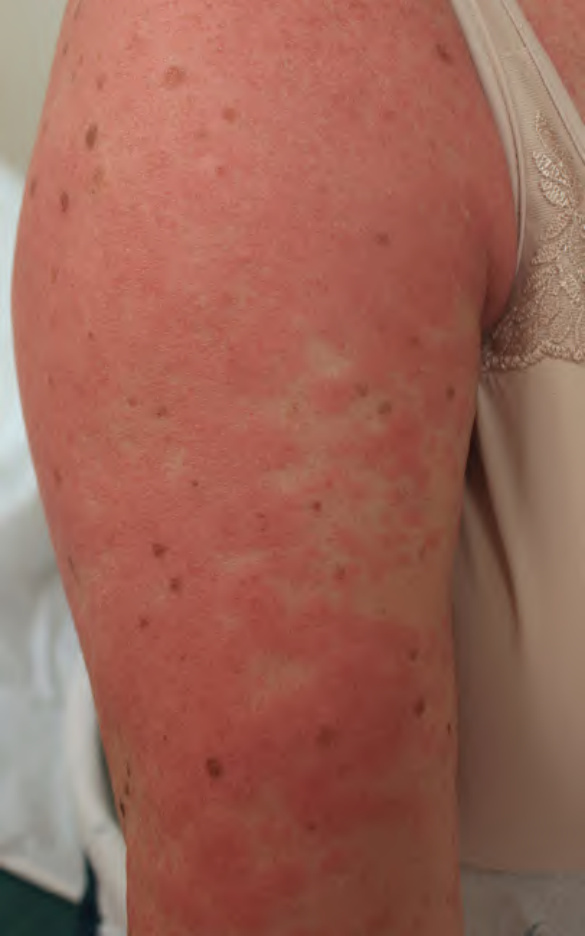
Fig. 130.3 Drug reaction with eosinophilia and systemic symptoms (DRESS) secondary to hydroxy- chloroquine. The individual lesions were edematous and became confluent. Courtesy Jean L. Bolognia, MD.

Table 130.3 Monitoring guidelines for systemic medications, as recommended by the authors.
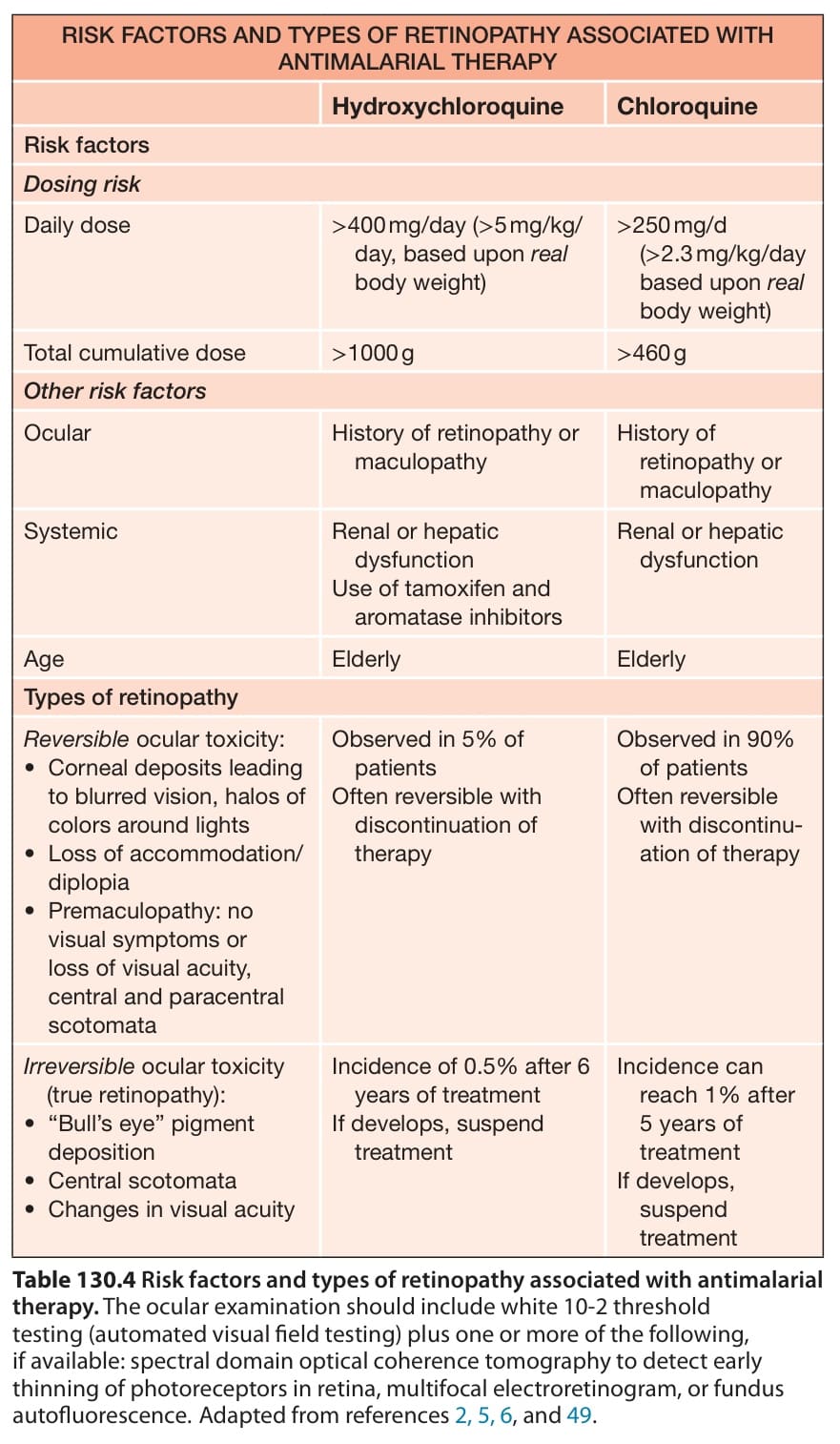
Table 130.4 Risk factors and types of retinopathy associated with antimalarial therapy. The ocular examination should include white 10-2 threshold testing (automated visual field testing) plus one or more of the following, if available: spectral domain optical coherence tomography to detect early thinning of photoreceptors in retina, multifocal electroretinogram, or fundus autofluorescence. Adapted from references 2, 5, 6, and 49.
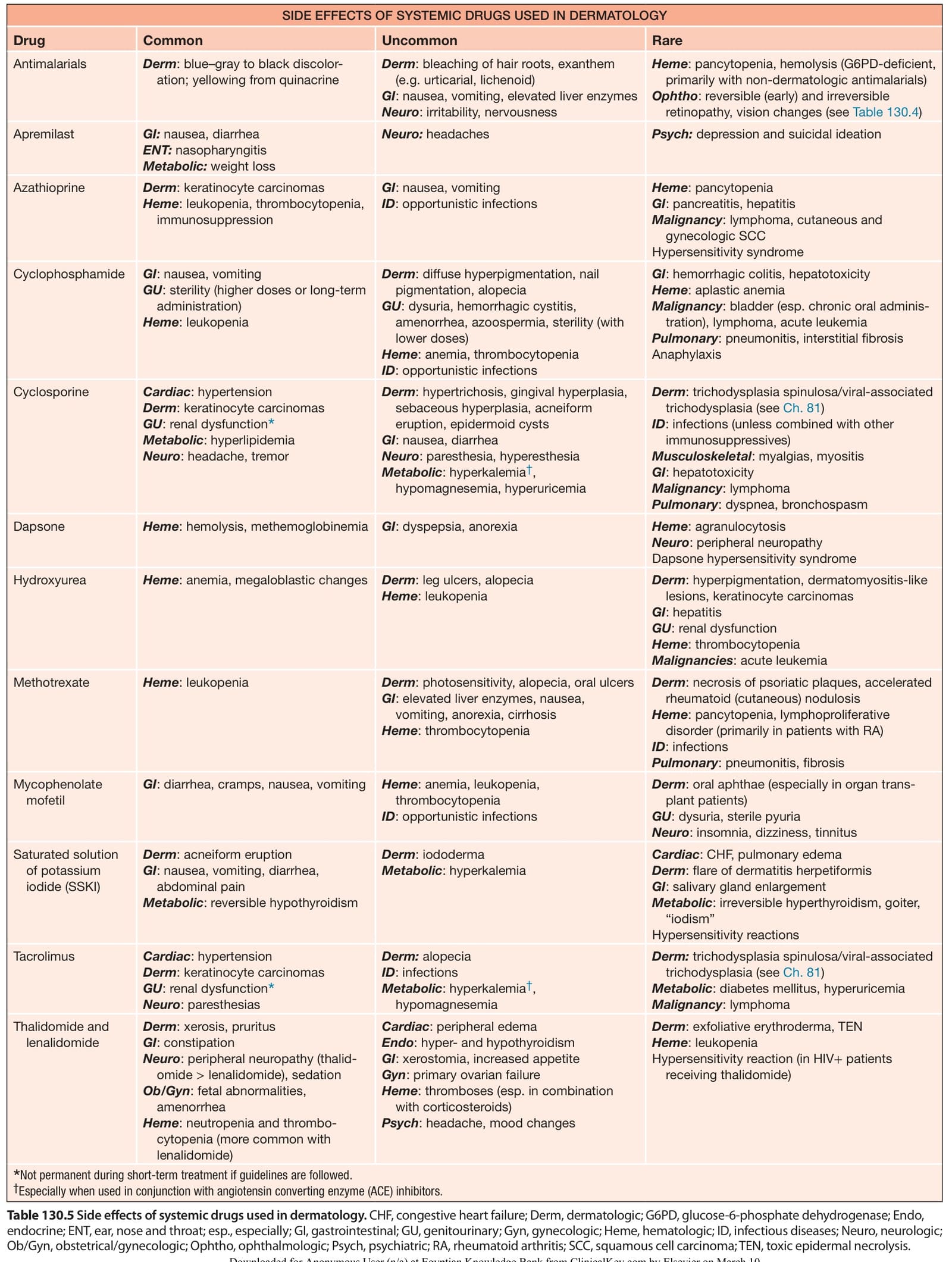
Table 130.5 Side effects of systemic drugs used in dermatology. CHF, congestive heart failure; Derm, dermatologic; G6PD, glucose-6-phosphate dehydrogenase; Endo, endocrine; ENT, ear, nose and throat; esp., especially; GI, gastrointestinal; GU, genitourinary; Gyn, gynecologic; Heme, hematologic; ID, infectious diseases; Neuro, neurologic; Ob/Gyn, obstetrical/gynecologic; Ophtho, ophthalmologic; Psych, psychiatric; RA, rheumatoid arthritis; SCC, squamous cell carcinoma; TEN, toxic epidermal necrolysis.