AZATHIOPRINE
Azathioprine was developed in 1959 from its parent drug 6-mercaptopurine (6-MP). After its anti-inflammatory and immunosuppressive effects were noted, dermatologists began to utilize azathioprine for the treatment of inflammatory diseases. With its moderately potent immunosuppressive and anti-inflammatory effects, azathioprine has a reasonable risk–benefit profile. However, it should be reserved for serious, life-threatening or recalcitrant dermatoses after other therapies have failed.
Azathioprine (Imuran®, Azasan®, Azamun™) has an 88% bioavailability. Immediately after absorption, it is converted to 6-MP and subsequently processed through three different, competing pathways (Fig. 130.5). When 6-MP is catabolized via two of these metabolic pathways, by either xanthine oxidase or thiopurine methyltransferase (TPMT), inactive metabolites result. Active metabolites, such as the purine analogue thioguanine monophosphate and others, are produced from the third and only anabolic pathway via hypoxanthine-guanine phosphoribosyl transferase (HGPRT). Should either the xanthine oxidase or TPMT catabolic pathway be blocked, more 6-MP will be shunted through the anabolic HGPRT pathway, leading to more active metabolites; excessive immunosuppression and pancytopenia may result.
The TPMT pathway is important because enzyme activity varies based upon genetic polymorphisms, and evaluating enzyme activity helps to guide dosing parameters. When TPMT activity within red blood cells (RBCs) is measured, which mirrors systemic activity, three subsets are identified – high, intermediate, and low activity (Table 130.6). Azathioprine should be avoided in patients with low activity because of the risk of accumulating metabolites which could increase the risk of severe myelosuppression. Underdosing is possible in those with high enzyme levels and the dosage may need to be titrated upwards. Although TPMT activity may vary somewhat between different laboratories and within different batches of the same test kit, knowledge of baseline TPMT activity is clinically useful in most patients.
Ethnic variations at the TPMT locus have also been described, with certain mutations unique to particular ethnic groups. However, given the diversity of ethnicities, one should not profile a specific group as a means of predicting TPMT activity. Rather, the functional enzyme assay should be utilized prior to initiating azathioprine.
Although decreased xanthine oxidase activity is rarely due to genetic polymorphisms, this enzyme is inhibited by the medications allopurinol and febuxostat (see Fig. 130.5). Azathioprine dosage should be decreased by 75% in patients receiving allopurinol or febuxostat.
Mechanism of Action
6-Thioguanine, the active metabolite of azathioprine, is a purine analogue similar in structure to both adenine and guanine. Instead of an amino or hydroxyl group, it contains a thiol moiety. Incorporation of 6-thioguanine into DNA and RNA inhibits purine metabolism and cell division. 6-Thioguanine has other activities which are not well understood, such as suppression of T cell function and B cell antibody production. It also decreases the number of Langerhans cells in the skin and inhibits their ability to present antigens.
Dosages
Available in 25, 50, 75, and 100 mg tablets, empiric dosing is generally started at 50 mg/day and increased to a maximum of 2.5 mg/kg/day according to clinical efficacy and careful monitoring. Maximum doses based on baseline TPMT determination are outlined in Table 130.6. In either case, renal insufficiency dictates dose reduction (see Table 130.3). Baseline evaluation should include a complete medication history because of adverse effects when azathioprine is used concomitantly with allopurinol, febuxostat, captopril, or warfarin (see below). Monitoring guidelines are outlined in Table 130.3.
Major Side Effects
Major side effects are related to the immunosuppressive effects of azathioprine (see Table 130.5). Pancytopenia occurs rarely, particularly when doses are based on TPMT activity. Patients may be at increased risk for malignancies, especially lymphoproliferative disorders and squamous cell carcinomas of the skin and female genitourinary tract, and should be monitored accordingly. Factors influencing a patient’s malignancy risk include degree and duration of immunosuppression, skin phototype, and existing comorbidities.
Azathioprine may rarely cause a life-threatening hypersensitivity reaction. It most commonly develops during the first month of therapy and when there is concurrent use of either cyclosporine or methotrexate. The cutaneous eruption is typically morbilliform with areas of confluence. Other components of the syndrome include fever, respiratory and gastrointestinal distress, hepatotoxicity, and possible cardiovascular collapse. This hypersensitivity reaction represents an absolute contraindication as re-exposure may lead to cardiovascular collapse. Azathioprine can also induce the triad of pancreatitis, polyarthritis, and panniculitis, referred to as PPP syndrome.
Indications
Although azathioprine has FDA approval for non-dermatologic uses only, dermatologists have been using this drug for decades to treat severe dermatologic conditions, most often as a corticosteroid-sparing agent in the treatment of immunobullous diseases, chronic actinic dermatitis, and various subtypes of cutaneous vasculitis. It is inexpensive and has moderate immunosuppressive and anti-inflammatory effects. Clinical benefit of the drug may not be apparent until it has been administered for at least 4 to 6 weeks.
Either decreased activity of TPMT or inhibition of xanthine oxidase by allopurinol or febuxostat can lead to shunting of 6-mercaptopurine to the HGPRT pathway. As a result of this shunting, there is an increase in active metabolites and an increased risk of toxicity. Azathioprine dosage should be decreased by 75% in patients receiving allopurinol or febuxostat. Adapted from Wolverton SE. Comprehensive Dermatologic Drug Therapy, 4th edn. Philadelphia: Saunders, 2020.
Contraindications
Absolute contraindications to azathioprine therapy include history of a hypersensitivity reaction, as re-challenge may prove fatal. Active serious infections and pregnancy are relative contraindications. Concomitant use of allopurinol or febuxostat requires dose reduction of azathioprine (see above) or selection of an alternative medication.
Use in Pregnancy and Lactation
Azathioprine may be associated with preterm delivery, low-birth-weight infants, sporadic anomalies, and hematologic toxicities. Even though it is considered relatively safe for use in transplant patients who become pregnant, for dermatologic purposes it should not be prescribed during pregnancy. Azathioprine may be compatible with breastfeeding, but it is recommended that patients wait for four hours after medication ingestion to initiate breastfeeding and to monitor complete blood counts in breastfed infants. There is no recommendation for male patients to discontinue azathioprine when trying to conceive with their partner; data regarding effects on female fertility are limited.
Drug Interactions
Inhibition of xanthine oxidase by allopurinol or febuxostat (see Fig. 130.5) increases the risk of pancytopenia in azathioprine-treated patients. Captopril may increase the risk of leukopenia. Azathioprine can decrease the effectiveness of warfarin and pancuronium, necessitating larger doses of these drugs. Since azathioprine may decrease the effectiveness of intrauterine contraceptive devices, alternative birth control methods should be employed.
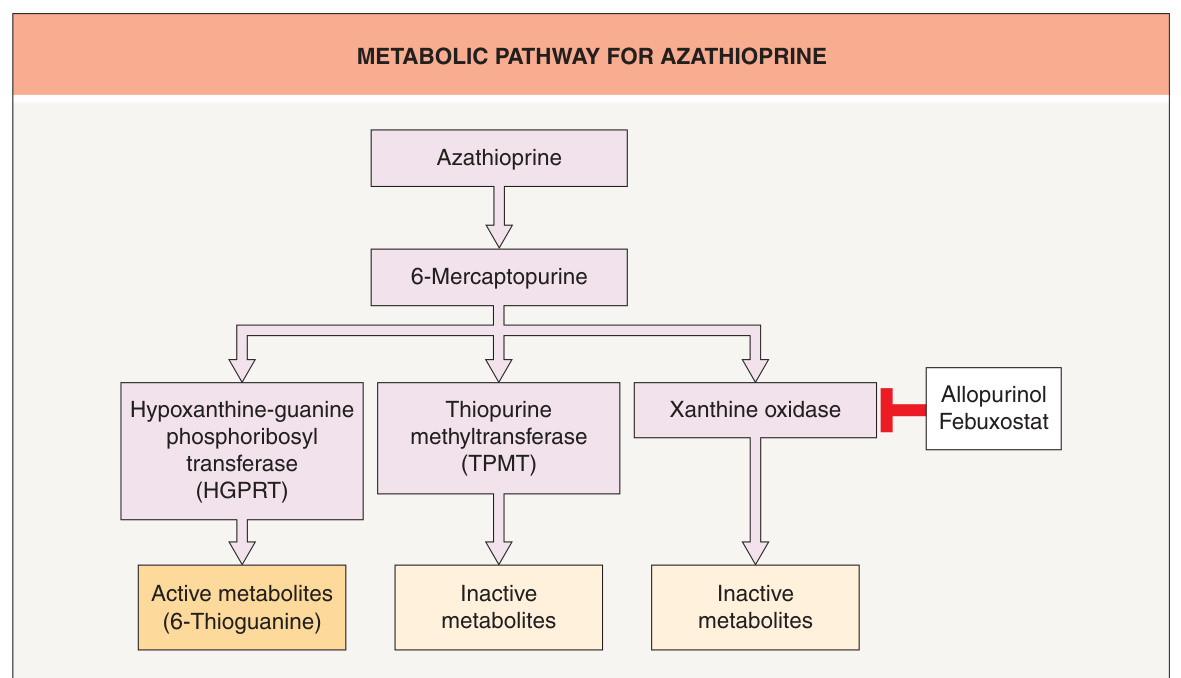
Fig. 130.5 Metabolic pathway for azathioprine.

Table 130.3 Monitoring guidelines for systemic medications, as recommended by the authors.
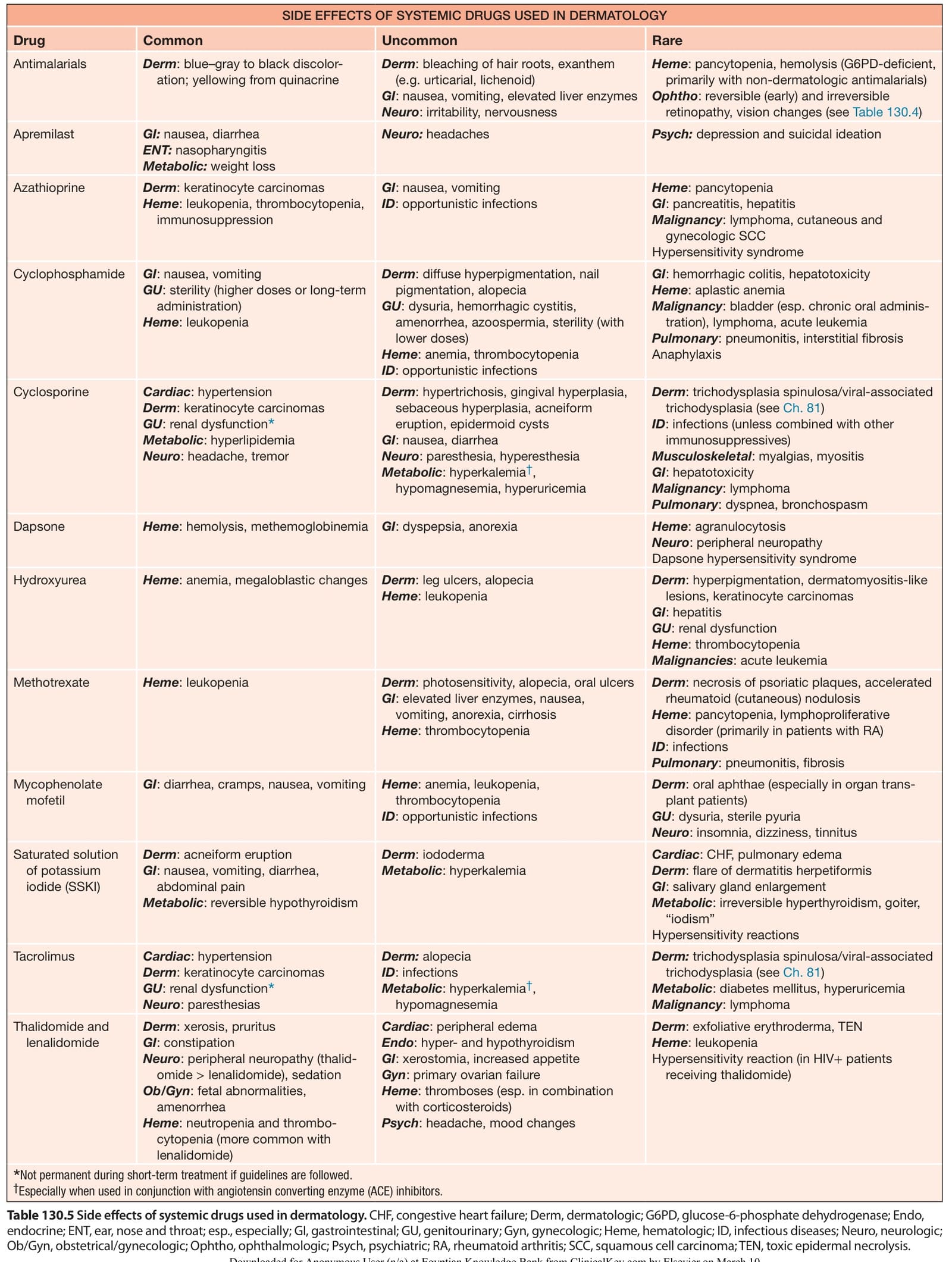
Table 130.5 Side effects of systemic drugs used in dermatology. CHF, congestive heart failure; Derm, dermatologic; G6PD, glucose-6-phosphate dehydrogenase; Endo, endocrine; ENT, ear, nose and throat; esp., especially; GI, gastrointestinal; GU, genitourinary; Gyn, gynecologic; Heme, hematologic; ID, infectious diseases; Neuro, neurologic; Ob/Gyn, obstetrical/gynecologic; Ophtho, ophthalmologic; Psych, psychiatric; RA, rheumatoid arthritis; SCC, squamous cell carcinoma; TEN, toxic epidermal necrolysis.
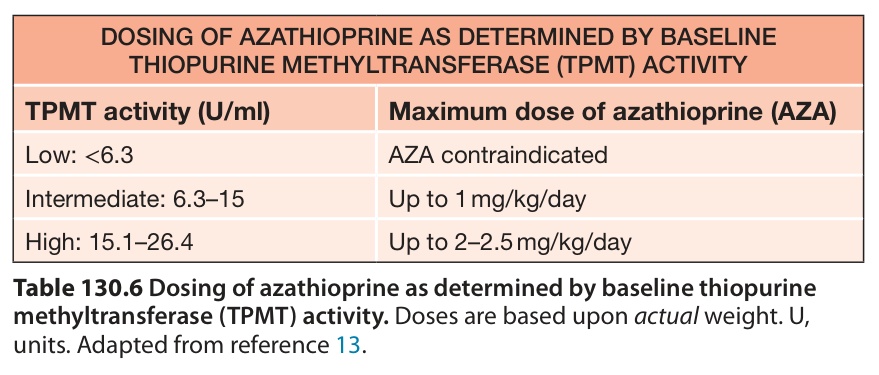
Table 130.6 Dosing of azathioprine as determined by baseline thiopurine methyltransferase (TPMT) activity. Doses are based upon actual weight. U, units. Adapted from reference 13.