CYCLOPHOSPHAMIDE
Cyclophosphamide (Cytoxan®) was derived from mechlorethamine (nitrogen mustard) in 1958; the latter was combined with phosphoric acid in an effort to make an inert drug capable of entering and releasing active mechlorethamine within target cells. It has ~75% oral bioavailability, peaks in the plasma at about 1 hour, and crosses the blood–brain barrier. Cyclophosphamide itself is inactive, but it is metabolized by
CYP enzymes into the active metabolite 4-hydroxy-cyclophosphamide (nornitrogen mustard; t1/2= 3.3 hours), which may then be converted into the other active metabolite phosphoramide mustard (t1/2= 9 hours). Metabolites are excreted primarily via the kidney (50%). The inactive metabolite acrolein is believed to cause hemorrhagic cystitis and associated transitional cell carcinoma of the bladder.
Mechanism of Action
Cyclophosphamide is an alkylating agent that functions in a cell cycleindependent fashion. Although its major effect is suppression of B cell function, it also suppresses T cell function (especially of regulatory
T cells). Clearly, the T cell effects are greatest if the drug is given prior to antigen presentation. Cyclophosphamide crosses the nuclear membrane, covalently binds with DNA, and inhibits the synthesis of guanine, cytosine, and adenine. Cytotoxicity occurs by several mechanisms: (1) DNA cross-linking with various proteins or other DNA strands; (2) G-C → A-T substitution; and (3) depurination resulting in chain scission. These mechanisms can overwhelm the DNA repair mechanisms, inducing cell death.
Dosages
Cyclophosphamide is available in 25 and 50 mg tablets. Doses range from 1 to 3 mg/kg/day, either as a single morning dose or in equally divided doses. Dermatologic diseases seldom require more than 2 to 2.5 mg/kg/day of cyclophosphamide. Dose reduction is necessary in patients with hepatic or renal dysfunction. Because of the risk of hemorrhagic cystitis, patients should be advised to always consume plenty of fluids. A monthly intravenous infusion (pulse) of 500 to 1000 mg has been used to treat a number of rheumatologic disorders, including severe SLE. Nowadays, monthly IV administration is favored over chronic daily use because of a reduced risk of side effects including bladder toxicity.
Prior to prescribing cyclophosphamide, patients should have a documented white blood count (WBC) of >4500/mm and a granulocyte count of >1500/mm. If the counts are lower and there is no alternative drug, then consultation with a hematologist is recommended. Laboratory monitoring guidelines are outlined in Table 130.3. Of note, it is not necessary to induce significant myelosuppression in order to achieve immunosuppression.
Major Side Effects
The most common side effects from cyclophosphamide treatment are hematologic and gastrointestinal (see Table 130.5). Dermatologic side effects include anagen effluvium (5%–30%, typically reversible), pigmented bands of the teeth (irreversible), diffuse cutaneous hyperpigmentation, transverse ridging and hyperpigmentation of nails, acral erythema, and, rarely, Stevens–Johnson syndrome. Up to 40% of patients have hemorrhagic cystitis, presumably from the acrolein metabolite, which is associated with a 10-fold increase in the risk for transitional cell carcinoma of the bladder. This risk is greater in patients who receive chronic “low-dose” cyclophosphamide (as traditionally given for dermatologic diseases) than in those exposed to brief courses of high-dose pulse therapy (as given for systemic lymphomas and SLE). Immunosuppression is significant, especially in patients concomitantly receiving systemic corticosteroid therapy. Infection and malignancy risks are real with appropriate monitoring recommended. Long-term or high-dose therapy may be associated with infertility in either sex.
Indications
Although cyclophosphamide is only FDA-approved for use in advanced mycosis fungoides and hematopoietic malignancies, it can be useful in treating a variety of severe cutaneous diseases. Cyclophosphamide has been regularly used to treat systemic vasculitides, in particular granulomatosis with polyangiitis and severe eosinophilic granulomatosis with polyangiitis, while it represents second-line therapy for polyarteritis nodosa and microscopic polyangiitis. In the future, administration of rituximab or avacopan may lead to a reduction in its use for ANCA-related vasculitides. Cyclophosphamide can also be employed as a corticosteroid-sparing agent in a variety of severe mucocutaneous diseases or as monotherapy after corticosteroids are discontinued. In particular, cyclophosphamide plus corticosteroids can be used to treat mucous membrane (cicatricial) pemphigoid, especially when there is rapidly progressive or severe ocular involvement.
Contraindications
Absolute contraindications are pregnancy, lactation, depressed bone marrow function, and hypersensitivity to the drug. Cyclophosphamide-allergic patients may have cross-reactions with chlorambucil or mechlorethamine. Relative contraindications include active infections and significantly impaired hepatic or renal function.
Use in Pregnancy and Lactation
Cyclophosphamide is a first-trimester teratogen and is immunosuppressive in breastfed infants. It should not be used during pregnancy or lactation. There is a high rate of permanent azoospermia; therefore cryopreservation of sperm may be necessary before treatment. The risk of infertility in females is related to cumulative dose and patient age; consultation with a reproductive endocrinologist prior to initiating therapy is recommended to discuss oocyte, embryo, and ovarian tissue cryopreservation.
Drug Interactions
Allopurinol, cimetidine, and chloramphenicol may elevate cyclophosphamide drug levels and produce toxicity (via CYP450 interactions), whereas barbiturates may enhance conversion to inactive metabolites. Digoxin absorption may be decreased. Cyclophosphamide may enhance the effect of succinylcholine, increase the cardiotoxicity of doxorubicin, and cause additive immunosuppressive and carcinogenic effects with other immunosuppressive drugs. Unpredictable effects can be seen when used with the inhalation anesthetics halothane and nitrous oxide.

Table 130.3 Monitoring guidelines for systemic medications, as recommended by the authors.
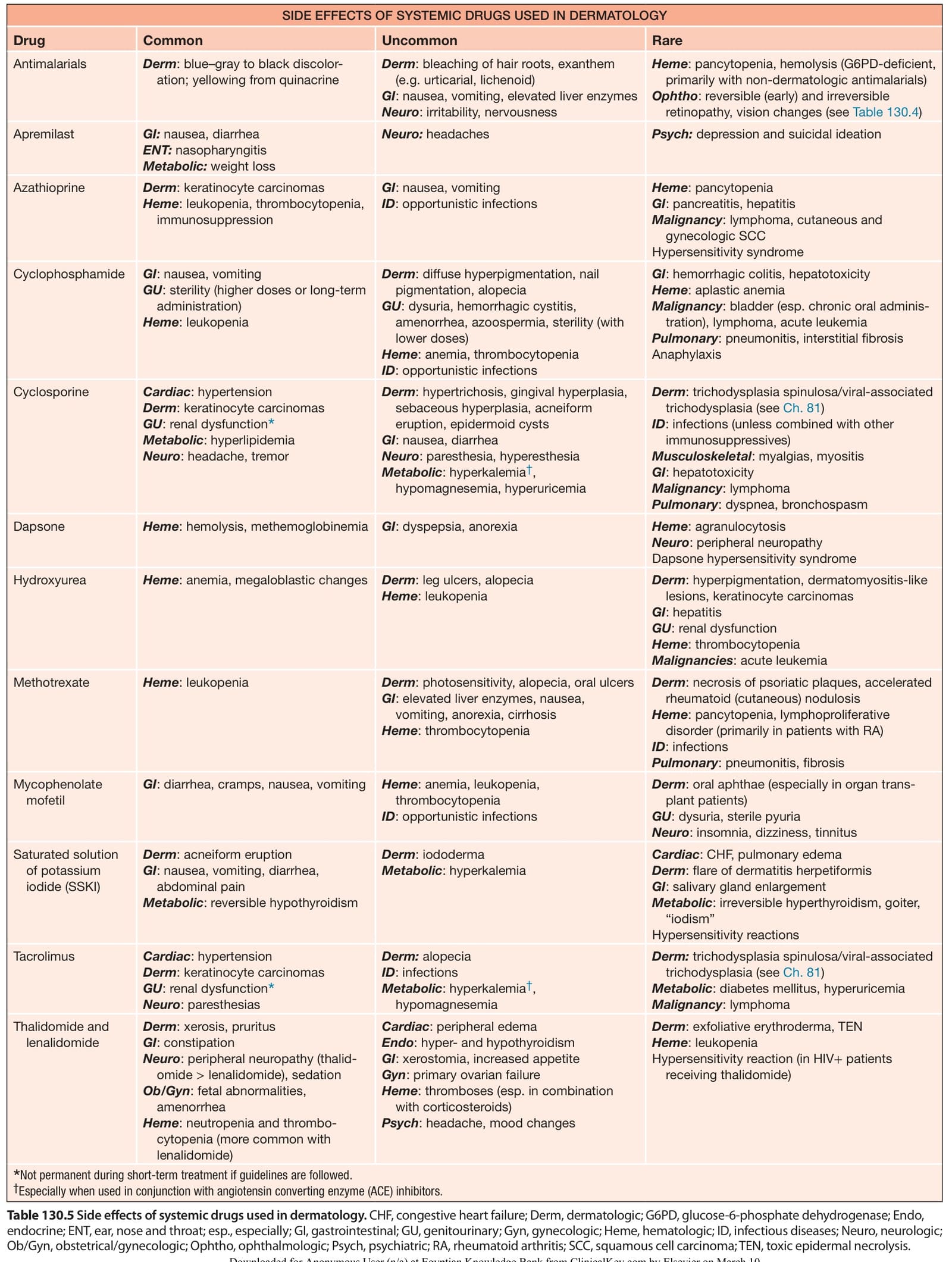
Table 130.5 Side effects of systemic drugs used in dermatology. CHF, congestive heart failure; Derm, dermatologic; G6PD, glucose-6-phosphate dehydrogenase; Endo, endocrine; ENT, ear, nose and throat; esp., especially; GI, gastrointestinal; GU, genitourinary; Gyn, gynecologic; Heme, hematologic; ID, infectious diseases; Neuro, neurologic; Ob/Gyn, obstetrical/gynecologic; Ophtho, ophthalmologic; Psych, psychiatric; RA, rheumatoid arthritis; SCC, squamous cell carcinoma; TEN, toxic epidermal necrolysis.
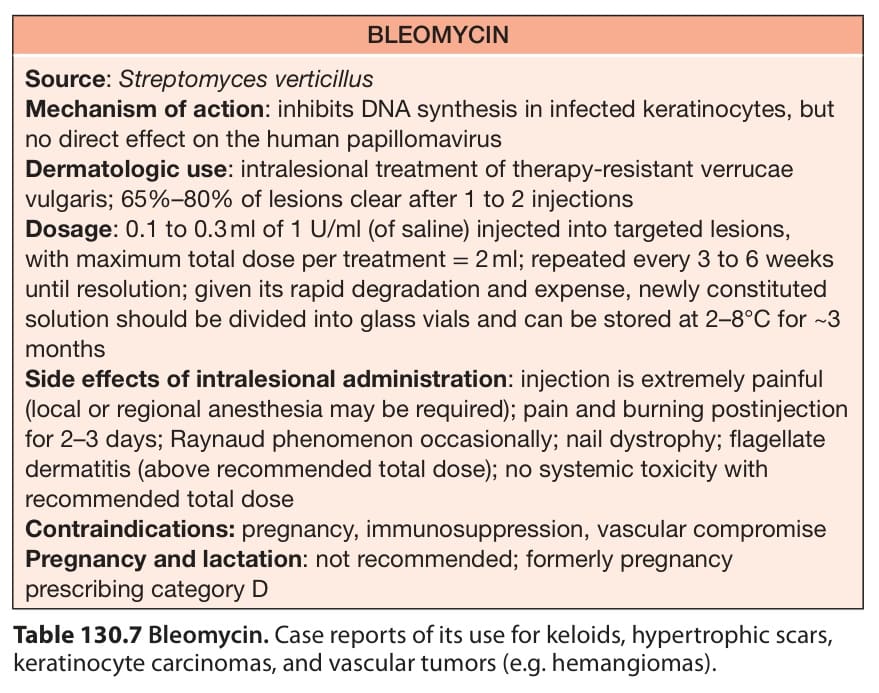
Table 130.7 Bleomycin. Case reports of its use for keloids, hypertrophic scars, keratinocyte carcinomas, and vascular tumors (e.g. hemangiomas).
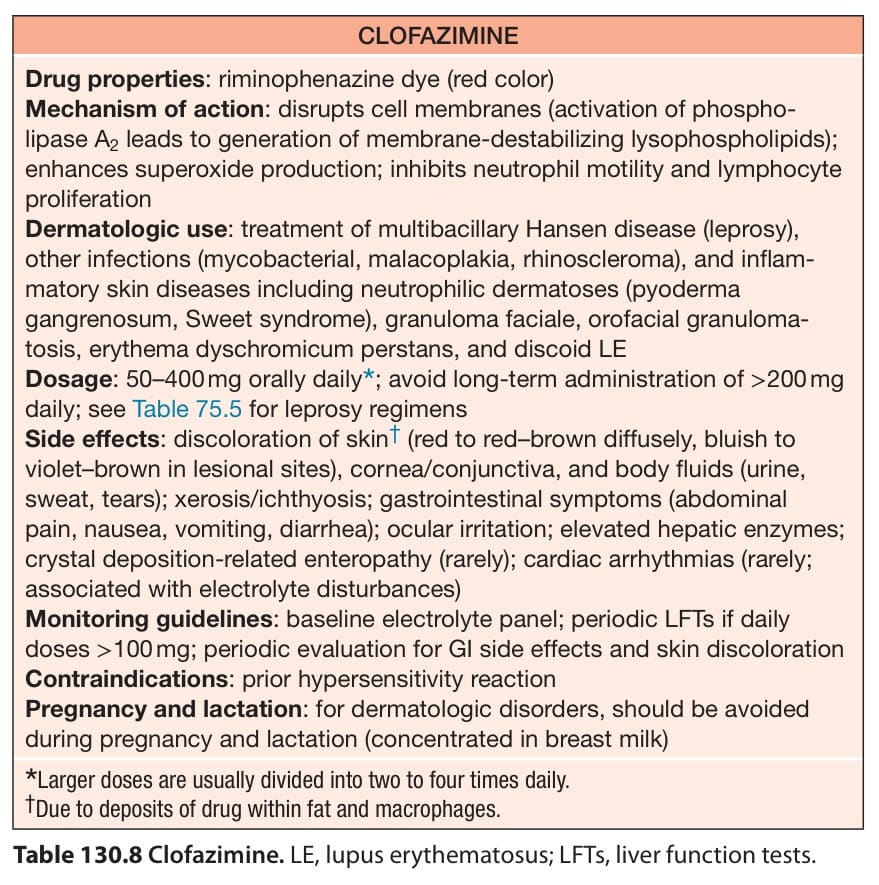
Table 130.8 Clofazimine. LE, lupus erythematosus; LFTs, liver function tests.
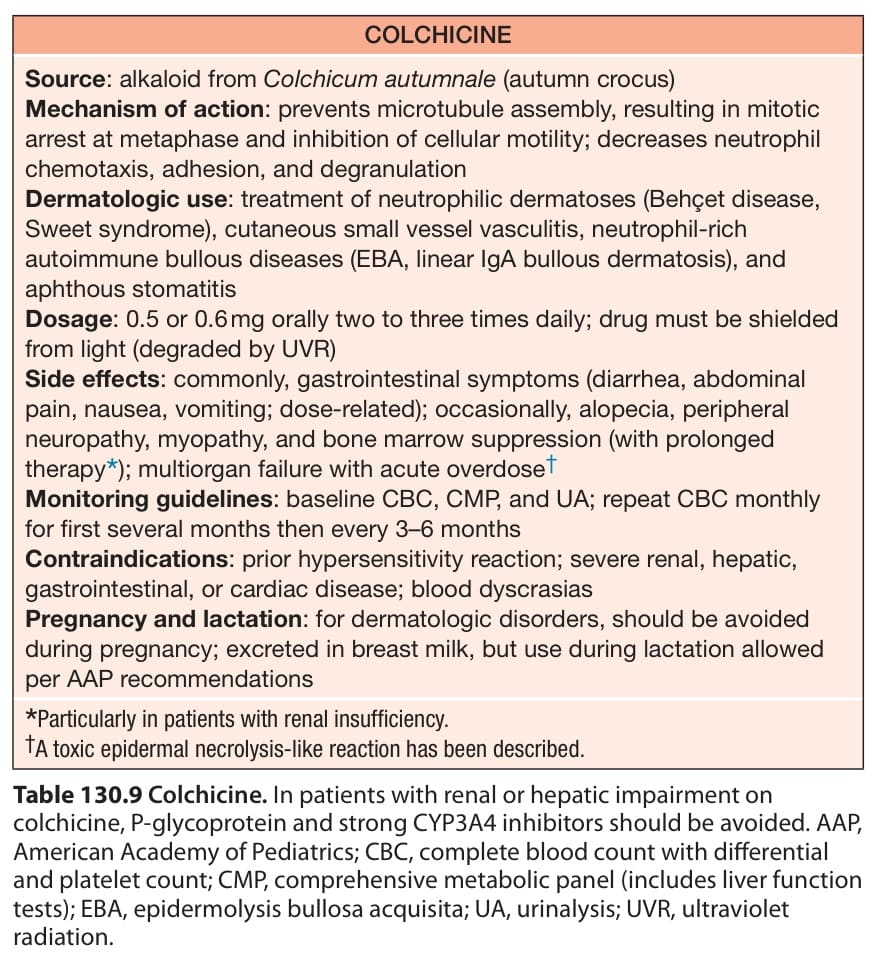
Table 130.9 Colchicine. In patients with renal or hepatic impairment on colchicine, P-glycoprotein and strong CYP3A4 inhibitors should be avoided. AAP, American Academy of Pediatrics; CBC, complete blood count with differential and platelet count; CMP, comprehensive metabolic panel (includes liver function tests); EBA, epidermolysis bullosa acquisita; UA, urinalysis; UVR, ultraviolet radiation.